


Vladislav
-
Posts
8,043 -
Joined
-
Last visited
-
Days Won
79
Content Type
Profiles
Forums
Gallery
Events
Blogs
BMT Wiki
Collections
Store
Everything posted by Vladislav
-
 Well, now I understand I saw similar cabs on Western Stars of late 80's. Thanks for the detailed explanations, interesting.
 -
There's make an offer option in the ad. Also the seller may be count out with some efforts for a straight deal to avoid e-bay commission. And I belive there's a bunch of BMT guys out there in NH so there's a chance someone would help picking that headliner up and bring to a truck show or send by ocassion. Just thoughts. $750 doesn't sound as for free but on the other hand purchase would solve a problem if such one exists.
-
Australian "stack" Intakes
Vladislav replied to ciw65's topic in Modern Mack Truck General Discussion
Yup, those bird catching devices were installed on some American trucks too. -
Great to hear Ray is in contact and continues providing transportation services. He used to show up on here regulary but seems plenty of time passed by since. White looks really nice, congrats on the purchase! Is the cab similar to what was used on some Brockways and Autocars?
-
Impressive thingy! Does that engine have decompression setup or anything else those "second injection lines" were used for?
-
B-73 Restoration
Vladislav replied to mattb73lt's topic in Antique and Classic Mack Trucks General Discussion
We are no less anxious on that than you -
The housings for airride and Camelback may differ by the attachments. Pre-90 Neway usually had double "cleves" at the bottom side which were a kind of cast steel bracket with two ears for bushing welded onto the axle housing. Camelback axles have pads at the bottom to accomodate the rubber pads and clamping caps. The pads are cast together with the housing if its cast style or a weld on part for fabricated housings. Once I met interesting setup of Neway equalizer beams connected to "ears" which were steel brackets attached to cast iron housings by bolts. Actually the housings were the same style Mack use for Camelback. But these "ear" adapters allowed to use them with Neway suspension. And all looked like factory setup, not home made. Also different truck models had different width of the rear end of the frames. The most of earlier rigs such as R, F, DM and also B-models I belive had 33-1/2 measured at the outside of the rails (with small wariations due to the rail material thickness or presence of outer rails etc). But newer trucks like RW, MH and than further CH/CX had different distance between the rails. That means different distance between rear suspension parts and as a follow different positions of attachment elemens on axle housings. So all in all you should pay attention to style and location of mountings on particular housings you might be wanting to swap in. Speaking the initial subject of the thread I'm with you on preference to be sure every important part in a truck or other vehicle has its properties according to industry standards and quality. We're supposed to belive factory things such as a truck or a car made in a plant were designed and build the way they should be to drive safe and reliable. And when we meet a fix which doesn't seem done correct big preference is to get rid of it by redo or swap. If a weak link takes place in a chain the fact it haven't broken yet doesn't mean it will never do.
-
front bumper spacers?
Vladislav replied to Tinman22's topic in Exterior, Cab, Accessories and Detailing
Me too -
front bumper spacers?
Vladislav replied to Tinman22's topic in Exterior, Cab, Accessories and Detailing
No Keith, looks like they're not. At least 3 R688 of the SGT bunch had the spring brackets with tow pins incorporated (and used no spicers) and also there was one more R which I purchased a hood off and it had the same style brackets and VIN starting with 2M2N pointing to Canadian assembly. All those were made in 1988. On the other hand the truck I mentioned in the post above was Matt Pfahl's (from Connecticut) restored R-model I crawled under for a few detailed pics accordingly to the condenser mounting (to fit it properly to my R). And that truck had spicers (as I mentioned before) and American VIN-code 1M... Built in 1985. So my guess the spicers were an option. I don't see any practical use in setting the tow pins off to the front (and putting them in one more separate part hold by bolts instead of a generic chassis part as the spring hanger) so probably it was a matter of style. Same as two bumper options for 2nd generation Superliner. Modelbuilders must be happy with what we describe and show out with pics definitely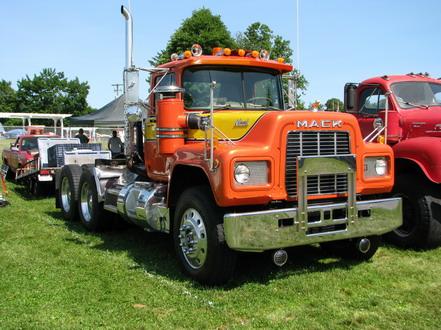
-
U model graveyard
Vladislav replied to Hans Remmers's topic in Antique and Classic Mack Trucks General Discussion
All i can do with that is put sad smile with the like button... -
front bumper spacers?
Vladislav replied to Tinman22's topic in Exterior, Cab, Accessories and Detailing
Yup, you got right about exactly how the bumper fits to the truck if no spicers used. No top tread plate is used with the bumper in this case too. -
front bumper spacers?
Vladislav replied to Tinman22's topic in Exterior, Cab, Accessories and Detailing
Bolts you fit the bumper are common style bolts not carriage bolts since you have good access to the nuts at the other end. I bought new SS bolts when installed chrome plated bumper and maximum OD the holes allowed me to fit there was 9/16. Sure 1/2 would also work but I preferred as thick hardware as I could put. -
front bumper spacers?
Vladislav replied to Tinman22's topic in Exterior, Cab, Accessories and Detailing
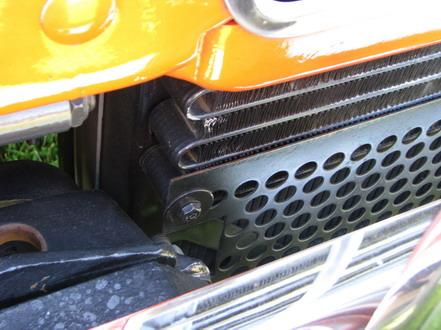
Those spicers were an option. Otherwise bumper seats right against the spring brackets. And it doesn't interfere with a stock condencer. But when I started looking for reference pic for you I found out interesting fact I have never payed attention to before. As you can see on the pic below the spring bracket already has 3 bosses which actually play a role of spicers for the bumper. I was going to use a photo of different R-model which both had a condencer and a bumper in place (and I had a good pics of). But when I looked at it I discovered it used those spicers exactly as Keith showed on his trucks. And when the spicers were used the spring brackets didn't have the bosses. Both at Keith trucks and on the one I had a pic of. At the same time 2 of my R's and one more front end of a truck I bought for parts in the past had bosses and no spicers.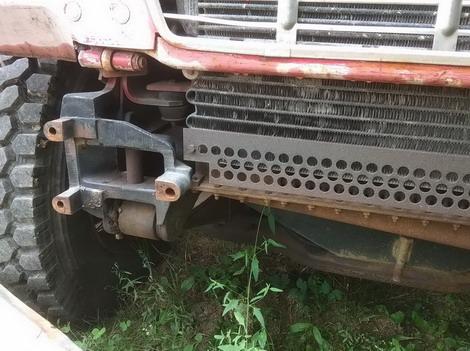
-
U model graveyard
Vladislav replied to Hans Remmers's topic in Antique and Classic Mack Trucks General Discussion
To my stupid understanding if De Jure you're right democracy should steer the things the right way. Seems like our world is far from perfection at any place. -
U model graveyard
Vladislav replied to Hans Remmers's topic in Antique and Classic Mack Trucks General Discussion
Which country are you talking about?? -
U model graveyard
Vladislav replied to Hans Remmers's topic in Antique and Classic Mack Trucks General Discussion
Thanks, Bob. You answered that exact matter I was thinking about. For some reason I supposed U-models went off production earlier, in the late 70's or so and were never fitted with 4V engines. So that grille looked too modern on that truck on my mind. With what you said all the ducks are in order. Hmm... interesting. Turns out U-models should have two different hood lengthes. A short version for pre-CMCAC and 2 inch longer for the later ones. Same as for R's. -
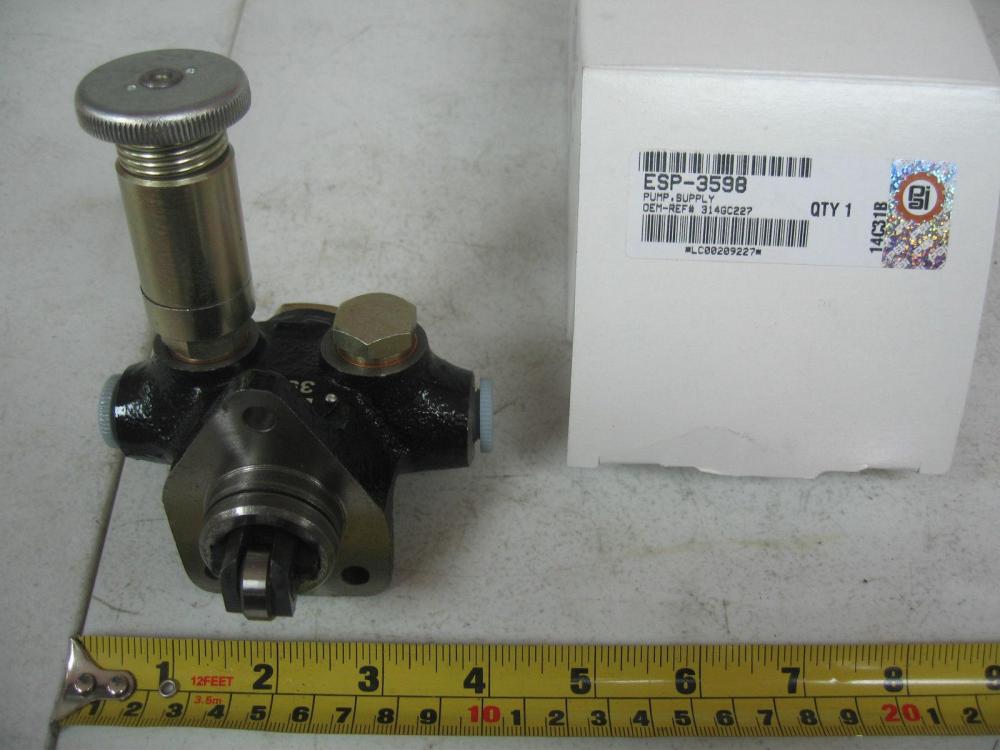
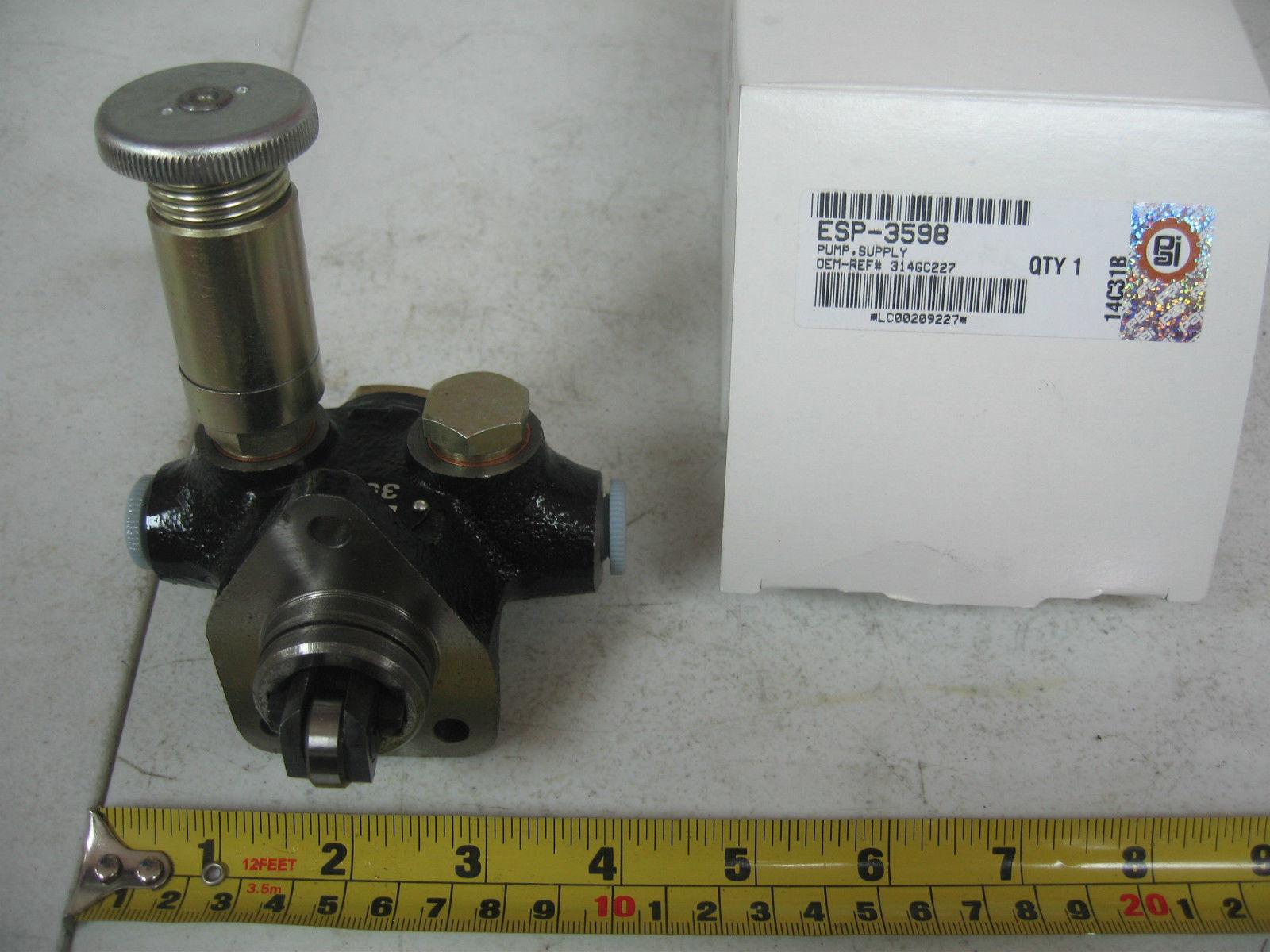
To me it looks like you can install a primer pump just in place of the 2nd plug. Or better to say that spot supposed to suit the primer but Mack "simplified" the things for a operator at a certain time to not bother his mind with such a unnecessory item as a primer. And plugged the 2nd hole.
-
U model graveyard
Vladislav replied to Hans Remmers's topic in Antique and Classic Mack Trucks General Discussion
The front standing U-model in the #5 picture has a decorative grill of a kind R's had installed on a CMCAC and it looks untypical to a U. Were there any U688 or U690 with chassis mounted aftercoolers produced or that grill appered there just by ocassion? Yes, Vinny is always on my mind when a U-model shows up by any chance. -
As said above PAI offers supply pumps for that engine. Units put onto Ambac and Bosch injection pumps differ. But even that seems being possle to climb up with some re-machining or use of adapting parts.
-
Yup. All the setup is in the front housing of the FR axle diff. Take away the prop shaft, drive yoke, front cover and you'll able to pull a cage out and see them wedges. Sure better to look at a cut or blow out view in a book and read a bit. The CRD92/93 maintenance manual may be found on the net. Vlad
-
No, I don't know. Probably not. Guess the numbers reflect the pump capacity but also not sure.
-
B95 is a fire truck model.
-
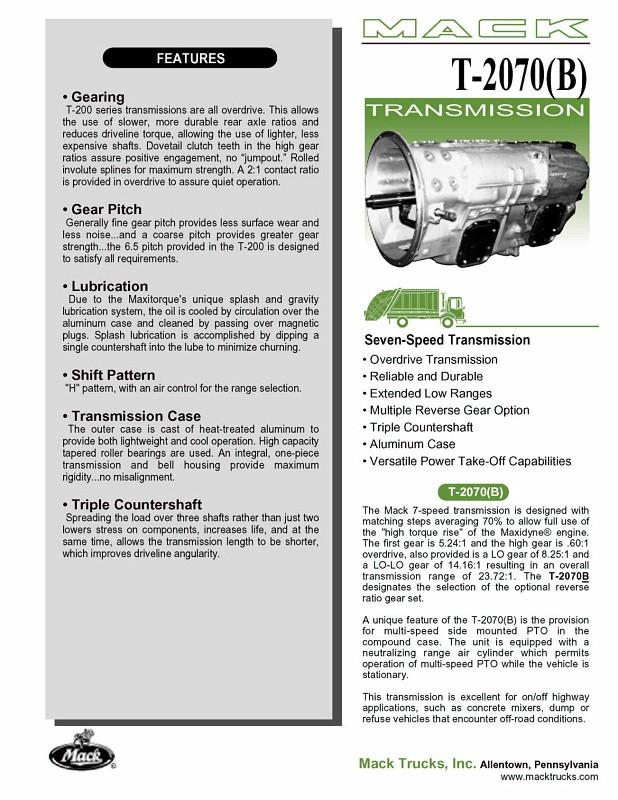
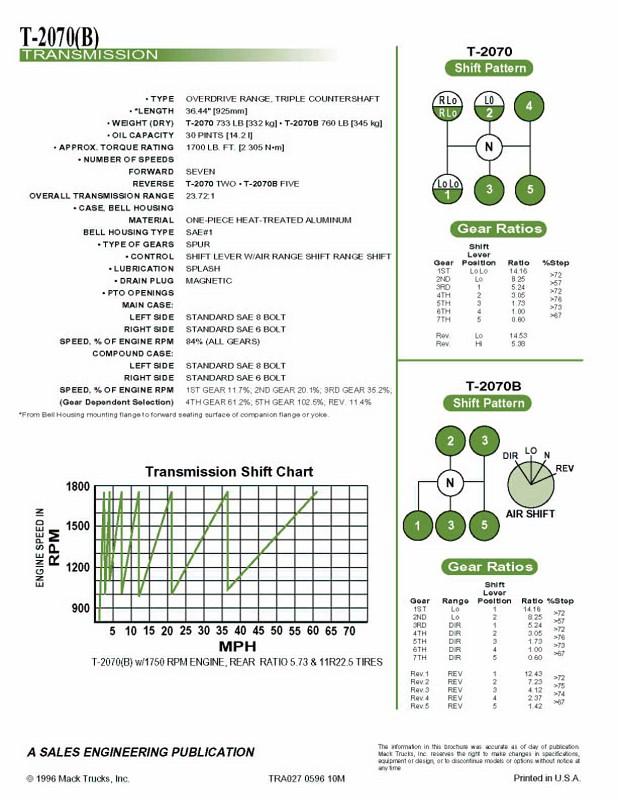
I have a manual which is entitled as T2070A. Common reverse style but long rear compound. In fact it's half empty compartment if you look through the top cover opening. There's space for the reverse setup but it doesn't take place. Probably the reason is possibility to install PTO. Short compound housing doesn't have the mounting as I mentioned above.
-
new old macks
Vladislav replied to Mean Green's topic in Antique and Classic Mack Trucks General Discussion
Looks like a well cared truck from the distance. How could you track the suspension?? -
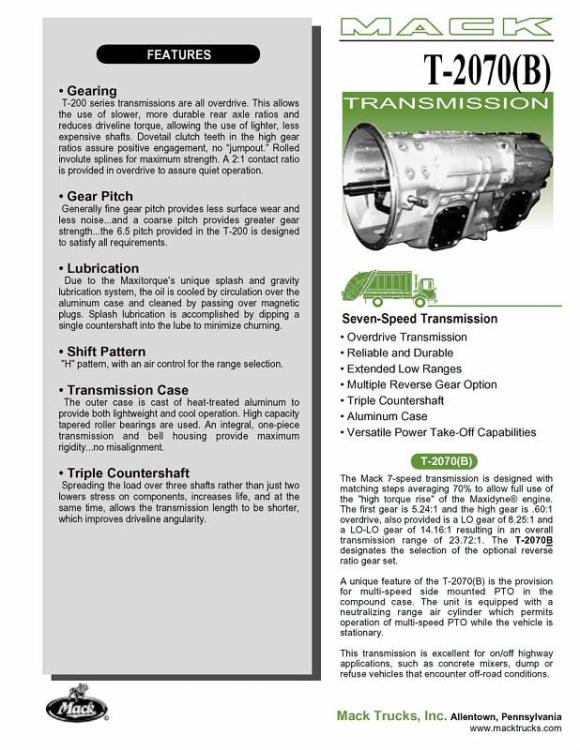
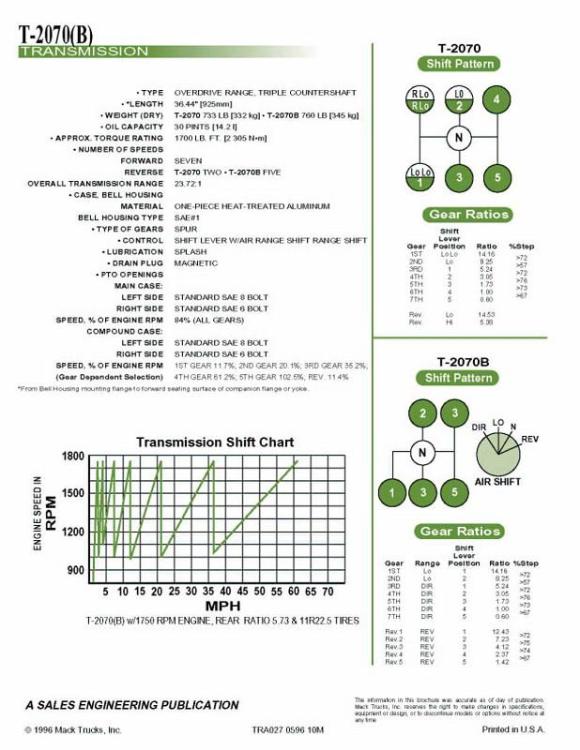
You are probably right. I have only a few Mack tranny manuals but one about T2070 represents long compound only. Also there's a brochure (below) posted on here in the past which also describes T2070 in the long housing only (note the length in the list). And two actual 7-speed trannies I could adopt locally both have long 2nd housing. On the other hand I see no reason a 7-speed can not be done in the short version.

BMT Forum Logo