



kscarbel2
-
Posts
19,132 -
Joined
-
Days Won
115
Content Type
Profiles
Forums
Gallery
Events
Blogs
BMT Wiki
Collections
Store
Everything posted by kscarbel2
-
Hytran in 2 stick
kscarbel2 replied to Ditchdiggerjcf's topic in Antique and Classic Mack Trucks General Discussion
I'm not chastising. Rather, I simply asked him to refrain from using profanity. The individual repeatedly used the word sh*t in posts, and finally dumb*ass. I politely suggested that he might not use such language here, because we don't want Barry and Watt's Mack to face problems with content issues. The other individual did not use profanity. A bit of dry humor is tolerable. -
Hytran in 2 stick
kscarbel2 replied to Ditchdiggerjcf's topic in Antique and Classic Mack Trucks General Discussion
Sir, could you please refrain from vulgar language? I for one would appreciate it. Though we're full of varied opinions about any topic, at the end of the day, we are a family here. As adults, we agree to disagree without calling each other names. -
I agree with you 100%, any mask is better than nothing. If everyone out in public wore a mask right from the beginning, we wouldn't have this embarrassing catastrophe now. Finally facing reality with maxed out hospitals, Texas Governor Abbott has reversed his stance and is now requiring all citizens wear masks. But it's too late. .
-
Peterbilt to launch Model 567 Heritage edition in September
kscarbel2 replied to kscarbel2's topic in Trucking News
-
Peterbilt Motors Co. Press Release / June 23, 2020
-
Peterbilt Motors Co. Press Release / May 28, 2020
-
Peterbilt Unveils Electric Medium-Duty Truck at CES
kscarbel2 replied to kscarbel2's topic in Trucking News
-
Peterbilt Motors Co. Press Release / June 9, 2020 .
-
Detroit Press Release / May 26, 2020 Features of the Detroit DD15 Gen 5 engine are highlighted, including the latest innovation of the most popular Class 8 engine in North America. The DD15 has been significantly redesigned to offer new ratings, a new aftertreatment system and cutting-edge technology that offers a fuel efficiency increase of up to three percent. .
-
-
Today's Trucking / July 3, 2020 Class 8 truck orders spiked to 16,000 units in June, reflecting a rapid freight rate improvement, according to preliminary data. Orders surged 139% from May, and were up 23% from a “very easy” year-ago comparison. Classes 5-7 orders also rose 77% from May, but were off 20% year-over-year. “Preliminary data show that June orders for medium and heavy-duty vehicles jumped to a four-month high, rising above the combined April and May order tally,” said an analyst. “On the back of a rapid improvement in freight rates over the course of May and June, North American Class 8 net orders spiked in June and were up against an easy year-ago comparison, when orders were under pressure from still large backlogs and rising equipment overcapacity. June is typically a slower order month, so seasonal adjustment augments the rebound.” Regarding the medium-duty market, he added, “Preliminary data here also show a four-month high and seasonal adjustment provides a lift to June’s Classes 5-7 orders.”
-
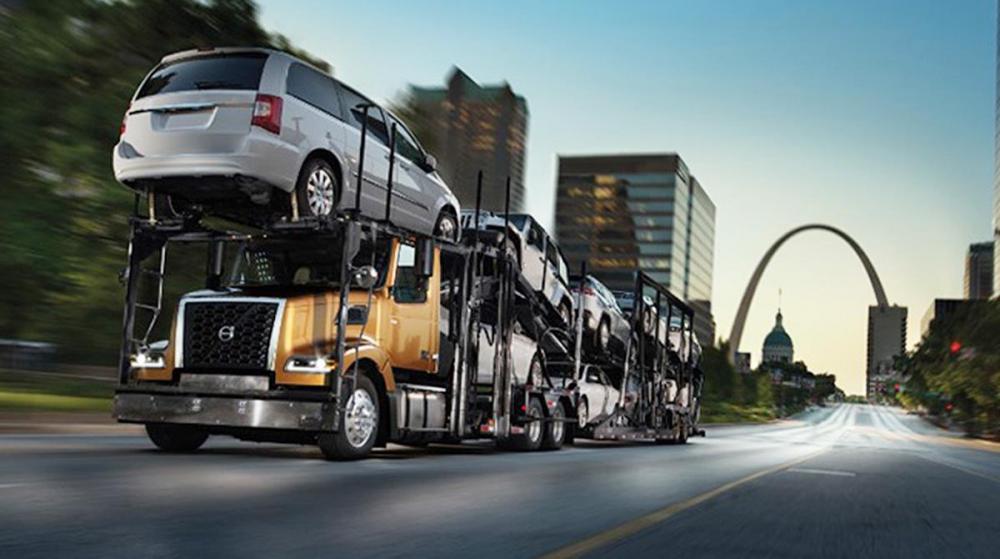
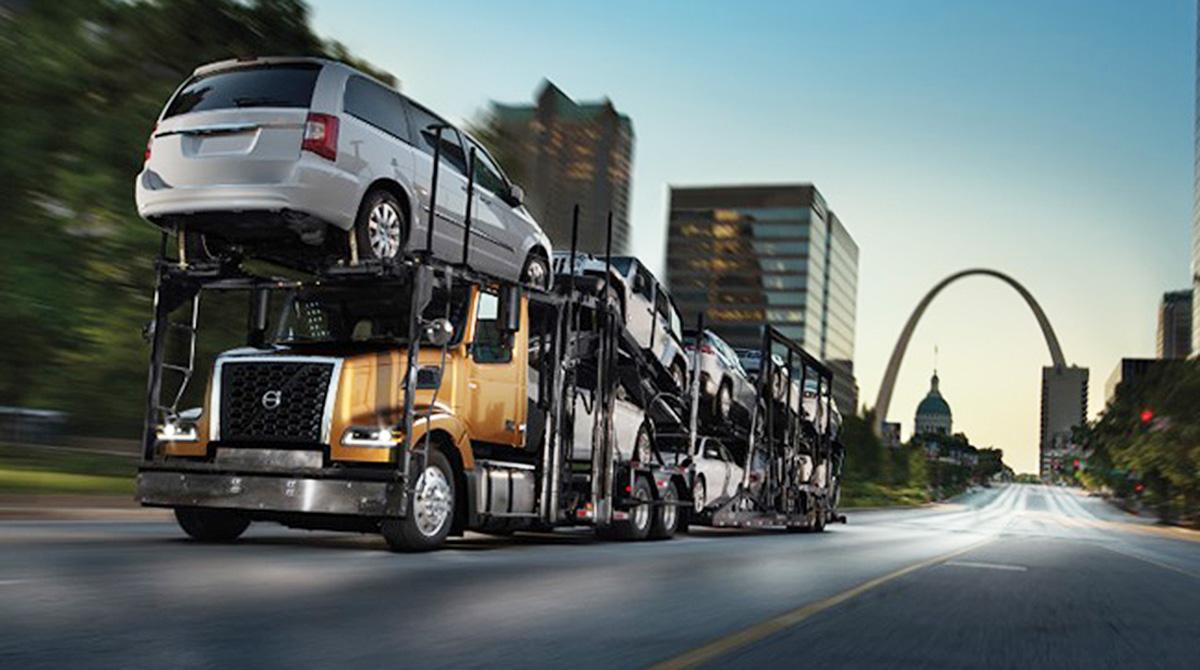
Commercial Carrier Journal (CCJ) / June 26, 2020 Volvo Trucks this week unveiled its new Volvo Auto Hauler (VAH) model, which completes the design overhaul of the entire Volvo Trucks North America portfolio. The updated VAH models are now available to order. The redesigned VAH features deep-drop front axles, low-height Volvo Air Ride rear suspension and industry-exclusive reduced-height cab options to create a lower overall roof height for larger passenger vehicles. “Volvo Trucks is proud to roll out the most advanced auto hauler model in the trucking industry,” said Andy Hanson, product marketing manager, VTNA. “Behind the new, updated look are significant engineering innovations utilized in the other models in our impressive product portfolio. We’re excited to introduce this new VAH model, designed with Volvo Trucks’ core focus on safety, productivity and comfort for drivers.” The models feature an updated Volvo Active Driver Assist collision-avoidance system, which features radar and automatic braking technology. The new VAH will come in three variations offered through Fontaine Modification: The VAH 300 day dab offers 11-vehicle capacity and a tight turning radius with a 113.6-inch BBC, available with 94.5- or 97.5-inch roof height. The VAH 400 sleeper includes a 42-inch interior cab height. Along with maximum payload capacity, agility and driver amenities, the 400 offers a 145.6-inch BBC and can be ordered with a 97.5- or 102.5-inch roof height. The VAH 600 sleeper offers a cab height of 61 inches and features a 36-inch wide mattress, ample storage space and refrigerator capacity. It has a 164.1-inch BBC and is available with a 97.5- or 102.5-inch roof height. .
-
Trailer-Body Builders / June 26, 2020 Volvo Trucks North America (VTNA) is collaborating with Galfab [formerly Galbreath] to have roll-off bodies available for installation at the Fontaine facility near Volvo Trucks’ Dublin Va factory. The local process will enable a more efficient body installation and delivery of Volvo truck models with 60,000- or 75,000-pound Galfab roll-off hoist bodies to customers and dealers, Volvo said. The bodies are delivered from Galfab’s headquarters in Winamac IN to Fontaine Modification located adjacent to the Volvo Trucks assembly plant in the New River Valley of Virginia. The most common model for this specification is the Volvo VHD. However, it’s also offered on other Volvo Trucks models that meet the minimum chassis requirements for the application. Specific option codes containing all chassis preparation requirements make the ordering process easy. Volvo Trucks performs all frame drilling, corrosion resistance coating and paint applications on the chassis at its assembly plant prior to the body installation process at Fontaine. Previously, a finished Volvo truck chassis was transported to Galfab’s Indiana facility, where the roll-off body was installed before being delivered to the customer or dealer, the company said. The new process reduces logistics fees and delivery times for fully finished, quality commercial vehicles that arrive straight to the customer or dealer. “This new practice gives customers and dealers the option to order a Volvo truck with a Galfab roll-off body, which removes complexity from the body installation and delivery process,” said Andy Hanson, product marketing manager at VTNA. “Not only does this save a significant amount of time and money for our customers and dealers, but Fontaine assures a high-quality installation and integration with our chassis.” Roll-off applications typically are used for transporting large containers such as trash receptacles with a hoist. Galfab produces bodies that utilize Volvo Trucks’ rear engine power take-off (REPTO) mounted with an F1 piston pump, as well as Volvo’s transmission-mounted PTOs. The hydraulic tank is mounted to the frame rail to ensure optimum oil supply to the pump. Galfab bodies also enable coded troubleshooting through Volvo Trucks’ Body Builder Module (BBM) in the dashboard, which simplifies the installation and testing of electronics and data components. “We are proud to partner with Volvo Trucks North America as the body vendor for this initiative with Fontaine,” said Mike Miller, vice president of sales at Galfab. “As a premium OEM dedicated to the highest standards of quality, Volvo Trucks shares our commitment to industry-leading products and customer service.” Volvo Trucks already has long-standing partnership with Fontaine, which completed an exhaustive training process to become a certified Galfab installer. “Fontaine is excited to expand our long-term relationship as a body installer with Volvo Trucks North America,” said Jason Clark, director of Volvo operations at Fontaine Modification. “We look forward to working with Galfab to bring a new level of efficiency to the delivery of roll-off hoist bodies for Volvo Trucks customers.”
-
Ford: Q2 volume off 33% with gains for just 2 nameplates Michael Martinez, Automotive News / July 2, 2020 DETROIT — Ford's second-quarter U.S. light-vehicle sales fell 33 percent, slightly less than most of the industry, as it was battered by the coronavirus pandemic and a massive drop in fleet orders. Sales to daily rental companies plummeted 94 percent during the quarter as demand for such services dried up, with a majority of people under stay-at-home orders. Additionally, Ford has been directing whatever inventory is available after a two-month plant shutdown away from rental and into retail channels. Commercial sales fell 78 percent but increased sequentially through the quarter. Ford officials said the automaker has seen very few canceled commercial vehicle orders and expects to begin filling them as the year continues. Ford said retail sales in the quarter fell 14 percent, although its retail share grew an estimated full percentage point to 13.3 percent. "Retail for the industry was a lot better than people would have thought back in March," said Mark LaNeve, Ford vice president, U.S. marketing, sales and service. Sales of F-Series pickups, the automaker's most popular vehicle line, dropped 23 percent in the quarter, although Ford said it grew an estimated 2.6 percentage points in retail share. Ford last week unveiled a redesigned F-150 pickup that's expected to go on sale this year. Ford is planning to stagger the launch at its Dearborn. Michigan, and Kansas City, Missouri, assembly plants so it can continue building the outgoing pickup at one as the other factory changes over to the new model. Overall, Ford Motor sedan sales dropped 60 percent, SUV deliveries fell 30 percent, and pickup/van volume fell 27 percent during the latest period. All but two nameplates — the Ranger mid-size pickup and Explorer SUV — posted sales declines. LaNeve said he's hopeful that Ford and the rest of the industry will continue to recover in the third quarter, although the automaker is monitoring states where coronavirus cases continue to rise. LaNeve said he just returned from a tour of 10 dealerships and was impressed with the social distancing measures they have implemented. "There's no way for me to predict it," he said. "We've had almost no reports of outbreaks within our dealerships. If the governors close those states down, there's nothing we can do about it. But we're looking for the business to continue moderately improving, and we're hoping for the best in terms of containing the virus." Brands: Ford, down 34%; Lincoln, down 18% Notable nameplates: Ford F-Series, down 23%; Mustang, down 27%; Escape, down 49%; Expedition, down 42%; Transit, down 57%; Explorer, up 12%; Ranger, up 20%; Fusion, down 55%; Lincoln Navigator, down 37%; Nautilus/MKX, down 39%; Corsair/MKC, down 8.3% Incentives: Ford, $4,127 per vehicle, down 3% from a year earlier; Lincoln, $6,937 per vehicle, up 7%, ALG says. Average transaction price: Ford, $42,613, up 12% from a year earlier; Lincoln, $56,641, up 7.1%, according to ALG. Inventory: Ford ended the quarter with a 75-day supply of vehicles, according to officials. Quote: "Our performance in Q2 was really driven by Ford and our dealers' deep commitment to customers and quick action taken to support our customers during these unprecedented times. Our support programs continue with our recent introduction of 'Ford Promise' to provide extra security during these difficult times. It's another way Ford is standing with hard-working Americans," LaNeve said.
-
U.S. Treasury to Loan $700 Million to Trucking Firm YRC
kscarbel2 replied to kscarbel2's topic in Trucking News
Good catch! Everyone should read this (even though it's CNN). -
-
Lincoln kills Continental, a $1 billion investment Michael Martinez, Automotive News / July 1, 2020 DETROIT — Lincoln Motor Co. confirmed Wednesday it will end production of the Continental at the end of 2020 as the luxury brand abandons sedans. U.S. sales of the Continental, reintroduced in 2016, slowed in recent years as customers shifted to the brand's growing crossover lineup. Lincoln announced this year that it would end production of its other sedan, the MKZ, at the end of the year. "Lincoln is investing in growth segments and the brand will feature a full portfolio of SUVs, including a fully electric vehicle in the future," the brand said in a statement. "Lincoln will continue to keep its newest SUVs fresh and we will have more news to share later this year; however, as the full-size premium sedan segment continues to decline in the U.S., we plan to end production of the Lincoln Continental at the end of this year." Lincoln informed workers Wednesday at the Flat Rock Assembly Plant that Continental production would end. “We build to customer demand and customer demands are changing,” John Savona, Ford vice president, North American Manufacturing, said in a letter. “Lincoln is important to Ford Motor Company and we know it has a bright future.” Lincoln brought back the Continental in 2016 as the flagship vehicle for a rebounding brand. It was one of the first models to feature Lincoln’s new mesh grille and was the first product to include 30-way massaging seats, which have become popular options on more recent models. Sales hit 12,012 in 2017 but fell steadily from there. Officials attempted to juice sales with a hyper-limited run of coach-door models in 2019. A spokeswoman said the brand would offer a 2021 Continental in China. Origins The Continental is among Ford's most revered nameplates. It joined Lincoln's lineup in 1939, when it was developed as a one-off vehicle for then-Ford President Edsel Ford, who had fallen in love with the long hoods, short trunks and rear-mounted spare tires of European sports cars on a recent trip overseas. In 1951, the Museum of Modern Art called it one of the eight most important cars before World War II. Architect Frank Lloyd Wright considered the original Continental "the most beautiful car in the world." It gained cachet through the 1950s and '60s as it was used in movies and boasted celebrity drivers such as Clark Gable, Rita Hayworth and Mickey Rooney. It also served as the limousine of U.S. presidents, notably carrying John F. Kennedy the day he was assassinated. In total, nine generations of Continentals were produced before the nameplate was shelved in 2002. Resurrection Designers were thrilled when Ford officials informed them they’d resurrect the vehicle for the 2017 model year [at a cost over $1 billion]. Originally, they were told only that they were supposed to create a “large Lincoln.” When no standout designs emerged, the automaker’s leadership team told them they’d be crafting the next Continental. “You could almost see an immediate change in the room,” then-Lincoln President Kumar Galhotra told Automotive News. “Right there was a very important lesson in the emotion behind the name.” While the 10th generation vehicle failed to gain traction in a utility-heavy market, Lincoln's dealer council as recently as February was lobbying the brand to remain in the sedan segment. "You only have to look at Tesla," Tom Lynch, chairman of the Lincoln National Dealer Council, told Automotive News. "If you have a strong product, people are going to want it, and they're going to want to buy it. What that looks like for Lincoln going forward, I'm not sure of."
-
I'm very sorry to hear that. Discouraging. Please do contact the museum.
-
Ford to take $100 refundable deposits for Bronco Michael Martinez, Automotive News / June 30, 2020 DETROIT — Ford Motor Co. will begin accepting $100 refundable deposits for the 2021 Bronco immediately after revealing the SUV on July 13. The deposit essentially puts customers in line for the vehicle, allowing them to configure it and choose a dealership. Ford will convert those deposits into completed orders at a later date, when the customer confirms final pricing and specs. The process is similar to what Ford offered with the Mustang Mach-E, although customers had to shell out $500 to earn a spot in line for the electric crossover, which hits showrooms later this year. The deposit trend was popularized by Tesla, which last year began accepting $100 refundable deposits for its Cybertruck. Tesla CEO Elon Musk has said the company received more than 250,000 deposits. The news of the refundable deposit first appeared on Bronco fan forums yesterday, and a Ford spokesman confirmed the plan to Automotive News. Ford will unveil the Bronco, along with the smaller Bronco Sport crossover, on July 13. The reveal has been postponed twice since the original spring timing. The Bronco is expected to go on sale early next year. Ford recently revamped its accessories business and hopes to offer hundreds of add-ons at launch. .

-
You should try contacting the parts department at your Mack brand dealer first to check availability. At least, you should be able to get parts numbers. If they say through Volvo they're no longer available (NLA), ask them to please cross the Mack part numbers (if that's what they have) to the vendor part numbers. For example, Mack dealers used to have a comprehensive Mack-to-Vendor cross-reference book. Or, I assume dealers can still call the Mack (Volvo) specifications department and obtain the vendor numbers.
-
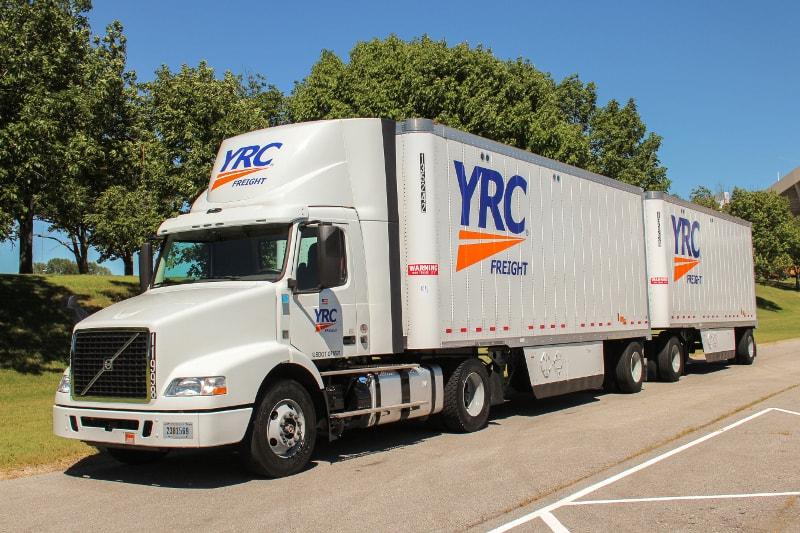
The Wall Street Journal / July 1, 2020 WASHINGTON—The U.S. government plans to lend $700 million in coronavirus stimulus funds to trucking firm YRC Worldwide Inc., in exchange for a 29.6% equity stake in the company, the Treasury Department said Wednesday. The Treasury said publicly traded YRC qualified for the loan under a provision of the $2.2 trillion law Congress enacted in late March that authorized $17 billion for companies deemed essential to national security. .
-
. . . . . . . . .
-
.
-
Deutz builds superb engines.



BMT Forum Logo