



Geoff Weeks
-
Posts
2,450 -
Joined
-
Last visited
-
Days Won
7
Content Type
Profiles
Forums
Gallery
Events
Blogs
BMT Wiki
Collections
Store
Everything posted by Geoff Weeks
-
President Trump assassination attempt at PA rally tonight.
Geoff Weeks replied to tjc transport's topic in Odds and Ends
Butler County DA confirms one bystander dead, and possible 2nd. All according to ABC news. Possible assassination attempt at Trump rally; shooter dead, DA says (msn.com) -
President Trump assassination attempt at PA rally tonight.
Geoff Weeks replied to tjc transport's topic in Odds and Ends
All over the news, but haven't seen any reports of any deaths? Any link to the reports of injuries? -
R Model Farm Truck
Geoff Weeks replied to seyser's topic in Antique and Classic Mack Trucks General Discussion
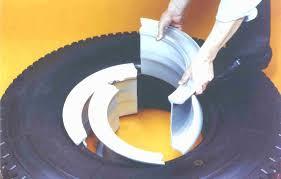
I would caution that straps and/or chains are not a substitute for a cage, neither are designed to absorb a blast, straps will be cut like hot butter and chains can become shrapnel. The are plenty of videos on the net of a tire coming apart in a tire cage, it is a single use item, they are there to absorb the energy release. BTW tube type and tubeless contain about the same stored energy. so MRSMACK doesn't have to find a picture and to set other hair on fire: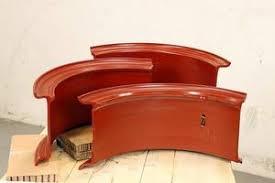
-
Finally some DM progress
Geoff Weeks replied to mowerman's topic in Antique and Classic Mack Trucks General Discussion
The site history is gone, but the site is alive and well here: Home - Forums (justoldtrucks.com) All the older stuff has been lost, which is unfortunate. A lot of info was lost. -
R Model Farm Truck
Geoff Weeks replied to seyser's topic in Antique and Classic Mack Trucks General Discussion
My point was while there is nothing wrong with tubeless, and the availability of tires in stock for them far exceeds tube type, there is no NEED to change. If I had tires that were serviceable I would use them, rather than throwing them out and spending money on tires AND rims. -
R Model Farm Truck
Geoff Weeks replied to seyser's topic in Antique and Classic Mack Trucks General Discussion
Lock ring wheels/rims are NOT dangerous, if you know how to work with them. Not having them on the front, but having them elsewhere doesn't make much sense. The amount of energy stored in a truck tire, be it tubeless or tube type is considerable and needs to be treated with respect. I have thousand and thousands of miles on lockring wheels and never had a "dangerous moment'. I have had blow outs on the steer at 70 MPH with both tubeless and tube type, of the two, type type was easier to handle, the truck didn't want to pull or wander like the tire flip/flopped in gutter of a tubeless did. Of the countless lock ring wheels I have serviced over my years, I NEVER EVER had on blow apart. It isn't luck, it is knowing how to work with them. Fine, if you want to spend money on new rims and tires, but if your tires are sound you don't "HAVE TO". The Firestone RH-5 deg wheel was a bad design, and the only one I will not have, they have made people think that all multi piece rims are like handling a live grenade, which simply isn't the case. When properly handled and assembled, the bead of the tire expands over the lock-ring and forces it into the lock groove, once that happens you could cut the lock ring into sections and it still wouldn't come apart. Far too many assemble, clip on an air chuck and walk/run a way, and if it doesn't explode assume they did it correctly. -
R Model Farm Truck
Geoff Weeks replied to seyser's topic in Antique and Classic Mack Trucks General Discussion
If it is only going to stay local, and not many miles a year than I would stay with what it has. Nothing wrong with tube types, other than finding them in stock while traveling OTR. For farm use and local use they are every bit is good as tubeless and tend to loose air more slowly while sitting between use. -
At what engine speed? You will not get any charging at idle (or very very little) so measuring the voltage at idle is meaningless.
-
2V maxidyne, issue pulling heads off
Geoff Weeks replied to Lmackattack's topic in Engine and Transmission
Just to add a bit of clarity, it take TWO revolutions of the crank to adjust all the valves, when it point to 1-6 that means you adjust EITHER 1 or 6 not both (depending on which is on TDC compression) then you go to the next mark in line do the same there, when you come back to 1-6 you adjust the cylinder that was TDC exhaust the first time around, and continue on until all have been adjusted. Unless it is different then I remember. -
There can be a few reasons, wire shorting to chassie, but the most likely reason is the low air pressure switch. Where that switch is located will take someone with more knowledge of the "B" line than I. Often they are around the brake valve, but can be other places as well.
-
From what I remember, Small Cams had more of a problem with cam/cam followers than the Big cams. Can happen to any engine though. I had 1.5M on one of mine, rebuilt and is still out there as far as I know, was running fine when I sold it.
-
May be I overstated the difference between them. I had 1's and 3's as well as 4's and NT88's. All were good, and I wouldn't run away from any of them.
-
If it is still stock, that is a very workable truck as it was built. Depending on when Mack purchased the engine, it could be a Big Cam 1, 2 or maybe 3. All are good each higher number has some engineering changes to address some possible issues that came up, many of the refinements are backward compatible and can be added at overhaul. As an O/O I would want a 13 spd, but have owned trucks with that exact trans (and still have one in the barn). the early big cams were prone to the upper press fit of the liner wearing and leaking coolant at the head gasket because of it. It is repairable when that happens, but the best thing is to bore the block for lower press fit liners and install Big Cam 4 liners. Early oil system is not as good as 3 and later engines. Early blocks had shorter head bolts than the later, but I have never found a problem with the short bolts. Early had "log" type exhaust manifolds and single entry turbos, later had "pulse" manifolds and duel entry turbos.
-
Before I spent $200 on that one ($100 +$100 shipping) I'd look at either a "front air Kysor" (which was designed as a replacement for a fixed fan) which can use the original fan drive, or replacing the drive with a whole air clutch. Problem with those viscus drives is: they wear out and hard to tell what you are buying, and very hard to find a new replacement when they do fail. Depends on your plans are for the truck. An Air clutch will cost slightly more, but are rebuildable. I had both Bendix and Horton and both were good. Bendix has some advantages but parts are harder to find.
-
If you have voltage at the generator with the engine running, (shouldn't be any when the engine isn't running) then the generator doesn't likely need to be rebuilt. I see the cover is off your regulator, has someone tried to adjust it? They are adjustable but it isn't easy to, it involves setting the current as well as the voltage, each takes a separate procedure. wouldn't be a bad idea to put some oil in the oil cups on the generator and starter. Generators will not produce much if at all at idle, so you need to run the engine 1500-1800 when checking the voltage, same for current. Regulator needs to be grounded, as it is mounted in rubber grommets, it does look like there is a ground wire on it, where it goes isn't clear. Generators are very well made, and if not abused, will still work fine after 80 year or more. I have two that old that still work fine. If the generator works when the engine speed is raised, then no problem taking to the parade, if it doesn't and you have a buddy with some jumper cables that can give you a charge if needed, that would work also.
-
Turns out I was way wrong about 50 volts! When I was looking for a short-sweet link on the subject, and found the Wiki page, I also came across a SAE "white paper" on the subject for automotive load dump, they recorded an short duration voltage spike of over 200 volts (202 to be exact) and calculated momentary current of close to 50 amps. That is like a momentary connection to 200 volt mains! Older vehicles with generators, esp cars or farm tractors with generators in the 30 amp range, yeah, you can get away with in most cases, no electronics to be damaged, the spike will be low if the engine is at idle. Add a Pertroix to replace points, and you are rolling the dice. Anything with an alternator, and you are asking for big trouble, at an ECU (computer) and you could be looking at damage that exceeds the vehicles worth. You can look it up yourself, do a search for "load dump" and read some of the papers on the subject. It is just bad practices and asking for trouble. P.S. a quick and dirty test you can do on the side of the road, is hold a piece of steel (Key ring, but not keys, as they are mostly brass) near the rear bearing on an alternator or near a pole shoe screw on the side of a generator, and if it is drawn to it, you know the field is active and the regulator and generator are likely working.
-
when you pull the jumpers off a dead battery, you still have the battery to help clamp the voltage. It acts as a big capacitor and quells the spike. Carry on doing it, if you like, I have seen the results. BTW battery cut-off and dual battery switches (the good ones anyway) have a kill circuit to cut the field to the alternator before it breaks the circuit to the battery. If it is such a myth, why did Cole Hearsee and the rest go through the trouble? It is especially bad with alternator charging system, because they can produce more at lower RPM. Some heavy alternators can be had with "load dump" regulators designed to clamp the voltage quick enough to prevent damage, but most do not have this feature. Less of a problem with generators as they produce less at low rpm, however the vibrating point type regulators used with them are slower to react and have a lower ability to clamp the voltage and prevent spikes. Load dump - Wikipedia Not an urban myth!
-
Ahh, not so much, no way to fuse something like a starter motor. It is very close to a dead short with the rotor not turning. The battery would have to be capable of supplying far more current than a starter motor could draw with a locked rotor. Any resistance in the braided cable goes to reducing the power from the battery to the starter, not a good thing. It is braided to make it as flexible as possible. In rush current can exceed 1000 amps on a medium starter and over 2000 on a big one. Starters are a short term load, so if they heat the cable a little, it can survive, no way those cables are going to survive a continuous load of 300 or more amps, so how do you fuse something that can take 8x-10x the current? You don't! Running battery cable to the engine just means running more copper, after all the "hot" side is already run direct to the starter solenoid, so if it can handle the engine moving around the ground side can also.
-
It can send a large voltage spike into the electrical system. Anything with an alternator and/or electronics can be damaged. It is a bad practice, and someday you'll pay the price of doing it. I've seen it blow headlight bulbs, when someone did it with them on, a 12 volt headlight will take 24 volt for a few seconds, this spike must have been over 50 volts.
-
Starter with external (two stud) grounding
.thumb.jpg.6f248535f635037c9007e174cf00b7c3.jpg)
-
No, if the starter only has one copper bolt coming out of the motor, then the starter motor is internally grounded to the case. For those, run your ground cable from the battery to one of the mounting bolts of the starter motor to the bell housing. If that is too difficult you can run to the transmission case. Many more modern starters have a 2nd copper bolt (stud) sticking out the back of the starter that needs a ground connected. (IE Delco MT 40's etc)
-
It why my 6 volt truck will start when sitting in below 0 weather. heavy cable to the starter case and the hot feed.
-
Never a good idea to disconnect a battery on a running engine. Yeah, I know you've done for years, and "not had a problem" but one day you will. Generators don't put out much at idle so your voltage reading doesn't mean much. "Doesn't start without a jump" doesn't say much, does it crank but not fire, does in not crank? I see the battery ground side goes to the frame, this is a common problem and a cheap way out that many mfg used. Run the ground to the highest amp draw item on the truck (starter motor) and ground the frame from there. If the starter is grounded through the case than run the ground to the mounting bolt. If the starter has a ground stud, run the ground there. It cost a bit more in wire, but eliminates many problems. Often there is a braided strap that grounds the engine to the frame, and it degrades over time and doesn't allow the current through. Frame and body need to be bonded to the engine with ground straps.
-
I think you'll find that they adapted their work as much as possible around the weather. Farmers did more strenuous work in the cooler parts of the day. Factory work must have been brutal, however. Where I am in Western Iowa, I get good breezes which make even 90's livable if not comfortable. The hard part is when it stays in the 80's at night with dew points in the upper 70's and the wind dies. That is why I have window A/C's. I have notices an increase in summer temps and dew points since I have lived here, even while the rain totals have dropped considerably. We have something called "corn sweat" which the moisture lost from the ag plants leaves that drive up the dew point when compared to the nearby cities, their actual temperature is a few degrees hotter but our dew points make us at least as uncomfortable.
-
Wedges use less air for the same stopping power. And were self adjusting (when everything was working) long before automatic slack adjusters came out. Also can fit where some S cam can't and are similar to the air over hyd used on some real heavy axles. I have a set of relined 15" you could have had for the cost of shipping. Main thing is lube up everything real well and make sure the protective boots are on the wedges to keep them from seizing in the bores.


.jpg.baadb666f46fa74ddb4ba90317abe495.jpg)

BMT Forum Logo