



Geoff Weeks
-
Posts
2,450 -
Joined
-
Last visited
-
Days Won
7
Content Type
Profiles
Forums
Gallery
Events
Blogs
BMT Wiki
Collections
Store
Everything posted by Geoff Weeks
-
Power steering pump rebuild
Geoff Weeks replied to yarnall's topic in Antique and Classic Mack Trucks General Discussion
Metal filled, machinable epoxies work better than silicone under the sleeve. -
Ok, how to you tilt the cab with that RV body on it? What do you do if it breaks down on the road, and you can't access anything because you can't tilt the cab? Yeah, the bed tilts but I would bet only if the engine runs the hyd!
-
Any updates?
-
Saw a lot of R models with sleepers in Canada back in the 90's and before. Now I can't remember the carriers names that used to run them.
-
Back at it
Geoff Weeks replied to Licensed to kill's topic in Antique and Classic Mack Trucks General Discussion
Oh, you will, when your back starts killing you, and all the stuff you thought you could still do but your body says you can't. Couldn't do it when I was working 'cause I didn't have the time, can't do it now because I don't have the body of a 30 year old anymore! Every project I finish, I as "this is the last big project I'm going to tackle" then just one more comes along and the cycle repeats. -
1st hook shop air to the truck, and listen for air leaks. There are so many places air can leak on a modern truck, it is almost a full time job finding and curing the leaks. How long does it take for the air to leak off once you shut down the truck? Next spray the line from the compressor to the air drier and all the way to the wet tank with soapy water, looking for bubbles/foam. Since you replaced the air compressor et all twice I doubt they are the problem, but: Last take the line from the air gov to the compressor off and briefly start the engine and see if air comes out either the port on the compressor or the line from the air gov. Be careful because nothing is going to shut the compressor off if the pressure rises, you just want to make sure, nothing is triggering the unloader.
-
I think he did a lot better than I 😁😆
-
It was also used by other low production makers.
-
The man had it least 3 may be 4 full lives, Air force career, Rhodes Scholar, Musician and actor. And Damn it he was great at all of them!
-
I saw the video a while back but don't think they are running the low voltages you are talking about the Cummins generator making. They are likely drawing 400 amps at 400 volt DC or could even be 800 VDC. That is a whole different ball game. A lot more power. The 5.9 has been used in yard goats, but even there speed is limited.
-
I'll agree with that statement with the cavoite, of longer distance trucking. Local and I mean very local drayage can be done. It is about matching the realistic capabilities to the task, if it is a good match, then electric has a whole lot of advantages, if it is not a good match then it has a whole lot of drawbacks. Both Jo-Jo and I have IHC K-7's that were, back in the 40's trucks that pulled semi trailers. Either air braked or hyd with an air pack. It was what they had so it got used. I'm glad I didn't have to use mine for my trucking career. Wrong tool for the job, but they did do it back in the day. CT electric move the same tonnage of paper rolls that a semi can today, from the rail head to the printer back in the teens and 20's. It was used because it was a good match to the task at hand. As much as I like the "Big Boy" and love to see it (or any steam train) pulling, I am also glad we aren't still moving all our rail freight on coal fired steam trains. School buses and other low miles, lots of stop and starts that return to a base, make sense if the miles and capacity are a good match. Obviously someone who has no idea about the power needed to recharge, unless you have a welder that can produce 480 three phase at over 400 amps! That would be some "portable welder"! Far easier and better to tow them while they regenerate braking to recharge the battery. Do a little reading on "flow batteries" and you might get an idea on what is coming. When the Military talks of electrifying that is what they are looking to do it with. Electric has a much lower heat signature on the battle field, which is why it is attractive. It combines the fast re fueling of a liquid with the low heat signature of an electric, the electrolyte holds the charge and can either be recharged in situ or exchanged much the same way diesel is pumped into a tank. Like anything, matching the tool to the task is key. No matter what Elon or others think, we are not to the point that todays electric can do long-haul trucking, but my head is not so far in the sand that I can't see a day when that is no longer true. I like my old trucks, and will fight anyone who tries to take them from me, I like old steam locomotives and love to see them work, but I also can embrace new technology when it is better suited to the job. Right now, electrics aren't there, but I think they will be. No transmission, no gear shifting, gobs of torque off the line all make the diesel electric locomotive so successful, and would be great in trucking as well.
-
I used to have tank venting problems in the real cold temps (below 0 f) , the vent would ice over on the non-draw side and prevent cross-over. cracking the cap would allow the tanks to equalize, it was surprising that it would hold almost the full amount of fuel in that one tank, while the other was almost empty. Be sure that what you are hearing is not just the fuel syphoning back to the tank when the seal is broken at the filter head, there is no "foot valve" on the fuel pick-up in most all cases. If in fact it is a venting problem that is easy to solve.
-
Endt 673 Starter removal
Geoff Weeks replied to skydawg's topic in Antique and Classic Mack Trucks General Discussion
Back in the day, the only battery with enough CCA's to crank a diesel were large 6 volts, with around 900-1000 cca's It takes around 1800 to crank cold on a 12 volt system and 1/2 that on a 24 volt. The main issue with 4 6 volts in series, is one weak or dead battery kills the crank. When high output (Gr 31) 12 volts came out, the need for large 6 volts went away. 2 groups of two 12 volts on a 24 volt crank, makes a very powerful system 2 group 31's is about the minimum to crank a truck engine, either in series for 24 or in parallel for 12. Most modern trucks have a minimum of 3 for a 12 volt and many opt for 4. For all out power and almost maintance-free, air start is hard to beat. The Maxwell come a close second, and has one advantage over the air start. If it doesn't start in 30 or more sec of cranking, it will recharge from the "house batteries" in about 10 mins as long as those batteries can provide around 18 amps without dipping below 10 volts. That isn't a hard ask of any single battery! The draw back of the Maxwell, and the only thing keeping it from beating air start, is all the power passes through the two 3/8" stud connections, If they become loose or dirty, the connection can arc and weld itself. Keeping them clean and tight especially with the heavy (000 ga) cable is something that needs to be checked every few months. Going with the 24 volt version would help alot, as the cables could be much thinner. -
Endt 673 Starter removal
Geoff Weeks replied to skydawg's topic in Antique and Classic Mack Trucks General Discussion
Those were industrial " floor scrubber" deep cycle batteries, a smidge wider and longer and about an inch taller than a Group 31. IIRC 155 amp/hr a piece I found in the end, that I didn't need the extra power and went with Gp 31 deep cycles later. IIRC 135 amp/hr. On two of my trucks, I had air start and four deep cycles, that truck was shorter and didn't have the space for a conventional air start tank, and the old "hot dog" vertical tanks CF used to use are hard to find, and when you do, are so old as to be not serviceable. That truck got 3 of the floor scrubber batteries and the Maxwell, which is much like an electrical version of air start, lots of cranking power for a short duration. -
Endt 673 Starter removal
Geoff Weeks replied to skydawg's topic in Antique and Classic Mack Trucks General Discussion
He just means that he converted to a 12 volt system, with 2 sets of two 6 volts, so two twelve volt packs made from two six volt batteries. -
Endt 673 Starter removal
Geoff Weeks replied to skydawg's topic in Antique and Classic Mack Trucks General Discussion
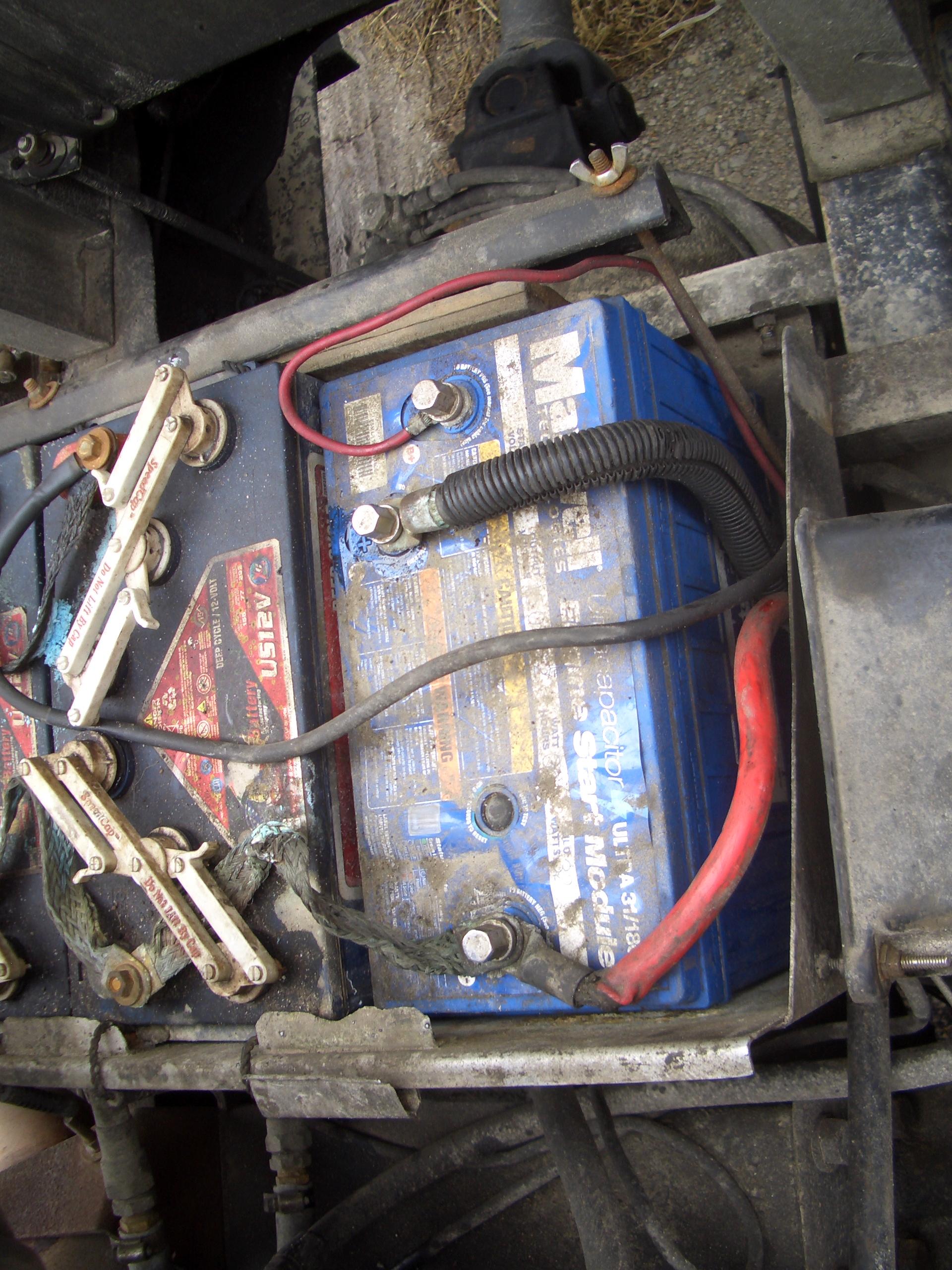
There are 3 ways to eliminate the Series/Parallel switch, or there used to be, one may not be available due to Elon buying then re selling Maxwell. 1st is to change the starter and cabling to a 12 volt crank/ run system 2nd is to used a TR alternator with both 12 and 24 volt output, The batteries are wired in series and the 12 volt truck loads are placed on only 2 of the batterys, the remaining two go to the starter in series with the 1 st two. Works but the batteries should be swapped around periodically for best life. 3rd and the one I would recommend, if it is still available is the Maxwell EMS, it will charge on 12 volt but supply 24 volt to the starter. It is the size of one Group 31 and can supply more than 4 group 31's can for short cranking loads. I had the 12 volt version in one of my trucks that didn't have room for air start. Even with the 12 volt holding less power than the 24 it cranked no problem in -25F temps. The 24 volt unit would charge on anywhere from 10 volt to 30 volts, so ideal for a 12 volt run truck with a 24 volt cranking system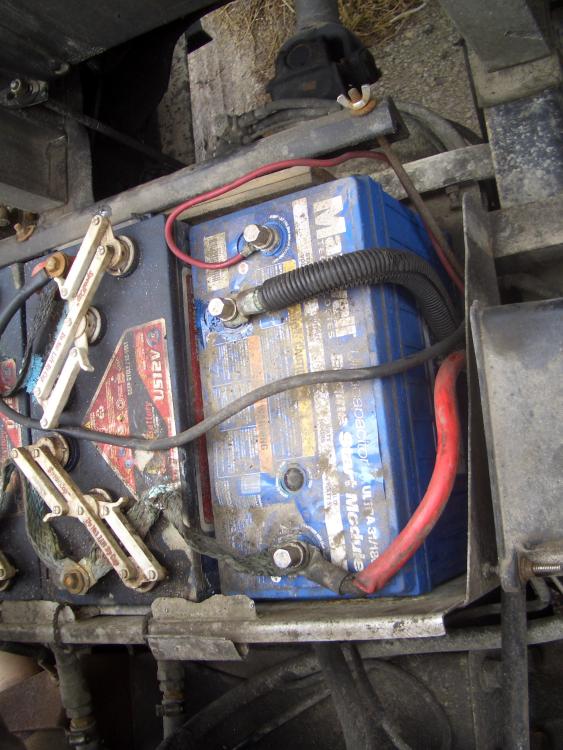
-
The Dodge had individual ports/runner on both intake and exhaust, and was under square, with (IIRC) a 4 1/8" stroke and 3.4" bore, which made it a real pulling engine Ford was 4" bore, (on the 300) but don't remember the stroke, Pulled a few English double deck buses back to the barn with one. Both the Dodge and Ford were made in medium truck versions with heavier duty guts. Chevy 292 came in the C-40 and C-50 IIRC If you held my feet to the fire, I'd be hard pressed to say any of the American OHV 6's were bad engines. Well, may be the babbet rod Chevy Stovebolt, was too far behind the times. About the time it came out, IHC was building wet liner OHV 6's, just for comparison
-
My father bought exactly that in 1973, only had a few options, Posi, full foam seat, PS PB. $2700 cash IIRC. It was handed down through my brother and I, but it was a rust-bucket. You could, however do a full tune-up in a thunder storm and not get wet, there was so much room under the hood. It was ok, but of the big 3, I'd say Ford (300/240) and Dodge (225) were better engines. I would have opted for the 292. I pulled a U haul trailer from Ma to Chicago, over rt 2 in Mass, climbing the hills in 2nd at redline.
-
PDL can't grenade the power train. All they do is lock out the interaxle differential. The only time they could come close to doing damage is they were on a truck with 2 spd rears (I have such a truck) and one rear failed to shift with the PDL locked. The other way is to try and shift it in when one wheel is spinning. Never in my time, did I ever have a problem having both 2 spd rears and a PDL From the factory I believe that they have it set up such that the PDL is only active in low range rear axle. I had mine set up that I could lock in both. Often I would put a set of 3 railers on the back axle and lock the PDL when climbing a snowy grade. A little common sense goes a long way.
-
I have done it, even have some "dummy" axle shafts cut off to cap off the hub (recommend packing bearing with grease). You need a good PDL and I wouldn't rawhide it with all the power going though the bull gears on the front axle. If air ride, you can cap off the air to the bags and chain the axle up. Then no worries on bearing lube. I am not as up on Mack Bogies do they all have an air operated PDL that can be locked? Rockwell, IHC (spicer) Dana and Eaton all do.
-
How many brake applications on a full reservoir?
Geoff Weeks replied to Old_DM's topic in Air Systems and Brakes
The trolly valve/Johnson bar, is normally plumbed to apply the trailer brakes only. It is independent of the treadle valve, both come together at the double check valve ahead of the tractor protection valve. Whichever pressure is higher gets sent to the trailers blue line. -
Plug socket
Geoff Weeks replied to Nick mack rd686s's topic in Antique and Classic Mack Trucks General Discussion
Most all block heaters are made in both 120 and 240 volt variants, if the plug end still has a USA NEMA 5-15P in it then it would be safe to assume it is still 120 volt, if it has a NEMA 6-15 or British/Irish plug one would conclude it has been changed to the higher voltage. Testing the resistance will tell what voltage. -
Good morning gentlemen, new cabover owner
Geoff Weeks replied to South of Heaven's topic in Introduction Forum
Being a '91 it should have a Big Cam NT88 so if it has a small cam the engine has been changed. By 1992 I think the N-14 was out. If a NT88 350 it will be a CPL 840, good engine, I had many miles on one. When you get the cab up, post the CPL number off the engine tag, that will ID it. If he pre filled the filter, it will start and clear itself. May run rough until the air is out, but I have changed a few from underneath. -
Damn, Jim glad to see you still kickin! I am surprised to see you post here, but I will not tell!
-
I'm in the group of people who say the worse is already done, so start it and run it long enough to make an assessment of its condition. May be something that was wedged somewhere that broke loose, or it may be more serious. At this point it can't make it a bigger problem. As you said it ran good. If it was clanking and banging before it stopped, I'd be more concerned.



BMT Forum Logo