



kscarbel2
-
Posts
19,112 -
Joined
-
Days Won
114
Content Type
Profiles
Forums
Gallery
Events
Blogs
BMT Wiki
Collections
Store
Everything posted by kscarbel2
-
Transport Topics / April 1, 2015 UPS Inc. plans to build 15 compressed natural gas fueling stations to support its purchase and deployment of 1,400 new CNG vehicles over the next year. Twelve stations will be in new natural-gas deployment areas, and three will replace existing CNG stations with higher-capacity equipment, the company said April 1. The vehicles include about 800 tractors — Kenworth T680s, with 12-liter Cummins Westport engines — and 600 package cars, with CNG systems by Agility Fuel Systems and Quantum Technologies. The fueling stations, which will be private at UPS facilities, are being built by TruStar Energy. The plan represents a nearly 30% increase to the company’s alternative fuel and advanced technology fleet of more than 5,000 vehicles worldwide. “UPS’s investment in a large-scale alternative energy fleet has enabled the company to avoid more than 34 million gallons of conventional fuels since 2000,” said Mitch Nichols, senior vice president of transportation and engineering. “CNG is an important building block in our long-term fleet strategy and offers environmental and economic advantages.” The CNG trucks and vehicles will be deployed in 15 cities, primarily in the Southeast. It currently has eight CNG facilities in four other states and operates CNG vehicles in Germany, the Netherlands and Thailand.
-
Overdrive / April 1, 2015 A federal rule to up the fuel economy standards of medium- and heavy-duty trucks has been sent from the Department of Transportation to the White House’s Office of Management and Budget for its stamp of approval, moving the rule one step closer to publication. The new fuel economy and greenhouse gas emissions standards would go into effect for 2018 model year vehicles, building upon the Phase 1 fuel economy and emissions standards that went into effect last year. Phase 2 of the efficiency and emissions standards come from executive action taken by President Barack Obama in February 2014, when he ordered the DOT and EPA to develop the 2018 standards. In a speech delivered then, Obama said heavy trucks represent just 4 percent of vehicles on U.S. highways yet produce 20 percent of all the transportation sector’s GHG emissions. As the action comes from executive action rather than legislation, a predecessor to Obama could undo the action. To take effect, the rule still must be cleared by the OMB and be published as a proposed rule in the Federal Register with a public comment period. Then, the DOT and EPA must develop a Final Rule and have it cleared by the OMB before publication.
-
The latest UltraShift Plus AMTs perform well, offering "Low speed maneuverability for docking and trailering" and "Creep Mode for maneuvering with continous low speed control". It was the predecessor to the current UltraShift Plus, called UltraShift DM3, that used a centrifugal type clutch which engaged via engine speed. I believe you have a DM3. At slow speeds when parking or backing into a trailer, the driver would have to increase engine speed to get clutch engagement resulting in a difficult to control vehicle speed. However with UltraShift Plus, Eaton added an electric clutch actuator so now the clutch can be engaged at idle, which significantly improves slow speed maneuvering. Because the old and new UltraShifts are quite different, Eaton should have come up with an all-new name to avoid customer confusion. Performance of the current UltraShift Plus AMT compares with the Detroit DT12 and Volvo I-Shift.
-
Condolences (http://www.legacy.com/guestbooks/mcall/walter-m-may-condolences/174515678?&eid=sp_gbupdate) To the May Family, It is with regret we learn of Mr. May's passing. He was one of our greatest influences here at Mack as I look back on my 37 year career. He was a mentor to all of us in Mack Engineering. I remember him always correcting me when I called him Mr. May, saying "my name is Walter". May you his family be consoled that he is now in Good Hands and he will still wear the "Mack Badge of Honor" to those of us who worked for him. Dennis Grejda,Allentown, Pennsylvania
-
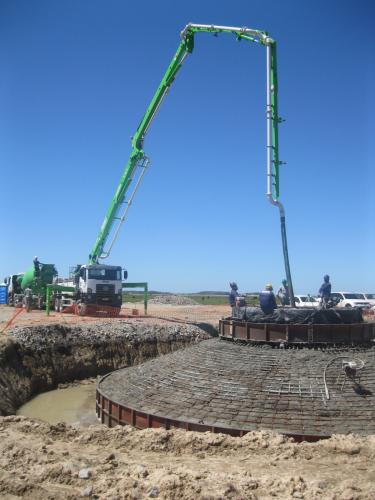
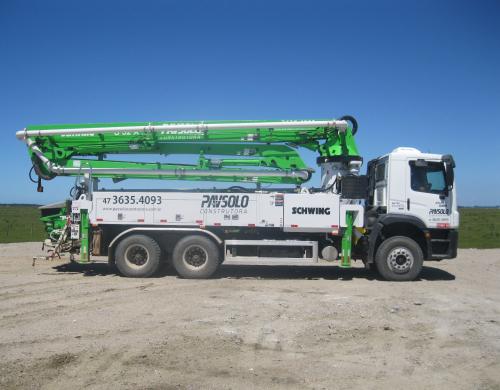
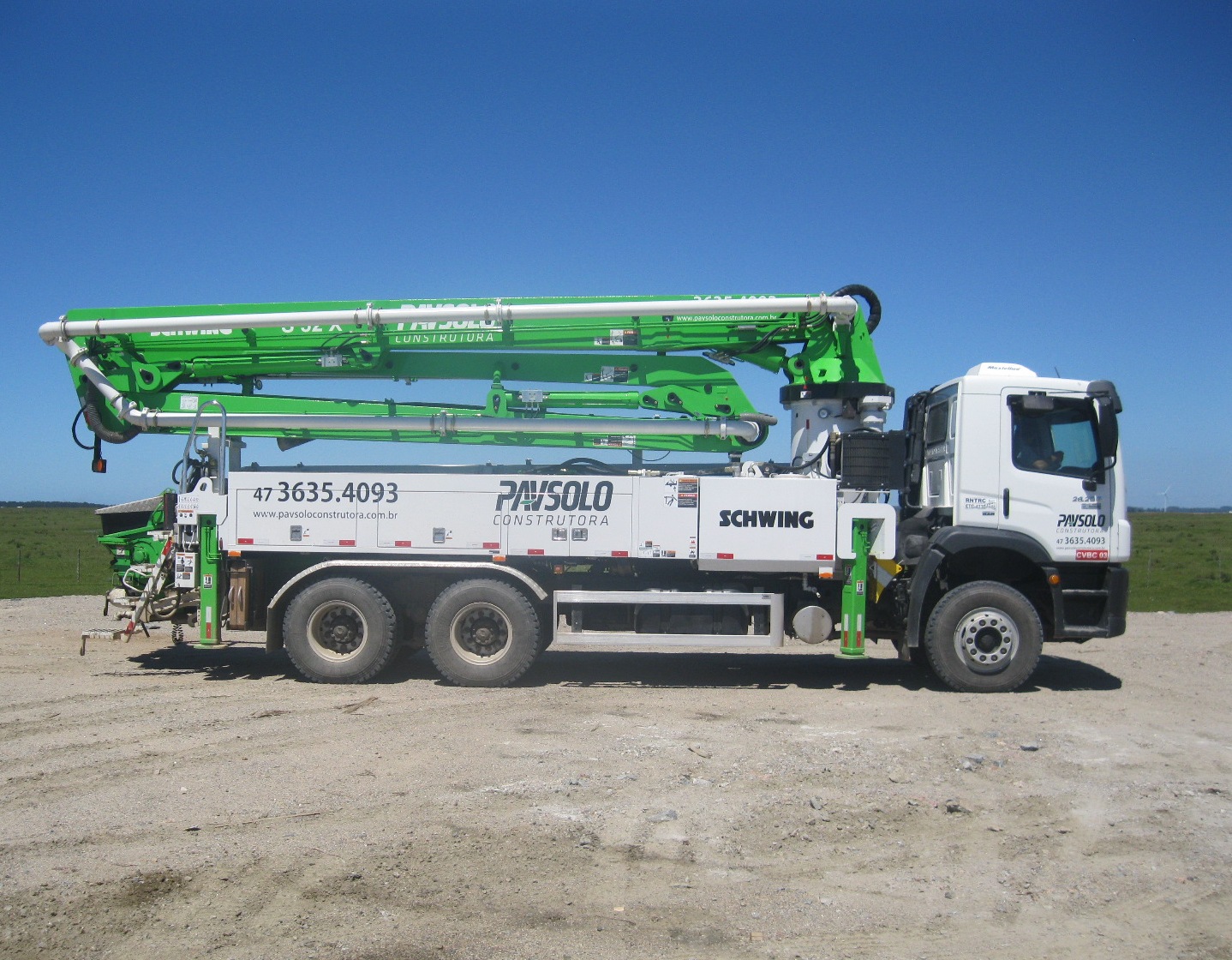
VW Press Release / March 31, 2015 The Volkswagen Constellation Series model 26.280 8x4 and 6x4 vocational chassis, and model 15.190 4x2 rigids were chosen by Pavsolo Construction for erection of wind turbines at wind farm projects in the cities of Santa Vitória do Palmar and Chui, both in Rio Grande do Sul. The project, which is expected to be completed at the end of 2015, encompasses the construction of 302 electricity-generating wind turbines. Up to 80 meters in height, the turbines will add 583 megawatts of grid capacity, enough to power to meet the needs of 3.3 million people. Pavsolo purchased a total of 34 trucks, including 27 8x4 mixer chassis equipped with fuel efficient Euro-5 275 horsepower MAN D08 powerplants that deliver 1,050 Nm of torque between 1100-1750 rpm. In 2014, Pavsolo purchased 6x4 versions of the 26.280, equipping them with Schwing S32X boom pumps (http://schwing.com/products/s32x/). In addition to the robust Constellation 26.280 vocational platform, Pavsolo added seven Constellation 15.190 to its fleet equipped with 190 horsepower Euro-5 MAN D08 power. Volkswagen trucks provide us with the highest levels of performance, efficiency and reliability at the lowest possible cost,” says Pavsolo CFO Elias Vargas. About Pavsolo Pavsolo Construction (http://www.pavsoloconstrutora.com.br/) offers a diverse range of construction services including earthworks, paving, sanitation, macro-drainage, energy and conservation, and concrete services. Based in São Bento do Sul, the company operates a 75 truck fleet which includes 40 Volkswagen brand medium and heavy trucks. http://www.man-la.com/images/stories/produtos/caminhao/ficha_tecnica/pdf/2812/Constellation%2015190_nov_13.pdf http://www.man-la.com/images/stories/produtos/caminhao/ficha_tecnica/pdf/2824/Constellation%2026280_nov_13.pdf .
-
Trucks Icarros Brasil / March 31, 2015 The distribution unit of BH Supermarkets has added ten new Iveco Tector model 17E22 6x2 rigids (straight trucks) to its existing 108 unit truck fleet. BH Supermarkets is the largest in the state of Minas Gerais and the eighth largest in Brazil. "For Iveco, it is an honor to continue our support of BH Supermarkets’ expansion," says Osmar Hirashiki, corporate sales director at Iveco. The Tector medium-heavy truck range is available in 4x2 and 6x2 configurations with 6.7-liter FTP* (Fiat Powertrain Technologies) NEF Series six cylinder engines rated from 218 to 280 horsepower, Eaton transmissions and a long list of build options to meet the specific needs of varying customer requirements. * FTP on-road engine brochure - http://www.fptindustrial.com/products/en-UK/Documents/onroad-en.pdf .

-
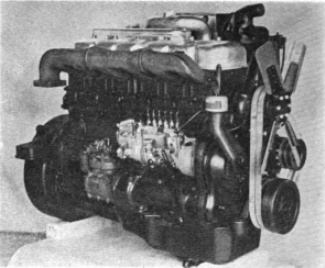
Commercial Car Journal / December 1940 To meet demands in the heaviest hauling field, Mack Trucks, Inc., has announced a new Model END-605 Mack-Lanova diesel powerplant. Similar in design and principle to the 8.5-liter (519 cu.in.) Model ED engine, the new Model END-605 diesel has a piston displacement of 9.9-liters (605 cu.in.), and bore and stroke of 4-5/8 in. x 6 in. The engine operates at the same maximum speed of 2,000 r.p.m. as the smaller Mack ED diesel and develops 144 horsepower at that speed. Maximum torque at 1,100 r.p.m. is 455 lb.-ft. (617 N.m). One of the most important claims of this new diesel is, that like other Mack-Lanova diesels, it combines smokeless combustion with high power, high speed and smooth running. Some of the reasons why this diesel produces full rated power without smoke may be thus enumerated: The Lanova energy cell in combination with Mack’s combustion chamber design is used in this engine, and all Mack diesels offer more thorough combustion and greater tolerance for different fuels. Higher grade pistons, rings, valves and liners in these Mack engines resist wear and heat better and longer. “Permafit” exhaust valve seat inserts endure indefinitely and prolong valve life. Valves are firmly guided and close accurately and evenly. Cylinders, which are of heat-treated alloy, do not distort, and gaskets stay tight because of multi-studded and deep-section heads. Other reasons for full rated power without smoke in this new END-605 Mack Lanova diesel include long-shank nozzles which may be cooled better, a Mack “Synchrovance” injection timer which reduces shock at low speeds, and a flange-mounted injection pump with fully enclosed tamper-proof direct gear drive. The injection pump is a self-contained multiple-unit protected against maladjustment in the course of ordinary engine maintenance. Full scavenging and low pumping losses are effected by valves which open directly into the combustion chamber. .
-
Baltimore Business Journal / March 31, 2015 The Port of Baltimore is spending hundreds of thousands of dollars on an effort to replace older diesel trucks hauling cargo around its facilities with newer, cleaner-running vehicles. The concept is similar to the federal government's famed cash for clunkers initiative that tried to boost auto sales during the Great Recession — public money goes to private owners who scrap their old vehicles and upgrade. But the port program isn't trying to increase truck sales. It's attempting to improve air quality around the port. The port is putting an additional $500,000 into the program, it announced Tuesday. It will give short-haul dray truck owners and operators as much as $20,000 to replace older vehicles with newer, cleaner-running trucks. The $500,000 will go toward replacing roughly 22 diesel trucks, the port estimates. Sources of funding for the latest cash infusion into the program include a $200,000 grant from the U.S. Department of Transportation. Existing state money from the Transportation Trust Fund makes up the remaining $300,000. The truck replacement program has previously scrapped 100 older trucks since February 2012. The port estimates it has cut yearly air emissions by about 108 tons of nitrogen oxide, 29 tons of carbon monoxide, 4 tons of particulate matter and 4 tons of hydrocarbons. Trucks must have model years between 1990 and 2003 to quality. They also have to be in working condition before being scrapped. The port weighs program applicants based in part on truck age and the number of trips a vehicle takes at its terminals. Replacement trucks have to meet or exceed 2007 Environmental Protection Agency emission standards. A $20,000 incentive doesn't cover the full cost of a replacement truck. That typically ranges from $40,000 to $70,000, according to the port.
-
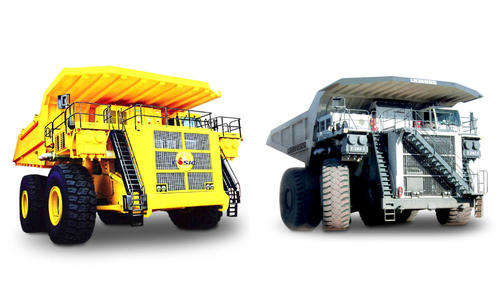
The Daily Press / March 28, 2015 A large manufacturing company is accusing several former workers at its Newport News production plant of stealing thousands of design documents used to make huge mining trucks — then turning the information over for copycat truck production in China. In a case heading for a jury trial this summer, Liebherr Mining & Construction Equipment is suing six former employees, alleging they conspired against the company. Liebherr is also suing a Detroit engineering firm, accusing it of serving as a conduit to Chinese companies, and two Chinese manufacturing partnerships, accusing them of imitating a Liebherr diesel truck with a 400-ton payload. "This case involves industrial espionage of a serious and brazen nature," says a 2013 complaint in the case. "It involves the wholesale theft of trade secrets from a United States manufacturing facility and the use of these trade secrets to help multiple Chinese competitors design a competing product." Access to those documents — from truck designs to vendor information to factory layouts — allowed the Chinese firms to build the large mining trucks "in a fraction of the time, at a fraction of the cost, and with a fraction of the manpower as could be accomplished by lawful means," the 104-page complaint alleges. All six workers — as well as the Detroit firms and the Chinese companies — have denied the allegations against them, saying they were not involved in a conspiracy to copy Liebherr trucks. One of the sued workers, the case's original defendant, died about a year ago. The complaint accuses some of the former workers of stealing documents by downloading files from their computers to thumb drives and USB devices, and says that one worker walked around the Newport News factory taking pictures of its layout and tools for use by a Chinese firm. The suit alleges that the Liebherr name was later taken off some of the documents and replaced with the Chinese firm's name. Liebherr, the suit says, spent significant money on computer forensics experts to track the downloading. If the theft isn't reversed, Liebherr contends, "American manufacturing jobs will be lost" to companies that have taken the easy way out and ripped off technology and processes that took decades and millions of dollars to develop. The Liebherr mining trucks — built at a Newport News manufacturing plant on Chestnut Avenue, off Interstate 664 — stand 29 feet tall and have a carrying capacity of 400 tons, with tires taller than a grown man. That compares to a normal dump truck that stands 10 feet tall and has a 40-ton payload. "Design of mining trucks occurs over years, not weeks," says the 2013 complaint, filed by Brett A. Spain and David A. Kushner with Wilcox & Savage. For its $5 million mining trucks, the complaint adds, "Liebherr has been analyzing and upgrading its design for over 15 years." "This effort has included teams of employees in research and development, design, computer modeling, quality assurance, vendor relations, manufacturing and testing," the complaint says. "Liebherr has spent hundreds of thousands of man-hours and tens of millions of dollars designing and improving these trucks and components." Preparing for court Liebherr USA — which includes the Newport News plant — is a division of a Switzerland-based manufacturing group, Liebherr-International AG, which was founded in 1949 by a German industrialist, Hans Liebherr. The case, with the complaint first filed in late 2010, is being heard in Newport News Circuit Court before Judge Timothy S. Fisher, with a jury trial set for July. Numerous defendants and lawyers are involved, with court filings taking up two large boxes. Parties in China have been served with the Newport News complaint by way of the Hague Convention, an international agreement that includes rules on serving court documents overseas. The complaint asks for $40 million in compensatory damages, though it asks that that be tripled — to $120 million — under state rules on conspiracy. It also asks for $350,000 in punitive damages against each defendant. Alternatively, the suit calls for a "reasonable royalty" to Liebherr and restitution "to be determined at trial" in "the amount the Defendants have been unjustly enriched." Moreover, the suit asks that the companies involved be forever barred from "producing or selling any trucks or truck designs which are derived from Liebherr's designs" or using its trade secrets again. Six former employees at the Newport News plant — Richard Hudson, Larry Gollady, Marc Viau, Billy M. Lewis, Allen W. Cunningham and Francis Bartley — are named as defendants. Disputing the allegations But Hudson — the original defendant in the case — died in Oklahoma about a year ago, said Cynthia Boettcher, a lawyer who represented him. Boettcher said Fisher hasn't let her or her law partner out of the case, even though she said Hudson has no estate left. In an October 2011 court filing, Hudson disputed the allegations against him. "Hudson admits that he copied some Liebherr documents, but denies they were … misappropriated," one of his lawyers wrote. Hudson also denied "that there was any conspiracy" and maintained he didn't use "any Liebherr documents in manufacturing a truck." A Michigan engineering firm — Detroit Heavy Truck Engineering, or "DHTE" — is also being sued, as are two officials, founder Liangyu "Mike" Huang, and vice president, Shenger "Ted" Ying. They are accused of conspiring with the Chinese companies to steal Liebherr's technology and hire former Liebherr workers to do it. Two Virginia Beach lawyers who once represented DHTE and its three former Liebherr workers — Cunningham, Lewis and Bartley — withdrew from the case in January and did not return phone calls this week. In 2011 court filings, DHTE and the three workers disavowed the suit's claims. "It is expressly denied that Liebherr's trade secrets were in any way used in the development, design or construction of the (Chinese) truck," said a filing from DHTE's then-attorney. Cunningham "expressly denies that he misappropriated" Liebherr documents, while Lewis "denies that he has conspired with anyone to damage Liebherr or misappropriate its … trade secret information," court filings say. Bartley also flatly denied the allegations. Ying and Huang couldn't be reached Thursday in Michigan, with Huang's wife saying he was traveling overseas. Robyn H. Hansen, a lawyer with Jones Blechman Woltz & Kelly who is representing two former Liebherr workers — Golladay and Viau — and their Hampton firm, Off-Highway Engineering, said her clients also deny the allegations. "My clients deny any liability and deny having engaged in any wrongful or illegal activity," Hansen wrote in an email. In a court filing, she said her clients deny taking information or "that they have conspired with any other defendant … to misappropriate property from Liebherr's Newport News facility." Chinese manufacturers sued Two groups of Chinese manufacturers are also being sued, accused of knowingly using Liebherr technology to build their own trucks, based on Liebherr's T-282-C. The first group — known as "Elite" — is made up of Ceri Heavy Industrial Equipment Co. and the MCC Heavy Industrial Equipment Co., which the lawsuit says operates as a single entity based in Xiangtan, China, in the Hunan Province. But Elite has failed to file a single response to the lawsuit's allegations since it was initially filed in October 2010. The second Chinese manufacturing group — which the lawsuit refers to collectively as "CSSG" — is made up of China Space Sanjiang Group Co. (CSSG), its subsidiary, Wuhan Sanjiang Import Export Co., and a related holding company, China Aerospace and Industry Group. The suit contends CSSG took over building the truck when Elite got out of the business a few years ago. But CSSG and Wuhan, for their part, contend DHTE approached them with the design — and failed to mention the lawsuit or that the design was a matter of controversy. "CSSG and Wuhan deny that they, individually or collectively, conspired with Ying, Huang, Elite or any of the other defendants or consulting companies to misappropriate Liebherr's alleged trade secrets," and deny any other "unlawful acts," said a filing by Williams Mullen attorneys William Stauffer and George Bowles. Meanwhile, two Washington lawyers representing China Aerospace and Industry Group recently asked to withdraw from the case. Conspiracy alleged The suit alleges the conspiracy began in early 2010, when "Elite" wanted to get into the large mining truck business. Only five other companies in the world — including Liebherr — were involved in such production. They wanted to get into the business sooner rather than later, the complaint said, given the downturn in the economy and their thinking that customers around the world might want lower-priced alternatives to the high-end trucks. "Elite and its parent companies set an extraordinarily aggressive schedule, calling for the design and production of a 400-ton mining truck within months," the suit says. Though Elite didn't have employees with mining truck experience and had never built them, it set a deadline for designing its first mining truck by December 2010, the suit says. Around that time, the suit alleges, Elite or its parent companies started up the Detroit firm — DHTE — to "provide certain technology" to it. Soon, DHTE hired Lewis — who had left Liebherr four years earlier as its general manager of engineering administration. The firm then hired Bartley, who had left Liebherr's senior management ranks in 2005, as its technical officer. The lawsuit contends Lewis and Bartley had "retained Liebherr trade secrets and other property" when they left Liebherr, and that the company soon began to hire others away from Liebherr. In June 2010, the suit alleges, DHTE hired the now-deceased Hudson as a "contractor." Over the next month — while he was still employed by Liebherr — Hudson "secretly stole gigabytes of Liebherr's most sensitive information," invoicing DHTE for "downloading/researching" fees, the suit contends. Data taken to China, suit says Hudson took a trip to China, with a computer and "at least one thumb drive full of Liebherr trade secrets and other property," the suit alleges. He shared pictures he took of the Newport News facility and its tools in July 2010— even though pictures are strictly prohibited at the factory, the suit says. "When Hudson returned from China, he continued to download and misappropriate Liebherr trade secrets," the complaint alleges. After he had stolen a "shocking volume" of information, he resigned on July 23, 2010, the suit says. "Hudson left Liebherr's employment with possession of virtually every type of drawing, design and other document necessary to build a mining truck business, design a manufacturing facility and design a series of mining trucks to compete with Liebherr," the complaint alleges. The complaint cites weld joints as a prime example. While it took years for Liebherr to painstakingly develop them, the complaint says, "Hudson was able to convert each Liebherr weld-joint design into a DHTE copy in a matter of minutes." Another worker, Cunningham — Liebherr's logistics warehouse manager — left Liebherr in September 2010 to become a DHTE contractor. But before he left, the complaint alleges, he emailed Hudson and asked him for "work assignments" from DHTE. In the complaint, Cunningham is accused of stealing, among other things, pictures of the plant and equipment, a design drawing of a forklift used to move a massive frame, as well as Excel spreadsheets with weights of each part of a mining truck. Cunningham also is accused in the suit of "throwing away" his DHTE hard drive "to cover up the Liebherr documents he transferred." Two other workers, Golladay, a structural engineer, and Viau, a senior mechanical engineer, are also accused of accessing Liebherr documents and design files before leaving in August 2010 to work as DHTE contractors. Golladay, for example, is accused of attaching a USB device and copying 300 design files related to a prototype mining truck, which the suit says he had not worked on in 10 months. Viau stands accused of copying a Liebherr contact list and drawings related to valve assembly and a suspension system project. The complaint asserts that a document deletion tool, "CCleaner," was found on Viau's computer and Viau's and Golladay's thumb drives, "suggesting that they have attempted to cover up their possession and use of Liebherr's property." .
-
Condolences (http://www.legacy.com/guestbooks/mcall/walter-m-may-condolences/174515678?&eid=sp_gbupdate) A associate for many years, he helped Mack remain the "The greatest name in trucks"! Learned a great deal from him and he was a industry Icon! Jack and Rosemary Curcio
-
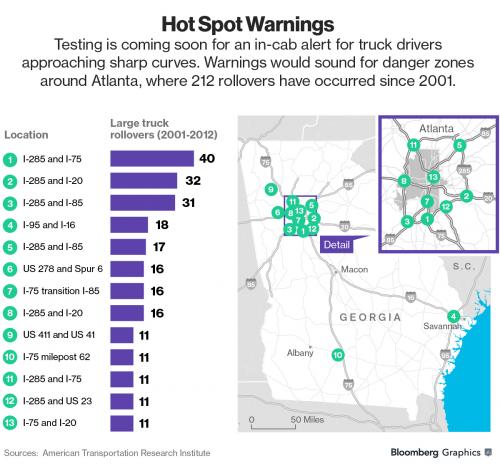
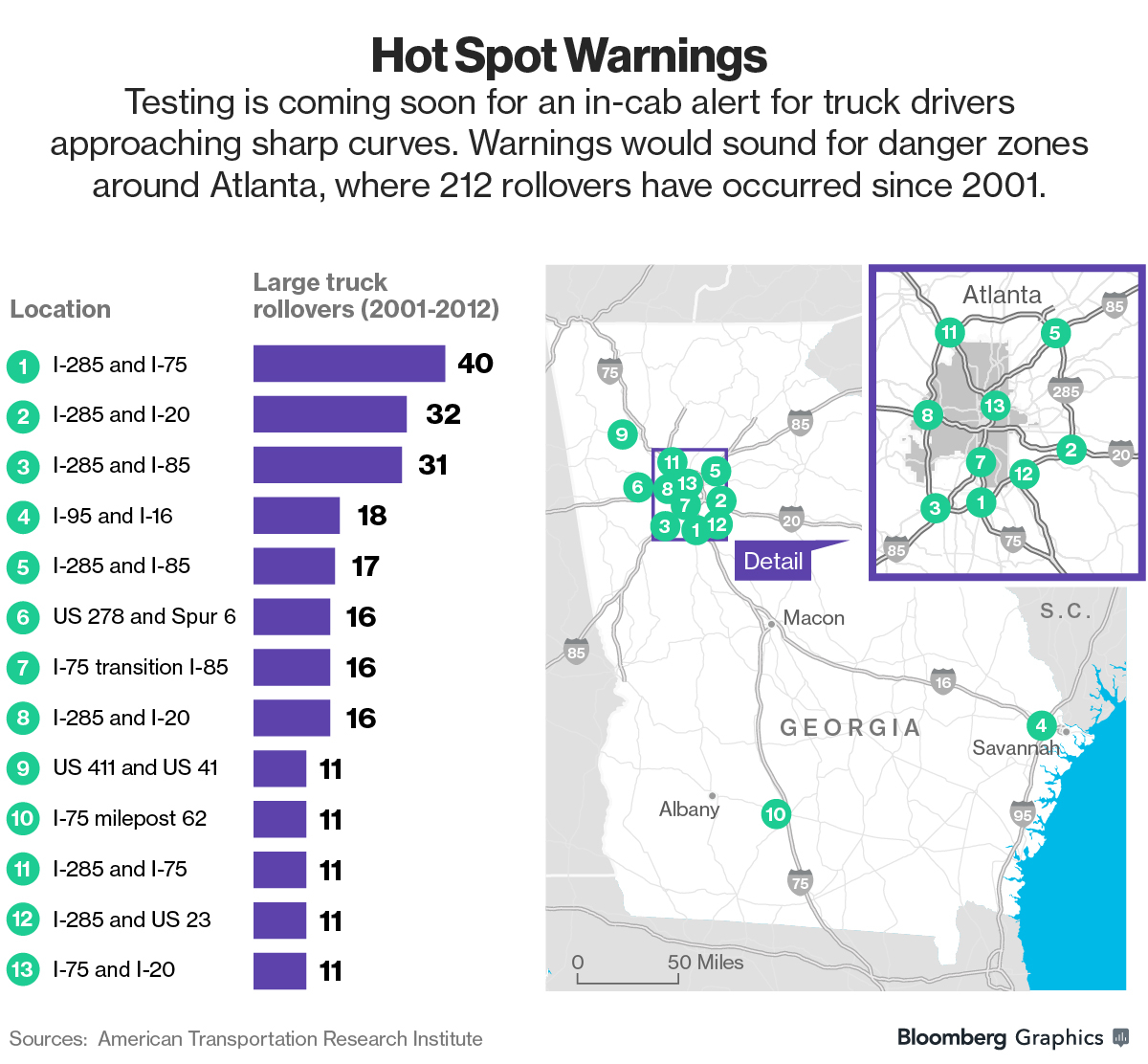
Bloomberg / March 30, 2015 It was almost midnight when Walter Price eased his 18-wheeler into the right lane on Interstate 75 near Atlanta. As he began to bank onto the exit ramp he’d been taking for the past 10 years, Price had no idea he was entering America’s most dangerous hot zone for truck drivers. As Price rounded the curve onto Exit 238-B that cold night in February 2012, a small black car darted in front of him on an otherwise deserted highway. The car’s driver slammed on the brakes to negotiate the exit’s sharp curve. Price had to veer left and hit his brakes to avoid a collision. But the curve was too sharp and Price’s 36-ton rig carrying car parts began to roll. “Once you hear the freight break loose and start sliding, there’s absolutely nothing you can do,” the veteran truck driver recalled. “You can kiss your ass goodbye.” Price was lucky. He survived his rollover; many others do not. Each year, hundreds of truck drivers die across the country on congested roadways and antiquated exit ramps like the one where Price crashed, as a crumbling interstate highway system, designed in the mid-1950s, bears the ever greater burden of a booming trucking industry. When comedian Tracy Morgan suffered brain damage and his friend was killed in a crash with a Wal-Mart Stores Inc. truck in June, Americans were reminded how lethal a rolling 18-wheeler can be for car passengers. Far less noticed are the rollovers that are especially deadly for truck drivers. Though they accounted for just 3.3 percent of all large-truck crashes, rollovers were responsible for more than half of the deaths to drivers and their occupants in 2012, the most recent year for which data are available. That’s 300 truck occupant deaths and 3,000 injuries every year. And among the 2.6 million workers in the U.S. who drive trucks that weigh more than 10,000 pounds (4,500 kilograms), crashes are the leading cause of on-the-job death, according to the Centers for Disease Control and Prevention. Overworked, distracted and sleepy drivers are causes of rollovers. But so too are outdated highway engineering and growing gridlock as trucking puts ever greater strain on the nation’s aging roadways. Truck tonnage hauled jumped to an all-time high in January, the American Trucking Associations reported. Truck freight may rise 5.3 percent this year from 4 percent in 2014, according to FTR Associates data compiled by Bloomberg, as job growth spurs U.S. consumer spending. The almost 10 billion tons of freight carried annually is taking such a toll on the nation’s highways that politicians of all stripes are angling to raise the money needed to fix them. Michigan’s Republican governor, Rick Snyder, has endorsed a ballot proposal to raise the sales tax to repair what he called his state’s “rotten roads and bridges.” Iowa’s Republican governor is also considering higher taxes to cover road repairs. “Because so many curves were made 40 years ago, they don’t have the banking needed for the trucks of today,” said Steve Niswander, vice president of safety policy at the Groendyke Transport trucking company in Enid, Oklahoma. “But to lengthen out and expand cloverleafs in probably 50 areas in the United States would take billions—and I mean with a B.” Nowhere do mid-century roadways and 21st century congestion collide with such deadly force as in Atlanta, where a tangle of twisting roadways and densely packed moving traffic combine to create America’s extreme tipping point. More than 200 trucks have flipped around Atlanta since 2001, according to a study by the American Transportation Research Institute. And more than 200 people have died in truck rollovers in Georgia during that time. The top 10 rollover hot spots in the Atlanta area all involve exit ramps that require a rapid reduction in speed and often have sightlines obscured by bridges or the curvature of the road. Many lack adequate signs and flashing lights to warn of impending rollover risk. A four-hour drive in a tractor-trailer around Atlanta reveals the scars of past rollovers—black skid marks on concrete exit walls and tractor-trailer-shaped dents in the grass along the roadside. “It’s a nightmare,” said Price, 61, who now refuses to return to the intersection where he rolled and, instead, takes the long way around Atlanta. “The whole time you’re driving through there, you have to be on defense.” Rolling up on the No. 1 hot spot, where Price flipped his truck, Herschal Evans, a driver based out of Atlanta for USF Holland, slows his fully loaded rig to less than 20 miles (32 kilometers) per hour. More than three dozen trucks have rolled since 2001 on this ramp to westbound I-285 off I-75, just south of Atlanta, and they’ve left their marks all over the scored earth along the curve. Two lanes feed into the exit, which is partially obscured by a bridge overhead. “We can’t afford a bad day or an off day,” Evans said. “We’ve got to bat 1,000 every day. When we don’t bat 1,000, we stand out.” The only warning of rollover risk at Exit 238-B is a small yellow sign on the right shoulder of the road that displays an image of a tipping truck. Drivers in the left lane may never see that sign. Even if they do, the warning comes too late, Evans said. “I’m not trying to excuse drivers,” he said. “But more warnings would help.” Experiencing a rollover increases a truck driver’s risk of dying in a crash by 30 times, according to University of Michigan research. Not wearing a seat belt makes it even worse. More than a third of drivers who died in crashes in 2012 were unbelted, according to the CDC. That helped drive up deaths among truckers between 2009 and 2012, after reaching a 35-year low six years ago, according to the CDC. “Rollovers can be quite violent at the last phase of it,” said John Woodrooffee, a scientist at the University of Michigan Transportation Research Institute in Ann Arbor. “The trailer goes over first, and then it can wind up like a spring and snap the cab over. Ejection or partial ejection from the cab are the highest causes of death.” The National Highway Traffic Safety Administration last month sent a proposed rule to the White House for review that would mandate electronic stability control to take over braking on big trucks, like the technology now required on sport utility vehicles, pickups and cars. While industry opposition has held up the regulation, NHTSA says it could save 60 lives a year and prevent 2,329 crashes. “The delay is costing us lives,” said Woodrooffee, who conducted research for NHTSA for the proposed rollover regulation. “Without a doubt, electronic stability control is one of the most effective crash avoidance technologies for heavy trucks on the market.” European regulators require big trucks to be outfitted with electronic stability control, which uses a variety of sensors to anticipate when a vehicle may tip and applies brakes to specific wheels or de-throttles the engine to prevent a rollover. Truckmakers already equip about 70 percent of new rigs with some form of stability control and are opposed to mandating the more costly electronic technology as NHTSA is proposing, said Ted Scott, director of engineering for the American Trucking Associations. “I don’t think the mandate is going to change a damn thing until all of the older tractors are off the road,” Scott said. In the U.S., crash prevention technology like stability control, along with greater seat-belt use, has helped to reduce overall highway deaths by 21 percent since 2003, according to the Insurance Institute for Highway Safety. Truck occupant deaths, in part due to lax seat-belt use, have fallen less—16 percent since 2003. What hasn’t changed is the percentage of truckers who die in rollovers. It was 51 percent in 2003 and 52 percent in 2012, according to federal data analyzed by Arlington, Virginia-based IIHS. The American Transportation Research Institute this year plans to test an in-cab alert system that will sound an alarm as a truck approaches a danger zone. The organization, funded by the trucking industry, has mapped out rollover hot spots in 39 states. It also is working with the states to add warning signs. “Hopefully, five or 10 years down the road, we will see the number of rollovers way down,” said Rebecca Brewster, president of the Arlington, Virginia-based institute. Price said his rollover seemed to happen in slow motion. First, his trailer began to corkscrew. Then, the cab snapped over on its side and the rolled rig tore through the grass beside the highway cloverleaf. As soon as the truck came to a stop, Price unbuckled, fell from his seat and scrambled to the back of the cab, searching for his wife, who had been sleeping there. “I couldn’t find her,” Price said. “I was throwing stuff up toward the front of the truck to find her. It was scary.” An 80,000-pound truck can take a 10th of a mile to come to a stop. At 60 mph, it’s covering 90 feet (27 meters) of road every second. If a truck driver gets cut off, “it takes him a second to understand he’s got to stop to get to his brakes, so he’s gone 90 feet,” said Niswander of Groendyke Transport. “It takes another half-second to get his air brakes to work. So now he’s at 135 feet before he’s made any effort to stop.” While the Prices felt lucky to survive their rollover, they were devastated financially. Price had to replace his destroyed truck and it took four weeks to get back on the road. Even with insurance, the total cost to him of a new truck and a month of lost wages: $100,000. “We’re just coming out of that now,” he said. The driver of the car who caused it all faced no consequences. “He just kept on driving, like they always do,” Price said. “They create accidents and they keep on driving like nothing happened. It’s brutal out here.” .

-
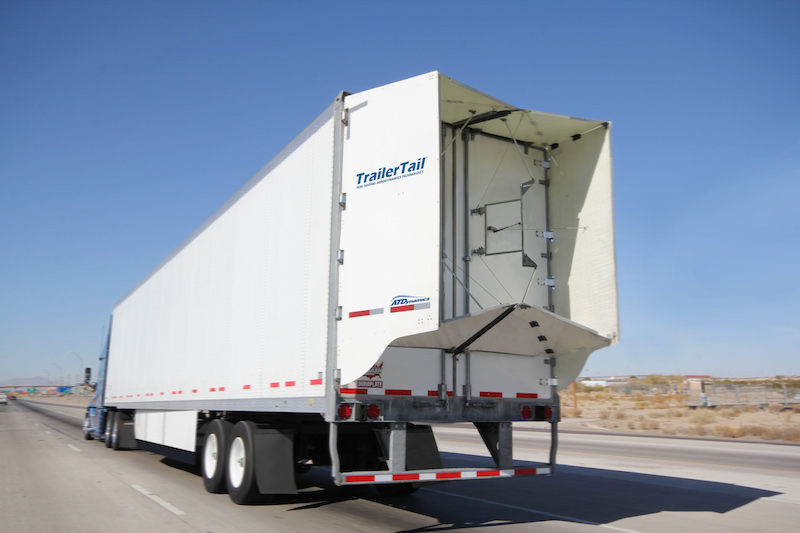
Stemco expects TrailerTail to become industry norm
kscarbel2 replied to kscarbel2's topic in Trucking News
You are 100% right. And that is why Scania is so focused on working with the drivers, schooling them on how to optimize fuel economy with the many technologies at their fingertips today. -
Yesterday, I contacted no less than five Mack distributor principles and not one had been notified by Volvo of Walter May’s passing. I am far beyond offended.........my friends, I am angry today. In the days of Mack Trucks, when a member of the Mack family was injured, severely ill or had passed, World Headquarters would get the word out within 24 hours, to the factory branches, privately held distributors, Vehicle Product Development & Test Center, plants and Mack PDCs (parts distribution centers). Though having purchased Mack trucks, Volvo clearly doesn’t understand the values of the Mack family it acquired. By American and Mack standards, Volvo is showing an immense lack of respect. (With my knowledge of Scania, I can assure all that Volvo’s insult is not indicative of Swedish culture in general) Had it not been for Walter May and his team of America’s best heavy truck engineers (including Win Pelizzoni*), Volvo would not be profiting from the Mack brand today. Volvo only cares about the money, Mack is merely a brand........a nameplate they purchased to adorn their North American Volvo truck range. * Winton “Win” John Pelizzoni, co-inventor of the revolutionary Maxidyne/Maxitorque powertrain** that changed the truck industry around the world, passed away on March 11, 2011, like Walter May at the age of 97. http://www.legacy.com/obituaries/mcall/obituary.aspx?n=winton-john-pelizzoni&pid=149502579 ** http://www.bigmacktrucks.com/index.php?/topic/30184-all-eyes-are-on-the-new-maxidyne/
-
In 2013, the wonderful people at Sperry Rail Service advised me of tentative plans to retire their Mack FCD (SRS 403) in 2014 or 2015, after 61 years of service. I recently touched base with Sperry and learned this Mack of immense historical significance is still active, but on a much more limited basis. The plan is to retire their Mack FCD after its work is finished towards the end of the year. Several railroad museums have expressed an interest.......nothing has been finalized. However finding an entity with the finances necessary to properly restore and maintain the Mack FCD, and storing/displaying it indoors, is the principal challenge. Sperry Rail Service has generously donated a number of historical pieces of rolling stock over the years to various railroad organizations. But being a Mack Trucks-produced model FCD rail bus, SRS 403 deserves a uniquely different fate. Frankly speaking, I would like to see the Mack FCD displayed in the Smithsonian’s Museum of American History. Related Reading: http://www.bigmacktrucks.com/index.php?/topic/33763-mack-rail-sperry-rail-service-the-oldest-operator-of-mack-rail-buses/?hl=srs403
- 1 reply
-
- 4
-

-
Thank you so much for posting. Mr. May was a living legend. Though the Mack family has lost one of its brightest sons, few gentleman had a more rewarding life. Under Walter May's stewardship were some of Mack's brightest and proudest days. We are so fortunate he was not one of the engineers on the plane in '69 (http://www.bigmacktrucks.com/index.php?/topic/31112-bulldog-airlines/?hl=%2Bbulldog+%2Bairlines) when so much Mack talent was abruptly and prematurely taken from us.
-
DAF Press Release / March 27, 2015 During "Automotive Week", DAF and TNO demonstrated the "EcoTwin" project in front of the Dutch Minister of Infrastructure and the Environment, Schultz van Haegen and her Belgian colleague Galant. This demonstration on the N270 near Helmond showed two truck combinations – wirelessly linked via WiFi – driving a short distance from each other, with the driver in the second truck not being required to accelerate, brake and steer. This was a first in the Netherlands. 2-Truck platooning is the name for the concept where two trucks cooperate by driving a short distance from each other using automated driving technology. The intention of the EcoTwin experiment with TNO – the Netherlands Organisation for Applied Scientific Research – was to show that the second vehicle is technically able to follow a short distance from the front vehicle, using radar and camera information, thanks to wireless communication between the two vehicles. During this process, the second vehicle can automatically accelerate, brake and even steer. The objective of the project with TNO is to reduce the gap between the two truck combinations as far as possible, so that fuel savings of 10% can be achieved in the long term, along with equivalent reductions in CO2 emissions. On the road around 2020 "Just because we have showed that 'automated platooning' with two trucks is technically feasible, that doesn't mean that we are actually there yet", says Ron Borsboom, member of the Board of Management of DAF Trucks N.V. and responsible for product development. "We still need to do quite a lot of development work to ensure that the technology is completely reliable in any situation. Issues like legislation, liability and acceptance also have to be taken care of properly. Along with TNO, we expect that transport companies will be able to operate the first trucks using truck platooning safely on Dutch motorways and some major provincial roads by around 2020." The next step after last week's demonstration is testing EcoTwin in the Rotterdam harbour area. The Port of Rotterdam Authority and the Transport en Logistiek Nederland (TLN) trade organisation are involved in this process and the programme is supported by the Ministry of Infrastructure and the Environment. As a ground-breaking truck manufacturer, DAF is constantly exploring opportunities to further reinforce its leading position in the field of fuel efficiency and (thus) low CO2 emissions. EcoTwin is among the promising technologies and also contributes to general transport efficiency, which is one of DAF's spearheads in truck development.
-
Bloomberg / March 27, 2015 Mercedes-Benz plans to make its first pickup truck, extending a push by manufacturers of upscale vehicles to invade territories traditionally dominated by mass-market competitors. Mercedes will introduce a mid-size pickup by the end of the decade, focusing sales on Europe, Latin America, Australia and South Africa, the division of Stuttgart, Germany-based Daimler AG said Friday. The project will attempt to succeed where previous upscale trucks like General Motors Co.’s Cadillac Escalade EXT and Ford Motor Co.’s Lincoln Blackwood failed. “The Mercedes-Benz pickup will contribute nicely to our global growth targets” as the vehicles are increasingly being put to personal use rather than just commercially, says Daimler Chief Executive Dieter Zetsche. Germany’s luxury-car makers, which built their reputations on refined sedans, have been pushing into vehicle segments that would previously have been spurned as they compete for volume. Mercedes, the world’s third-largest premium-car manufacturer, plans to overtake Volkswagen AG’s Audi marque and market leader BMW AG in sales by the end of the decade. The Mercedes pickup will be smaller than full-sized models that competitors offer in the U.S., where the segment is dominated by Dearborn, Michigan-based Ford’s bestselling F-150 and the Chevrolet Silverado from Detroit-based GM. The Mercedes-Benz pickup, which will offer about 1 metric ton (2,205lb) of payload capacity, will be built by its commercial-van division. To cut costs for the project, Daimler can tap technology from Japanese partner Nissan Motor Co. The automakers’ cooperation includes Nissan’s Infiniti brand using Mercedes underpinnings for a compact car. Yokohama-based Nissan makes Titan and Frontier trucks for the U.S. market. .

-
Peterbilt Introduces Medium-Duty CNG Platform
kscarbel2 replied to kscarbel2's topic in Trucking News
Sorely missed for the 337 and 348, and particularly for the 325 and 330, is a 6.7-liter ISB natural gas option from Cummins Westport. The virtually 9-liter ISL-G is overkill in the medium truck segment, and a good bit heavier. -
Heavy Duty Trucking / March 27, 2015 Peterbilt Motors Company introduced two new medium-duty vehicles -- the Model 337 and the Model 348 -- powered by compressed natural gas (CNG) during this week's Mid-America Trucking Show. Both vehicles are now in production and can be configured as trucks or tractors. “Peterbilt is the established market leader in natural-gas powered Class 8 commercial vehicles and we’re pleased to bring this expertise to medium-duty markets,” said Darrin Siver, Peterbilt general manager and PACCAR vice president. “Peterbilt’s award-winning medium-duty trucks – renowned for their versatility, quality and performance – are now available for customers who want to operate with cost-effective, environmentally sound CNG. This is an ideal choice for dump, refuse, and short- and regional-haul operations.” According to Scott Newhouse, Peterbilt Chief Engineer, the new medium-duty models are optimized for this configuration with 110-inch BBCs. “The CNG Models 337 and 348 give Peterbilt the industry’s most competitive portfolio of natural-gas vehicles,” Newhouse said. “The dimensions provide a BBC two inches shorter than any competitive model and a cab height that is 2.5 inches lower.” Newhouse said the optimized spec, including steering geometry that provides up to a 50 degree turning angle, provides improved maneuverability in congested city and jobsite operations. Both the Models 348 and 337 are powered by the 8.9-liter Cummins Westport ISL-G with 320 hp and 1,000 lb.-ft. of torque. The engine complies with EPA 2010, 2013 and CARB emissions regulations, according to the company. .
-
Commercial Carrier Journal (CCJ) / March 30, 2015 During a press dinner at the 2015 Mid-America Trucking Show in Louisville, Ky., Martin Daum, president and chief executive officer of Daimler Trucks North America, shared his company’s optimism for near-term truck sales in North America, saying at the moment the U.S. is one of the few really strong markets in the world. According to Daum, the North American Class 6-8 market finished the year with roughly 374,000 units sold in 2014, and after a fast year-to-date start of 18 percent growth in 2015 compared to last year, DTNA remains optimistic in the near future for truck sales in North America. “I would say that the entire market could be higher than 10 percent [growth] this year,” said Daum. DTNA is even more bullish on its forecast of the U.S. Class 8 truck market, with the company forecasting total market sales of 256,000 units in 2015, a 19% increase from 2014’s 214,000 units. “This is what drives the industry at the moment and is by far the strongest part of our business,” said Daum, adding that figure could be even higher given the current favorable market conditions. DTNA forecasts the U.S. Class 6-7 market to retract slightly by 3 percent to 100,000 units after posting a 9 percent increase in 2014, noting this segment is more stable and has less volatility than the U.S. Class 8 market. In terms of market share, DTNA forecasts it will recoup its slight losses in 2014 (37.0 percent North American market share) in all NAFTA regions for the Class 6-8 market with 4.4 percent growth in 2015 to 41.4 percent. In the United States, it expects to increase from 38.5 percent market share in 2014 to 42.8 percent this year. Meanwhile, the company predicts its market share to increase in Canada and Mexico by 4.6 percent and 7.1 percent, respectively. To keep pace with growing demand and record-breaking order intake, DTNA increased its production capacity by 16 percent and added 2,300 production workers in the last half of 2014, which should increase truck production by 27,000 units this year. “There is absolutely no fear that those production slots will go empty. In fact, I have a feeling that it will not be enough,” said Daum. DT12 beats expectations The Detroit DT12 automated manual transmission, a main component of DTNA’s integrated powertrain package, has defied even DTNA’s expectation in the first two years since it was introduced to the market, and Daum cited the combination of fuel efficiency, driver convenience, integration and safety as reasons for customer acceptance. “The integrated powertrain is pivotal for how you can engineer and build truck technology today, and it is the heart and soul of our success in the market,” said Daum. “The sky is the limit with the DT12. It changed the entire market and at such a rapid pace. Even in my wildest dreams I wouldn’t have seen that.” Future GHG regs need to foster “free thinking” Freightliner introduced its 12.2-mpg Super Truck concept at an earlier press conference at MATS, the culmination of a five-year project partially funded by the U.S. Department of Energy. DTNA says it intends to be the first truck manufacturer to announce certification for the U.S. Environmental Protection Agency’s 2017 greenhouse gas regulation large part due to the technologies that came out of the Super Truck project. But Daum added that truck manufacturers need the freedom to continue to innovate and evolve their products to meet any future emissions regulations beyond 2017. “We need smart regulations that don’t limit the market, but that support and foster free thinking,” said Daum. “There are a lot of variables with fuel efficiency that we can optimize, but not with limitations that ultimately don’t support the best solutions.” On the subject of future greenhouse gas regulations beyond 2017, Daum said DTNA “strongly advocates a complete vehicle standard. A lot of technologies which will today and in the future save fuel work together with other truck components. Any standard for a single component limits your ability to optimize the entire package.” Daum also added that mature and feasible technologies must meet customer expectations of an 18- to 24-month payback. Improving the nation’s infrastructure is also critical to helping realize better truck fuel efficiency. “We can have the best truck, but if we have bad infrastructure, it’s not going to work,” said Daum. “One traffic jam can eradicate all the technology that we spent hundreds of millions of dollars to develop. If we don’t get our infrastructure right in this country, we can do as much as possible in research and technology but it will be blown out the tailpipe after 10 minutes in a traffic jam. It is the biggest thing the government can do to help and that’s why the highway bill is so important.”
-
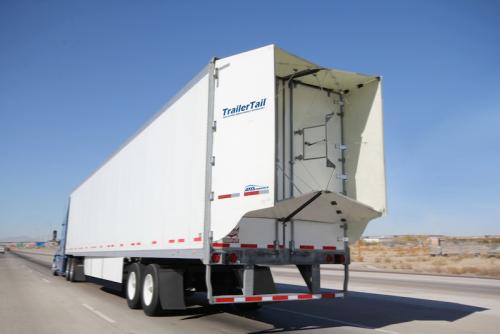
Overdrive / March 27, 2015 Stemco’s recent acquisition of ATDynamics, which is known for its TrailerTail that streamlines air at the rear of box vans, has led to a major expansion of its sales force, said Stemco Vice President Bob Montgomery at the 2015 Mid-America Trucking Show in Louisville, Ky. Montgomery also announced that Stemco has introduced a more durable hose for its tire inflation systems. The new replacement hoses are more rugged and performs better in high temperatures. Testing has repeatedly shown that a TrailerTail and trailer skirts together can increase fuel efficiency by 9 percent to 11 percent, said Andrew Smith, who sold ATDynamics and is continuing to work with Stemco. “It is absolutely crazy to purchase or operate a long-haul trailer without skirts and tails on it,” he said. Montgomery said Stemco has increased its sales force focused on the product from 12 to 84 because of its confidence that the product will continue to spread throughout the market. Smith noted three other benefits of using a tail: 1. It reduces trailer sway, especially in windy conditions, which improves tire wear and safety. During rain, it reduces spray when vehicles are driving near the rear of a tractor-trailer. 2. The extended tail creates a “crumple zone” that discourages vehicles from following too closely. 3. Owner-operator fleets using TrailerTails have a recruiting advantage because of the fuel savings passed along to them. “Those owner-operators are starting to value that additional 2 cents per mile,” he said. Smith said the range of TrailerTail models peaks at slightly below $2,000 for one tail, and return on investment is typically six to 18 months. Smith and Montgomery said there are almost 40,000 TrailerTails in use with 500 customers. Many newer customers are opting for the second generation of AutoDeploy, which opens a closed tail when the truck reaches 35 mph, so that drivers do not thwart the system’s potential savings by leaving the tail shut. .
-
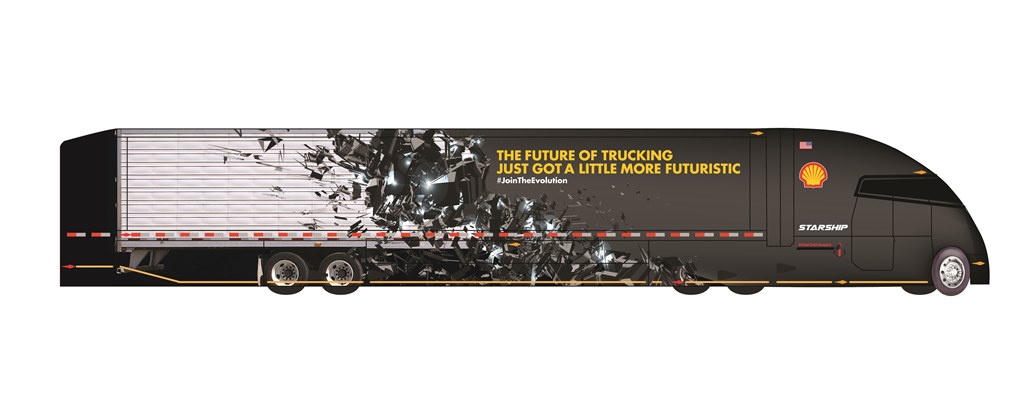
Shell sponsoring new “hyper-fuel mileage” tractor-trailer design
kscarbel2 replied to kscarbel2's topic in Trucking News
The roots of such aerodynamic truck design architecture stem back to Preston Trucking (The 151 Line), where impressive cutting edge American innovation was spurred by Caterpillar's National Fuel Conservation Challenge. http://www.bigmacktrucks.com/index.php?/topic/31813-the-preston-aero-how-to-make-a-brigadier-slice-through-the-wind/ Preston Trucking, I feel, was remains the best LTL carrier to ever operate in these United States. -
Fleet Owner / March 27, 2015 Lubricants is stepping outside of its traditional “fluid engineering” box in the trucking world to help sponsor the development of a new “hyper-fuel mileage” Class 8 tractor-trailer design being built by the AirFlow Truck Company (http://www.airflowtruck.com/) and its principal owner and designer, Bob Sliwa. At a press event here at the Mid America Trucking Show (MATS), Dave Waterman – North American marketing manager for the Shell Rotella engine oil brand – noted that this “next-generation” concept truck, nicknamed the “StarShip,” is being built by Airflow in a 6,400 ft. garage in Connecticut and should be ready for testing by late next year. “We’ll be doing shake down testing and some regional runs by the third quarter of 2016, with coast-to-coast by the fourth quarter of 2016,” Silwa noted. He added that he rolled out first “hyper-fuel mileage” concept vehicle, dubbed the “Bullet Truck,” back in 2012. Crafted from a 2003 model Kenworth T2000 over a period of three years, Silwa said it achieved average fuel economy of 13.4 mpg under load on aa cross-continental haul from Connecticut to California. “I actually averaged 14.1 mpg until we ran into 35 mph headwinds in Laramie, WY,” he noted. The new “StarShip” vehicle (seen at right), however, is being built on a 2016 Navistar International ProStar chassis, which will include a 2010-compliant engine equipped with selective catalytic reduction (SCR) emission control technology. “We’re building our own cab for this concept and will be 100% EPA certified to operate on the road,” Silwa said. He’ll be loading the StarShip tractor-trailer combination with ballast up to 65,000 lbs. gross vehicle weight; a GVW he said 70% of today’s freight-hauling trucks opera Initial He added that initial designs call for the StarShip tractor and trailer to join together into a single integrated unit. “This will solve the problem of having a gap between the tractor and trailer, which is a big source of aerodynamic drag and loss of efficiency,” Silwa stressed. The StarShip tractor and trailer alike will feature side skirts, hood, front end and custom interior, along with a tractor-to-trailer “active aerodynamics” gap sealer. Both the gap sealer and trailer skirts will retract below 35 mph or when coming up on obstructions such as a railroad crossing, etc., Silwa said. Waterman said noted that while Shell will be providing some engine and lubricant to the StarShip project, Silwa will remain the chief owner, designer and driver of the vehicle. Waterman also emphasized that the project will use “fuel ton efficiency” as its guiding metric. “That more effectively measures fuel efficiency when fully loaded,” he explained. Selda Gunsel, vice-president of technology for Shell Global Solutions, noted in a separate statement that the pursuit of significant fuel economy gains for class 8 trucks and trailers is a challenging process given the size and traditional construction of a tractor and trailer. With new fuel economy regulations on the horizon and the need for continuing advances in fuel economy, Gunsel said Shell “recognized” that a “holistic approach” is needed to generated larger fuel economy gains, including advances in engine and drive train technology, the use of low viscosity synthetic lubricants, aerodynamic designs, efficient driving methods and more. “That’s why we intend to stay at the forefront of innovation – collaborating with companies like AirFlow to develop creative solutions that will benefit the industry for years to come,” Gunsel explained. “During our continuous on-highway testing of Shell Rotella engine oils and other lubricants, we always seek to understand how efficiencies can be gained across the whole truck,” added Chris Guerrero, global brand manager for Shell Rotella. “Aerodynamics plays a big role in achieving higher fuel economy and we look forward to working with Bob Sliwa and AirFlow Truck Company on the evolution of an all-new hyper fuel mileage tractor and trailer,” he said. In other news, Kate Faucher – global transport marketing projects lead for Shell Lubricants – provided an update on the PC-11 engine oil spec development process at Shell’s MATS press event: In development since 2013, final specs for the PC-11 category are right now expected to be released March 1, 2017;Two PC-11 requirements – for scuffing and compatibility with biodiesel – have officially been scratched from the PC-11 draft standard;Two subcategories – dubbed PC-11 A and PC-11 B – are being developed, with PC-11 A designed to backward compatible while PC-11 B won’t be;PC-11 B is being formulated as a thinner viscosity 30 weight oil focused on delivering maximum fuel economy, thus why it won’t be backward compatible;At the moment, PC-11 A will be designated CK-4 when officially licensed in 2017; PC-11 B is being tentatively titled FA-4, with the “F” standing for “fuel economy.”.

-
Mack production line fire?
kscarbel2 replied to wiserfrombud's topic in Modern Mack Truck General Discussion
Thanks for setting me straight on the "G". I'd forgotten that Orrville built that.........it's been years. Believe it or not, upon doing a clean-up around Macungie in the late 1980s, we discovered that we had a G-model frame assembly (at least one as I recall). Obviously it had been transferred over from 5C at some point. But it was rough having been outside for so many years. -
Mack production line fire?
kscarbel2 replied to wiserfrombud's topic in Modern Mack Truck General Discussion
Just FYI, the F-model and WS/WL Cruise-Liner cabs were assembled in-house by Mack Trucks. The MB was the last cab produced for Mack Trucks by Orrville (vendor code 6124).



BMT Forum Logo