



JoeH
-
Posts
2,732 -
Joined
-
Last visited
-
Days Won
18
Content Type
Profiles
Forums
Gallery
Events
Blogs
BMT Wiki
Collections
Store
Everything posted by JoeH
-
Clogged fuel filter? New problem? Symptoms surrounding the problem's start?
-
Truck should have 3 Torque Arms, one from the top of each axle tying to the trunnion stand cross member, and the third Torque Arm goes from the rear drive axle to the right frame rail. The joints of the torque arms wear out, expect to replace one or two of them.
-
Camelback suspension is about the best you can have for offroading. Provides perfect weight distribution to all 4 wheels at all points of articulation, regardless of how fast you're going over rough terrain. Air suspension articulation requires time for air to vent from one bag and the truck to fill the other bags. By the time it's done that you're three bumps ahead of where you were or you're stuck.
-
I'll have to sift through all the wiring to find it... Currently I'm looking for the "VIM" as Allison calls it: "Vehicle Interface Module", a series of ~6 relays, a couple 10a fuses, and a couple other odds and ends. Probably need to just grab a 10a fuse and start swapping it for 10a circuit breakers to see if I get a positive result....
-
After a day of beating my head against the wall, I have determined that Pins 1 and 16 on the "grey" "V" plug on the Allison ECU don't have power, when they are supposed to. Allison wiring schematic shows a 10a fuse, but it's on the Vehicle side and I don't have a diagram showing me where this fuse is located.... I'd love a fuse location diagram for a 2003 MR688S if anyone has access to one... Or could provide any insight as to where fuses/breakers are for the auto trans...
-
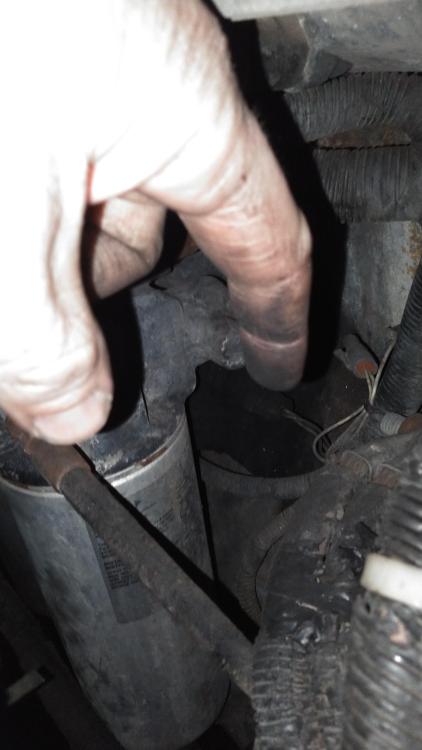
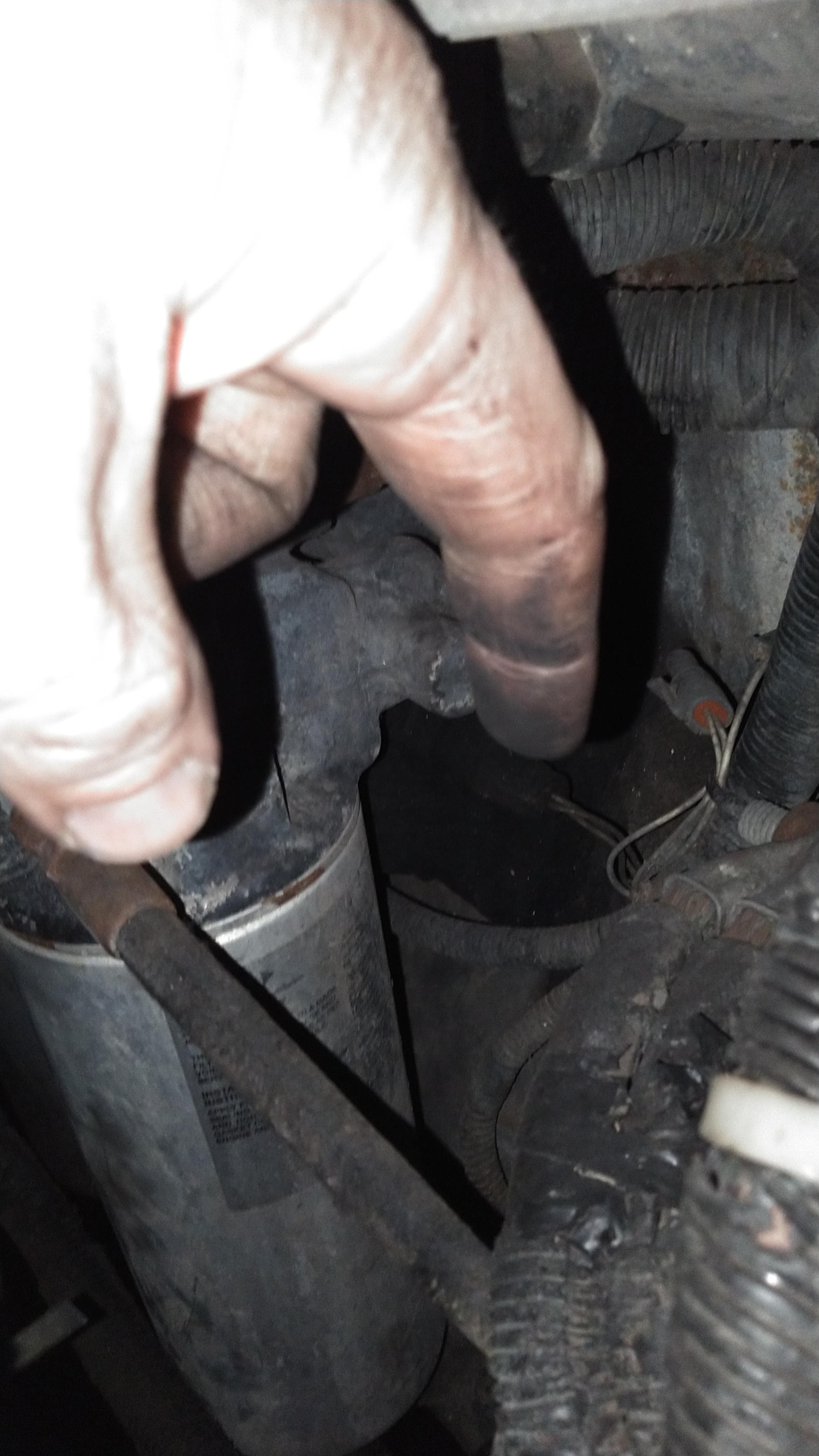
Thumb is pointing at cab gauge oil signal. Index finger is pointing at computer oil pressure sensor. So yes, 2 separate oil signals. (This is a 2003 ai350. Forget what yours is.)
-
2003 MR688S AI350 w/ Allison HD4560 trans. (see post in Modern Truck section to see what we've done) got frame rails back in, everything (I thought) is hooked up. No power to the trans controller, thus not allowing us to crank the engine. (Got it to fire up by jumping a solenoid). Runs but won't go into gear as there's no power to the gear selector! Truck has a ton of hours on it, so needless to say wiring has been "repaired" by former owners a time or two. There's a makeshift power wire coming off ignition terminal in dash, T's into a wire in the gear selector harness. This wire has power when key is on. (According to my dad, I haven't verified. Will do so tomorrow.) Assuming it's getting power, where does it ground? This tiny power wire seems hardly sufficient to power "everything" so what else should I be looking for? Also note it has Blink Code 6-8, which indicates a failure in the J1939 serial data link, which is 2 wires twisted together (to obscure any potential interference,) running from the VECU to the Transmission. Would a break in this link cause the above No Power fault?
-
Plan on doing a full delete next time the truck gets a clutch.
-
Oil lubrication ports may be left wide open thus bleeding oil pressure, the idler gear is still in there slapping around waiting to grenade... And it still may not solve your noise complaint as the idler gear could be a large part of the noise.
-
Last one we did was a dry liner in our 1979 endt676 12 years ago. Dropped a valve seat so it got one piston/liner kit and a rebuilt cylinder head. I remember my dad welding the inside bore of the old liner to get it out, and I don't remember doing anything special to drive the new one in. Probably scuff sanded the block bore and drove the new liner in with a wheel seal driver and/or a block of wood. We aren't technical enough to measure bore interference.
-
Cylinder liner kits aren't too bad to do. You already have the head off, that's the hardest part. Drain the oil, drop the oil pan, pull the connecting rod off the crank and send the piston and rod out the top. A vertical weld up the old piston liner is all you need to loosen it. Forget how we drive the new liner in, probably a block of wood and a hammer... Might be a brass punch involved at the end.
-
Yes, it has the disconnect switch. Batteries have been out of the truck for a couple weeks now for the frame work, so I can't look into this light thing til tomorrow when I go over everything with a fine tooth comb to make sure I have everything hooked up properly. I'm a bit nervous of the wiring. It's only 19 years old, but.... 26,000 hours on it....
-
So is this a programming thing? A parameter that can be switched off?
-
Diesel gels over at 13 degrees, and thaws back out around 35 degrees. (Fahrenheit) additives reduce the gel temperature some, but -20-40 is pretty cold. Fuel is probably gelled over.
-
I'd disassemble the entire thing, sandblast and paint each individual component and slap it back together with new bolts. Rust sets in between every layer and pushes things apart. There will be rust cancer hiding behind suspension brackets.
-
Read the manual I linked. Looks like trans has to come out, fly wheel has to come off to remove the drive gear/idler gear assembly. More to it than just pulling off the output assembly.
-
https://macktrucks.vg-emedia.com/ProductDetail.aspx?ProductId=7607 Looks like there's a link for View File. I downloaded it, it's the same manual for e7 and ETech engines, so that covers yours.
-
All I know is the technical name is REPTO. Rear Engine PTO. Should be information in a Body Builder manual. I should think it would be no problem to remove it and the associated gears. Take it apart and see what you see!
-
Could be daytime running lights that stay on like modern cars do. You shut the car off, go inside, and the lights shut off after a minute. That's my best guess. This is my first MR too, haven't had much play time with it.
-
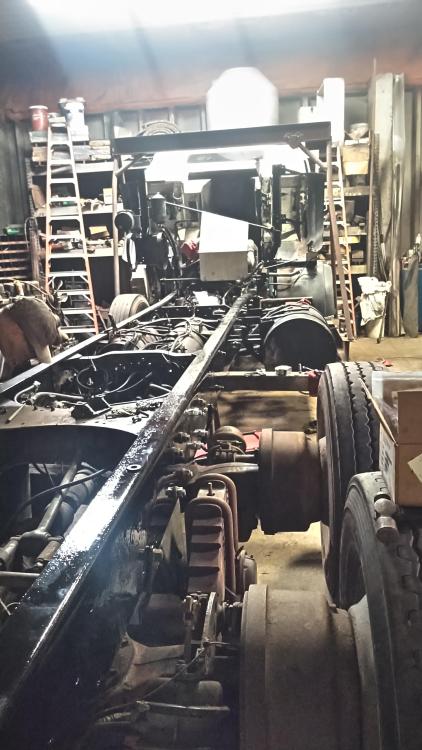
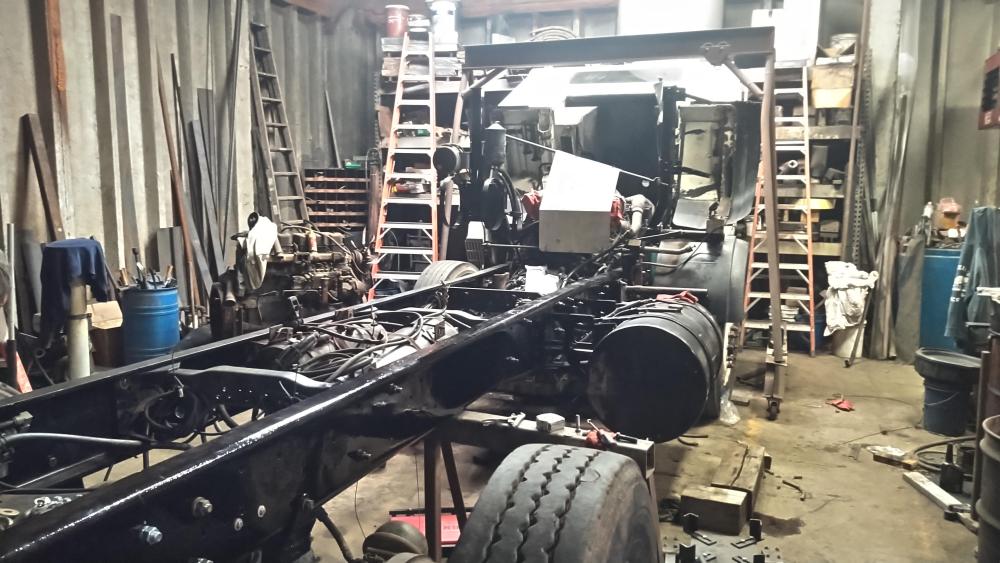
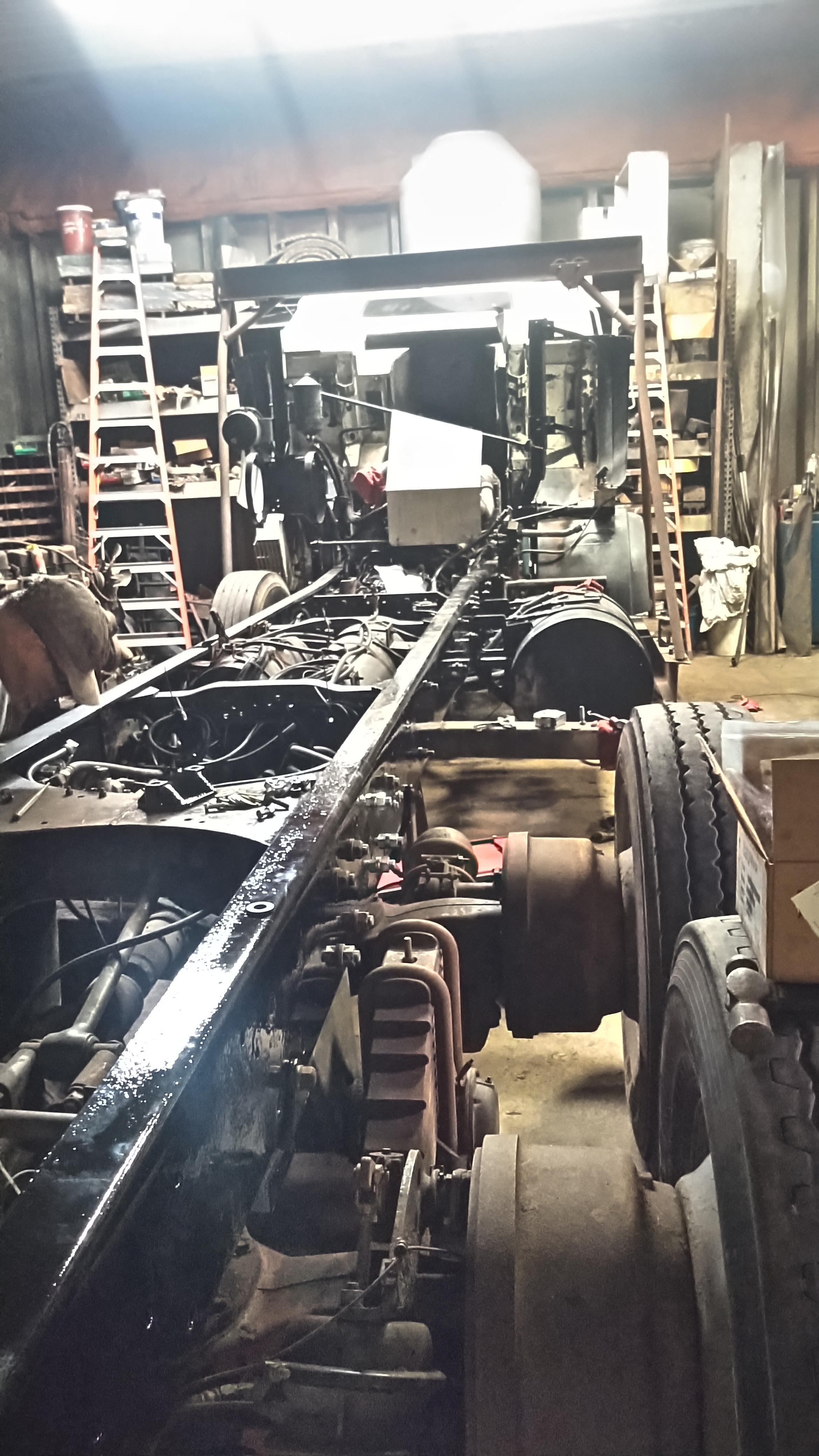
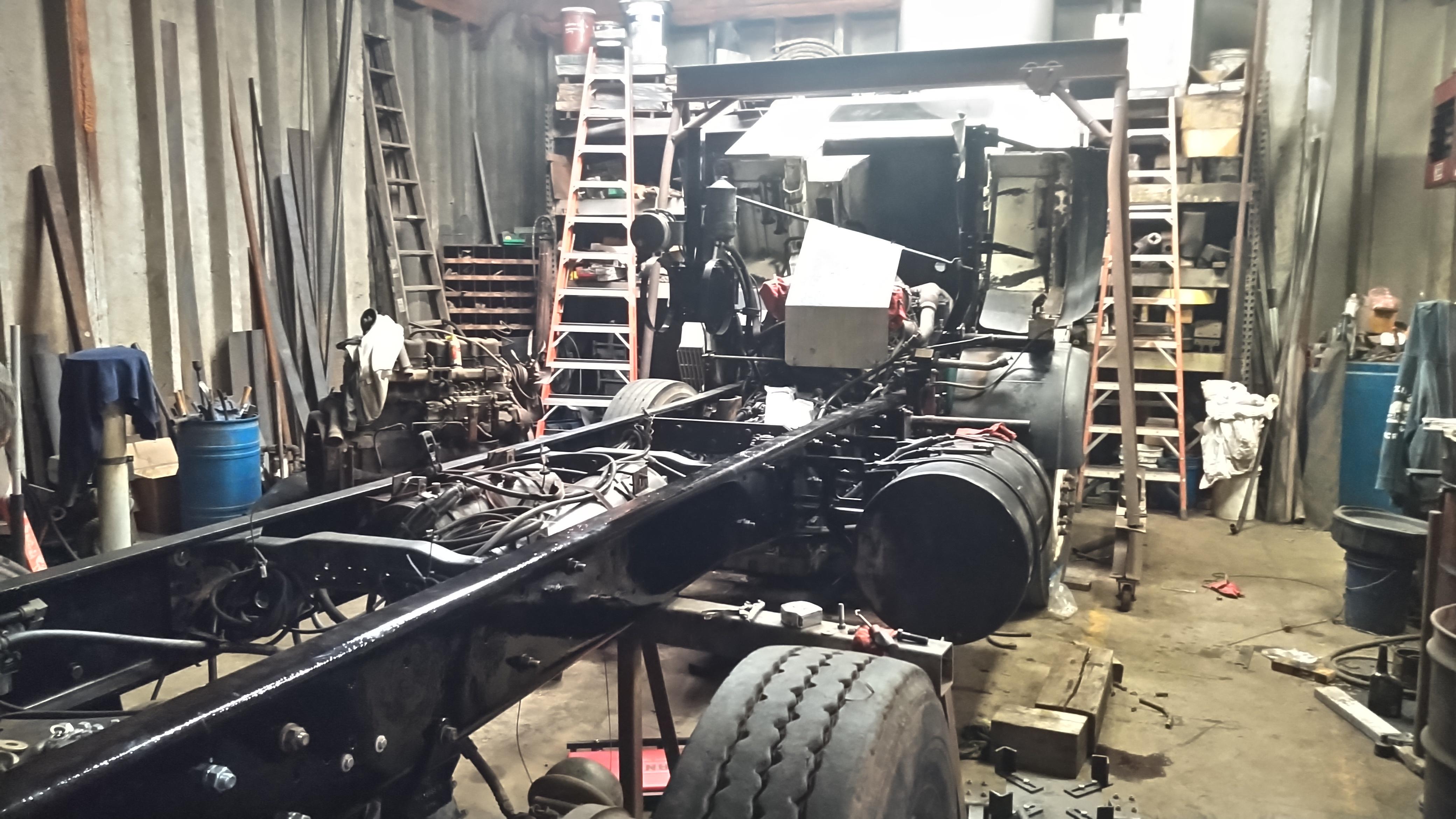
Today's progress: right frame rail installed, tandem slid forward to the new wheelbase. Miscellaneous brackets installed for bumper, skid plate, cab tilt, exhaust, fuel tank, etc. Shortened driveshaft should arrive tomorrow or Friday, hopefully the lift axle is coming by Friday, though the tracking number TForce Freight provides is bogus. All in all I think we've made a lot of progress in 2 weeks. Won't be particularly pretty when it's done, but we've always had more interest in structural integrity than chrome. These trucks just get covered in concrete dust. All this work is simply to eliminate the Rust Jacking in the frame, not to make it cute.
-
Sleeper would be interested on an MR, it couldn't mate to the cab as there's part of an engine in the way. Would definitely be a neat rig if you could pull it off!
-
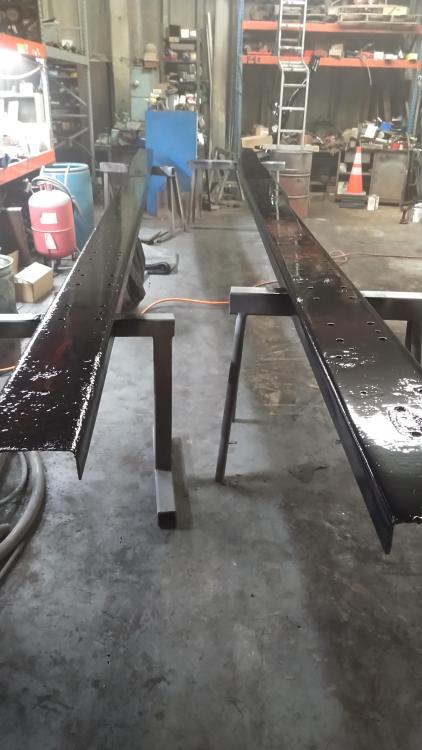
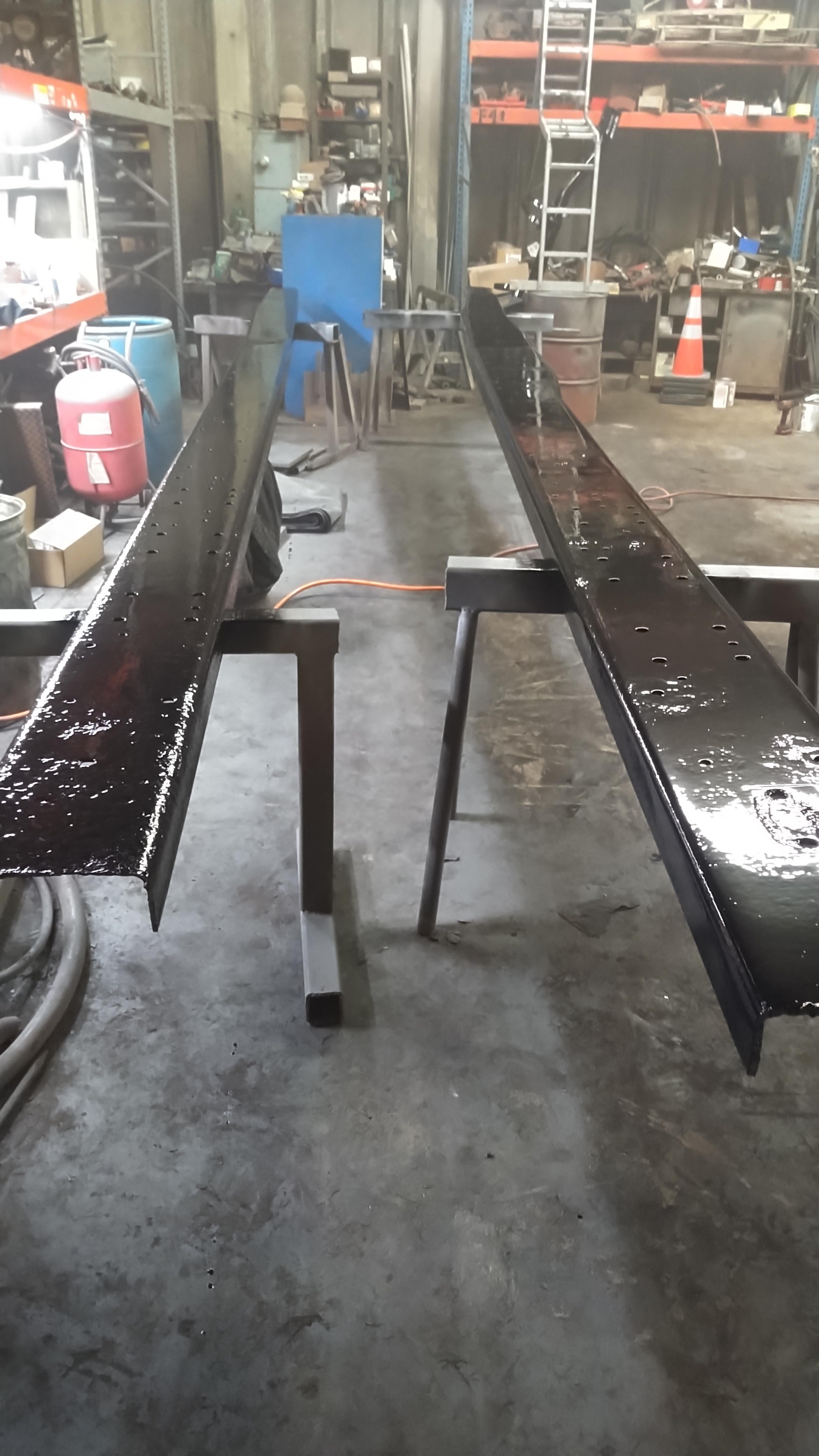
New Years Eve had the paint store closed, so we didn't get as much done last Friday as we hoped. Finally got the right frame rails and about 10-15 miscellaneous brackets sand blasted and painted. Everything is sitting in the garage baking at 75 degrees overnight. 8am tomorrow starts the install process. Should go smoothly, no reason for it not to. Lift axle should arrive end of the week, hopefully the shortened driveshaft will be back soon too. One of my tenants is a collision center, I may ask them to prep the cab for paint. That's one task I don't enjoy so much. More pictures promised as progress continues!
-
Older Mack engines
JoeH replied to Dale smith's topic in Antique and Classic Mack Trucks General Discussion
I think this hits closer to the mark. "Lugging" is trying to accelerate when you are too far below your power band. There is a surging effect in power delivery that damages things. Mack figured out how to make smooth power at a lower RPM, allowing them to start the power band lower and thus reduce the need for so many gears. All this achieved by injection timing, fuel delivery, etc. Mack, having engineering control over every vehicle component from engine to trans to rears allowed them to do what other brands like CAT and Cummins couldn't. CAT and Cummins had to design their power delivery to match generic transmissions. Not a chance in hell Eaton would have made a 5-6 speed transmission to pair as an option for one specific CAT motor with a wide power band motor. Not enough sales market. Eaton would be dependent on the end user spec'ing a KW or Pete with that motor and trans to sell the transmission. Mack was able to build a 40+ year reputation on it. I don't know what kind of market share Mack had on OTR long haul trucking from the 60s to 2000, but I'm guessing not too much as truck stops don't seem to favor them. I'd guess the Maxidyne setup earned them a huge share of local/regional market, where 55-60mph was all that was ever asked of a truck, but left the market open to CAT and Cummins for cross country trucking where the bigger liter engines moved along at 70+ mph. -
Older Mack engines
JoeH replied to Dale smith's topic in Antique and Classic Mack Trucks General Discussion
Type of valves shouldn't matter, the slower an engine turns over the easier it is to keep valve train (pushrods, rockets, lifters, etc.) from floating. Do t know what Rees valves are. -
Older Mack engines
JoeH replied to Dale smith's topic in Antique and Classic Mack Trucks General Discussion
My understanding is that it is high oil pressure. Most trucks regulate oil pressure around 45 psi, but our 1979 maxidyne runs about 90 psi. The higher your oil pressure the more it can withstand the downward pressures in the crankshaft journals before metal to metal contact.


BMT Forum Logo