


kscarbel2
-
Posts
19,151 -
Joined
-
Days Won
115
Content Type
Profiles
Forums
Gallery
Events
Blogs
BMT Wiki
Collections
Store
Everything posted by kscarbel2
-
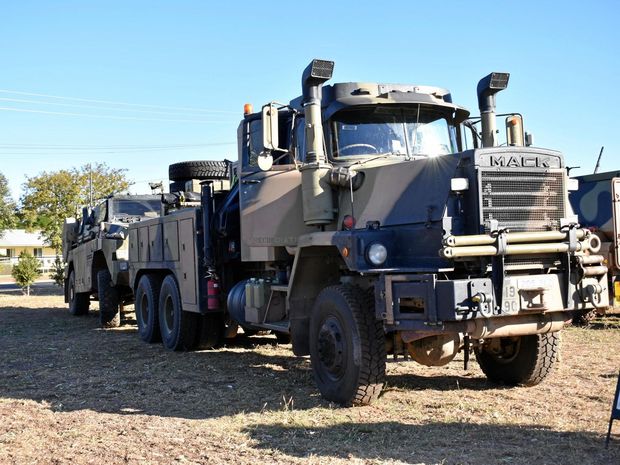
Big Rigs / July 24, 2017 Australian Defense Force (ADF) troops are leaving the Shoalwater Bay Training Area after the Talisman Sabre exercise. Drivers on the Bruce Highway have come across convoys of military vehicles [including Mack RM6866RS wreckers] stretching along kilometres of road. The convoys travel between 60-90km per hour. Drivers should be patient only overtaking vehicles when safe to do so. .
-
-
Because Renault still has "truck people". They are well liked around the world. Despite Volvo trying to restrain Renault and limit some global markets to a Volvo presence (no Renault......or Mack), Renault still embarrasses Volvo in sales performance. It pays off to have a sales force that knows something about trucks.
-
I know the Mack part numbers in my head, Paul. I spent a few years in service engineering (seems like yesterday.....wish it was). Unlike inferior and meaningless Volvo system part numbers, the far superior and simply brilliant Mack part numbering system is memorializable.
-
Volvo has owned all of Prevost (and subsidiary Nova Bus) since 2004. I know that back in 2007, Prevost engine choices were either Volvo D13 or Detroit Series 60. Today there is no choice - Volvo D13.
-
I don't trust the part numbers on that RM6866RS break down. I'd expect the roof to be a 165QS519A. http://www.wattstruckcenter.com/store/index.php?route=product/product&product_id=263&search=roof Rood vent rubber 25RU354 with 812AXF rubber "key". http://www.wattstruckcenter.com/store/index.php?route=product/product&product_id=144&search=roof We used to offer the roof vent under two different part numbers, one beige (23QU45P3) and the other silver gray. I imagine Volvo only supplies silver gray now. http://www.wattstruckcenter.com/store/index.php?route=product/product&product_id=222 Rocker panels: http://www.wattstruckcenter.com/store/index.php?route=product/product&product_id=265&search=rocker http://www.wattstruckcenter.com/store/index.php?route=product/product&product_id=266&search=rocker After providing your Mack dealer with your truck's model and serial number, they should be able to accurately research all the parts you need.
-
Renault Trucks’ global sales results.....versus the Volvo brand: January 2015 Renault up 24% Volvo down 4% February 2015 Renault up 26% Volvo down 13% 1st quarter 2015 Renault up 35% Volvo down 8% April 2015 Renault up 12% Volvo up 9% May 2015 Renault up 5% Volvo down 1% 2nd quarter 2015 Renault up 7% Volvo down 4% July 2015 Renault up 8% Volvo down 5% August 2015 Renault up 60% Volvo down 6% 3rd quarter 2015 Renault up 20% Volvo down 2% October 2015 Renault up 16% Volvo down 1% November 2015 Renault up 54% Volvo down 10% 4th quarter 2015 Renault up 29% Volvo down 7% Full Year 2015 Renault up 22% Volvo down 4% 1st quarter 2016 Renault up 8% Volvo down 8% 2nd quarter 2016 Renault up 12% Volvo down 9% 3rd quarter 2016 Renault down 5% Volvo down 12% 4th quarter 2016 Renault down 5% Volvo down 8% Full Year 2016 Renault up 2% Volvo down 9% 1st quarter 2017 Renault up 3% Volvo down 2% 2nd quarter 2017 Renault down 4% Volvo up 1%
-
The Numbers In Q2 2017, sales (deliveries) from Volvo Group’s truck operations amounted to 52,058* units, down 1 percent from 52,670 units in Q2 2016. Q2 2017 Volvo brand truck sales (overall) rose to 28,510 units globally, up 1 percent from 28,255 units in Q2 2016. Q2 2017 Volvo brand truck sales in North America plunged to 5,665 units, down 17 percent from 6,786 units in Q2 2016. North American Volvo brand truck sales in review: 17 percent sales decline in Q2 2017 versus Q2 2016 40 percent sales decline in Q1 2017 versus Q1 2016 49 percent sales decline in Q4 2016 versus Q4 2015 49 percent sales decline in Q3 2016 versus Q3 2015 39 percent sales decline in Q2 2016 versus Q2 2015 41 percent sales decline in Q1 2016 versus Q1 2015 4 percent sales decline in Q4 2015 versus Q4 2014 12 percent sales increase in Q3 2015 versus Q3 2014 27 percent sales increase in Q2 2015 versus Q2 2014 27 percent sales increase in Q1 2015 versus Q1 2014 15 percent sales increase in Q4 2014 versus Q4 2013 24 percent sales increase in Q3 2014 versus Q3 2013 17 percent sales increase in Q2 2014 versus Q2 2013 93 percent sales increase in Q1 2014 versus Q1 2013 19 percent sales increase in Q4 2013 versus Q4 2012 10 percent sales increase in Q3 2013 versus Q3 2012 7 percent sales increase in Q2 2013 versus Q2 2012 39 percent sales decline in Q1 2013 versus Q1 2012 17 percent sales decline in Q4 2012 versus Q4 2011 7 percent sales decline in Q3 2012 versus Q3 2011 19 percent sales increase in Q2 2012 versus Q2 2011 38 percent sales increase in Q1 2012 versus Q1 2011 66 percent sales increase in Q4 2011 versus Q4 2010 91 percent sales increase in Q3 2011 versus Q3 2010 152 percent sales increase in Q2 2011 versus Q2 2010 124 percent sales increase in Q1 2011 versus Q1 2010 78 percent sales increase in Q4 2010 versus Q4 2009 103 percent sales increase in Q3 2010 versus Q3 2009 58 percent sales increase in Q3 2010 versus Q3 2009 1 percent sales decline in Q1 2010 versus Q1 2009 Q2 2017 Volvo brand truck sales in Europe rose to 15,745 units, up 9 percent from 14,430 units in Q2 2016. Q2 2017 Volvo brand truck sales in Africa/Oceania (includes Australia, New Zealand) declined to 1,345 units, down 7 percent from 1,454 units in Q2 2016. Q2 2017 Mack brand truck sales (overall) fell to 5,507 units globally, down 1 percent from 5,588 units in Q2 2016. Global Mack brand truck sales in review: 1 percent sales decline in Q2 2017 versus Q2 2016 24 percent sales decline in Q1 2017 versus Q1 2016 42 percent sales decline in Q4 2016 versus Q4 2015 40 percent sales decline in Q3 2016 versus Q3 2015 22 percent sales decline in Q2 2016 versus Q2 2015 21 percent sales decline in Q1 2016 versus Q1 2015 2 percent sales decline in Q4 2015 versus Q4 2014 6 percent sales increase in Q3 2015 versus Q3 2014 9 percent sales increase in Q2 2015 versus Q2 2014 16 percent sales increase in Q1 2015 versus Q1 2014 30 percent sales increase in Q4 2014 versus Q4 2013 24 percent sales increase in Q3 2014 versus Q3 2013 2 percent sales increase in Q2 2014 versus Q2 2013 31 percent sales increase in Q1 2014 versus Q1 2013 14 percent sales increase in Q4 2013 versus Q4 2012 13 percent sales decline in Q3 2013 versus Q3 2012 15 percent sales decline in Q2 2013 versus Q2 2012 38 percent sales decline in Q1 2013 versus Q1 2012 25 percent sales decline in Q4 2012 versus Q4 2011 37 percent sales increase in Q3 2012 versus Q3 2011 48 percent sales increase in Q2 2012 versus Q2 2011 54 percent sales increase in Q1 2012 versus Q1 2011 45 percent sales increase in Q4 2011 versus Q4 2010 34 percent sales increase in Q3 2011 versus Q3 2010 99 percent sales increase in Q2 2011 versus Q2 2010 37 percent sales increase in Q1 2011 versus Q1 2010 38 percent sales increase in Q4 2010 versus Q4 2009 16 percent sales increase in Q3 2010 versus Q3 2009 7 percent sales decline in Q2 2010 versus Q2 2009 36 percent sales increase in Q1 2010 versus Q1 2009 Q2 2017 Mack brand truck sales in North America fell to 5,023 units, down 3 percent from 5,192 units in Q2 2016. North American Mack brand truck sales in review: 3 percent sales decline in Q2 2017 versus Q2 2016 27 percent sales decline in Q1 2017 versus Q1 2016 46 percent sales decline in Q4 2016 versus Q4 2015 41 percent sales decline in Q3 2016 versus Q3 2015 21 percent sales decline in Q2 2016 versus Q2 2015 21 percent sales decline in Q1 2016 versus Q1 2015 1 percent sales increase in Q4 2015 versus Q4 2014 6 percent sales increase in Q3 2015 versus Q3 2014 8 percent sales increase in Q2 2015 versus Q2 2014 15 percent sales increase in Q1 2015 versus Q1 2014 38 percent sales increase in Q4 2014 versus Q4 2013 31 percent sales increase in Q3 2014 versus Q3 2013 9 percent sales increase in Q2 2014 versus Q2 2013 49 percent sales increase in Q1 2014 versus Q1 2013 31 percent sales increase in Q4 2013 versus Q4 2012 4 percent sales decline in Q3 2013 versus Q3 2012 16 percent sales decline in Q2 2013 versus Q2 2012 42 percent sales decline in Q1 2013 versus Q1 2012 32 percent sales decline in Q4 2012 versus Q4 2011 49 percent sales increase in Q3 2012 versus Q3 2011 68 percent sales increase in Q2 2012 versus Q2 2011 61 percent sales increase in Q1 2012 versus Q1 2011 47 percent sales increase in Q4 2011 versus Q4 2010 30 percent sales increase in Q3 2011 versus Q3 2010 138 percent sales increase in Q2 2011 versus Q2 2010 34 percent sales increase in Q1 2011 versus Q1 2010 36 percent sales increase in Q4 2010 versus Q4 2009 21 percent sales increase in Q3 2010 versus Q3 2009 12 percent sales decline in Q2 2010 versus Q2 2009 63 percent sales increase in Q1 2010 versus Q1 2009 Q2 2017 Mack brand truck sales in South America rose to 221 units, up 41 percent from 157 units in Q2 2016. Q2 2017 Mack brand truck sales in Africa/Oceania (includes Australia, New Zealand) rose to 263 units, up 11 percent from 238 units in Q2 2016. Q2 2017 Renault Truck brand sales (overall) declined to 13,110 units globally, down 4 percent from 13,650 units in Q2 2016. Q2 2017 Renault Truck brand sales in Europe declined to 11,941 units, down 3 percent from 12,304 units in Q2 2016. (Q2 2017 Renault Truck brand medium/heavy truck sales in Europe rose to 7,808 units globally, up 2 percent from 7,683 units in Q2 2016. Q2 2017 Renault Truck brand light truck sales in Europe declined to 4,133 units globally, down 11 percent from 4,621 units in Q2 2016.) Q2 2017 UD (Nissan Diesel) brand sales (overall) rose to 4,931 units, down 5 percent from 5,177 units in Q2 2016. Q2 2017 UD (Nissan Diesel) brand sales in Asia rose to 4,021 units, down 3 percent from 4,147 units in Q2 2016. Total Global Deliveries by Brand Q2 2017 Q2 2016 % Change Volvo 28,510 28,255 1 Renault Trucks 13,110 13,650 -4 UD (Nissan Diesel) 4,931 5,177 -5 Mack 5,507 5,588 -1 Total Deliveries 52,058 52,670 -1 Total Global Deliveries by Truck Size Q2 2017 Q2 2016 % Change Heavy Duty (>16 metric tons) 44,075 43,265 2 Medium Duty (7-16 metric tons) 3,762 4,467 -16 Light Duty (<7 metric tons) 4,221 4,938 -15 Total Deliveries 52,058 52,670 -1 Total Global Deliveries by Region Q2 2017 Q2 2016 % Change Europe 27,686 26,734 4 Heavy & medium 23,553 22,113 7 Light duty 4,133 4,621 -11 North America 10,720 12,039 -11 South America 2,692 2,549 6 Asia 7,823 7,963 -2 Africa & Oceania* 3,137 3,385 -7 Total Deliveries 52,058 52,670 -1 * includes Australia, New Zealand
-
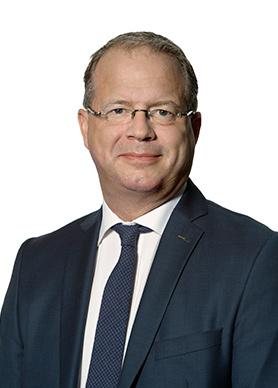
Volvo Group Press Release / July 19, 2017 In Q2 2017 net sales increased by 12% to SEK 88.4 billion (78.9). Adjusted for currency movements and acquired and divested units sales increased by 6%. Adjusted operating income amounted to SEK 8,540 M (6,130), corresponding to an adjusted operating margin of 9.7% (7.8). Currency movements had a positive impact on operating income of SEK 350 M. Operating cash flow in the Industrial Operations amounted to SEK 11.9 billion (6.9). New Volvo VNL long-haul tractor launched in North America. CEO’S COMMENTS Continued profit improvement and strong cash flow The Volvo Group increased both sales and profitability during the second quarter. Compared with the second quarter last year, net sales increased by 12% and amounted to SEK 88.4 billion. The profitability continued to develop positively with an adjusted operating income of SEK 8.5 billion (6.1), which corresponds to an operating margin of 9.7% (7.8). All our business areas improved their operating income. Cash flow in the Industrial Operations was also strong and amounted to SEK 11.9 billion (6.9). The service business continued to develop favorably and grew by 3% compared with the same quarter last year on a currency adjusted basis. We continue to increase our focus on selling complete solutions combining products with services and financing to our customers. Recent trends on the truck markets continue with good demand in Europe, including a distinct recovery in Russia, and a gradual improvement in North and South America, with increased order intake. In Europe, Renault Trucks has improved its market share and Volvo Trucks kept its historically high share while growing it in Russia. Total truck deliveries were down 1% in the quarter driven by lower deliveries in North America. The adjusted operating margin was 9.6%, with the quarter being negatively affected by a stretched supply chain. Our competitive trucks continue to make their mark in the industry. Volvo Trucks and Renault Trucks came in first and second place in the “Young Professionals Truck Award 2017”, which is based on test driving by young truck drivers in Germany. In North America we took a very important step in July with the announcement of the new Volvo VNL series. It is a groundbreaking long-haul tractor with cutting-edge innovations in fuel efficiency, driver productivity, safety and connectivity solutions to maximize uptime. The truck features a new cab with improved aerodynamics and interior, including an all-new, 70-inch sleeper. Together with the Volvo VNR for regional haul, which was announced in April, Volvo will have a product program in North America that is the strongest ever. The new trucks will be ramped-up in production gradually during the second half of 2017. Following the introduction in the first quarter, UD Trucks new heavy-duty and medium-duty truck series with associated services are now launched in an increasing number of markets. Most recently at a major customer event with UD Croner in Dubai. The new trucks strengthen the Group's competitiveness in Japan as well as in emerging markets in Asia and other parts of the world. We see good progress for UD Trucks in Japan, where market share has recovered to 17.8% (16.5). Demand for construction equipment continues to improve in Europe and China, and also with a clear recovery in the mining segment in many parts of the world. Volvo CE’s sales increased by 36% compared to a year ago and amounted to SEK 18.5 billion. Thanks to Volvo CE working intensively to reduce its cost base and keeping tight control over costs now as volumes return, the increased sales has resulted in a significant improvement in profitability with an adjusted operating margin of 13.3%. In general Volvo CE has very competitive products and services with good positions in key markets and segments. We will continue to drive the transformation program that focuses on core products and segments, continuous improvement, improved quality and reduced costs. Volvo Buses’ profitability was stable with an adjusted operating margin of 4.6%. During the quarter Volvo Buses secured a frame agreement for 360 Prevost coaches to Greyhound/First Group, the largest order to date in North America. In the seasonally strong second quarter, not least on the marine side, Volvo Penta's sales increased by 15% and they generated an adjusted operating margin of 15.5%. The positive development with good growth also applies to industrial engines, where Volvo Penta is currently investing to further strengthen their customer offering. In July, Volvo Penta made a move in to the segment for outboard engines when they acquired a majority in the US-based, innovative outboard engine manufacturer Seven Marine. Volvo Financial Services continued to have a good return on equity with low credit losses. Financial services are a very important part of our complete solutions offer and they deepen the relationship with our customers. We have a clear strategy on how to improve the Volvo Group's profitability and grow the service business while we continue to invest in new technologies. We have strong, Group-wide assets that business areas can utilize. At the same time, we are in the process of decentralizing responsibility and creating value chains that are more regional to drive accountability, simplicity and speed to better manage changes in demand. But above all, we are building a culture where continuous improvement is the guiding principle to better serve our customers. Martin Lundstedt President and CEO Report on the second quarter 2017(PDF, 0.9 MB) Presentation material(PDF, 9.9 MB) .
-
Timmy, I couldn't agree with you more. The BMT website follows generally accepted guidelines on posts: no name-calling, personal insults or threats. And no profanity or vulgarity. And it's so easy to go along with. David Wild began the thread, and in his unique style got right to the point of his thoughts. However he didn't break any of those socially-accepted standards. Teamstergrrrl's comment about sobering up comes across as a personal insult. It may have been said in a light-hearted way, but we can't sense "tone" in written posts. Unfortunately written thoughts can be at times misconstrued. Like a Bulldog and anyone in the truck business, nobody here is thin-skinned. But I suggest we all make a conscious effort to respect each other's differing opinions and restrain from insults. After all, at the end of the day, we're all one big family. I'm confident that both Teamstergrrrl and 41chevy (Paul) are each super people in their own right. And certainly we all know by now, they're both extremely intelligent individuals. Hopefully a hand shake and hug can help them bond. We all have just one life and it's far too short. Enjoy yourself on BMT, and enjoy your life. As you say Timmy, with an open mind, one can learn a lot from this site, from people with greatly opinions. I've learned at least one thing from every person that I ever knew, including both people I liked and disliked, agreed with and disagreed with. I had a neighbor in my twenties and we simply disliked each other. But she lectured me one day that if I only threw my wet laundry into the dryer for 2-3 minutes to wring off the water, and then hung them up to dry, the clothes would last for years and years. She was right. Wear and tear in the washing machine can't be helped (front loader is much better), but the dryer is a clothes destroyer.
-
Renault is on the tag of your superb T2130 triple countershaft Mack-designed Maxitorque transmission because it owned Mack at the time. Your transmission was designed at the former Mack Trucks' Engineering, Development and Test Center (ED&TC) in Allentown, PA, the truck capital of the world, and built at the iconic American truckmaker's powertrain plant in Hagerstown, Maryland.
-
Bloomberg / July 21, 2017 The European Commission and the German cartel office, or Bundeskartellamt, are investigating claims that Germany’s major carmakers may have been operating a cartel since the 1990s, colluding on everything from vehicle development and engines, to suppliers and diesel emissions systems. A report in Der Spiegel magazine this week said the biggest car manufacturers -- Daimler AG, BMW AG and Volkswagen AG as well as VW’s Audi and Porsche brands -- may have colluded for decades on technology. According to the Spiegel report, the five German car brands met starting in the 1990s to coordinate activities related to their vehicle technology, costs, suppliers and strategy as well as emissions controls in diesel engines. Their discussions involved more than 200 employees in 60 working groups in areas including auto development, gasoline and diesel motors, brakes and transmissions. Talks may have also involved the size of tanks for AdBlue fluid for diesel autos, which is at the heart of the emissions case. The Spiegel article said that one aim of the collusion was to obstruct competition, with the carmakers agreeing on costs for components or technical details such as convertible roofs. According to the cartel office, the raid took place exactly a year ago and targeted six carmakers and suppliers. Der Spiegel said that the follow-up probe was essentially a by-product of that raid, which involved 50 employees of the cartel authority, aided by local police and regional law-enforcement officers. Related reading - https://www.bigmacktrucks.com/topic/46111-truckmakers-get-record-324-billion-eu-fine-for-cartel/#comment-372456
-
Ford to petition to avoid U.S. recall of 2.5 million vehicles Reuters / July 21, 2017 WASHINGTON -- Ford Motor Co. will petition to avoid a U.S. recall of about 2.5 million vehicles with Takata airbag inflators that the Japanese auto supplier declared defective last week, U.S. regulators and the automaker said Friday. Separately, the National Highway Traffic Safety Administration said Nissan Motor Co. had agreed to recall 515,394 2007-2011 Versa cars after Takata declared 2.7 million vehicles to have potentially defective inflators. Ford spokesman John Cangany said the automaker will file a petition requesting "to continue testing and analyzing our inflators." NHTSA said the petition will seek an exemption from the recall because Ford believes the issue is inconsequential. Ford said the issue covers 2.5 million vehicles, including the 2007-11 Ranger, 2006-12 Fusion and Lincoln MKZ, 2006-2011 Mercury Milan and 2007-10 Ford Edge and Lincoln MKX. Ford previously said it covered about 2.2 million vehicles. Last week, NHTSA said that new testing prompted Takata to declare inflators defective in Ford, Nissan and Mazda vehicles in some driver-side airbags built from 2012 through 2015. NHTSA said in a statement Friday that "testing data shows that the propellant in this inflator is degrading and on the path towards potential ruptures in the future. There are no reported ruptures in the real-world or in testing." Takata airbag inflators are already linked to 17 deaths and more than 180 injuries worldwide, and the recalls will eventually cover about 125 million inflators. Nissan said last week it would recall 627,000 Versa cars from 2007-2012 model years, including 515,000 in the United States "out of an abundance of caution." Nissan said testing of 895 inflators showed no ruptures, while one "exhibited an elevated internal pressure." Takata said the inflators potentially could rupture "after several years of exposure to high absolute humidity." Mazda said last week the issue impacts just 6,000 B-series trucks. The company also plans to file a petition to avoid a recall, NHTSA said. The automakers have 30 days to submit the petition and then NHTSA will take public comment before making a decision. More than 65 percent of 46.2 million previously recalled Takata airbag inflators in the United States have not been repaired. The issue is the largest-ever auto-safety recall, covering 17 automakers. Takata filed for Chapter 11 bankruptcy protection in June.
-
Billy, my thought is, the "Odds and Ends" thread is designated "for non-truck related topics", including current events. (The "VIP Lounge" is also broad topic) BMT's general guidelines on posts are, no name-calling, personal insults or threats. And no profanity or vulgarity. Some of the posts can be high spirited at times, but in general BMT members are a high caliber group of people that contribute to the website being unparalleled in nature. We all need to remember that everyone has a right to their own opinion. And there's absolutely no point to getting high blood pressure over another person's thoughts (opinions). If you disagree with another person's opinion, ignore it and move on. A few things in life are still so simple and effortless. Some healthy discussions on current events and other in the "Odds and Ends" thread isn't a bad thing, if members express themselves reasonably. There are a lot of very intelligent people here that bring some legitimate viewpoints to the table. Even though opinions may conflict with each other at times, it doesn't mean they're without merit.
-
A little Tatra history.................. Beginning with the Tatra 111. No frame, in the conventional sense. 210 horsepower Model V910 air-cooled V-12 engine. .
-
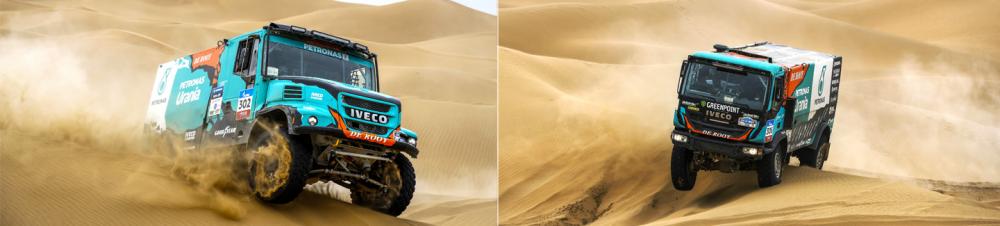
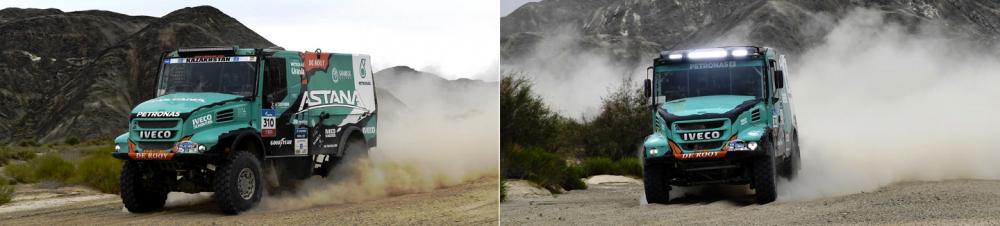
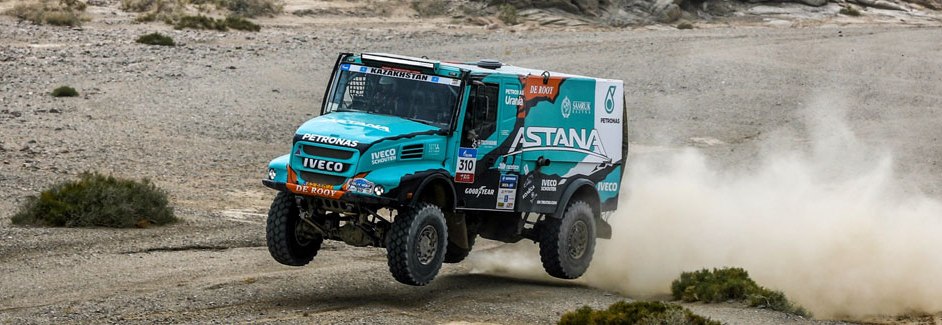
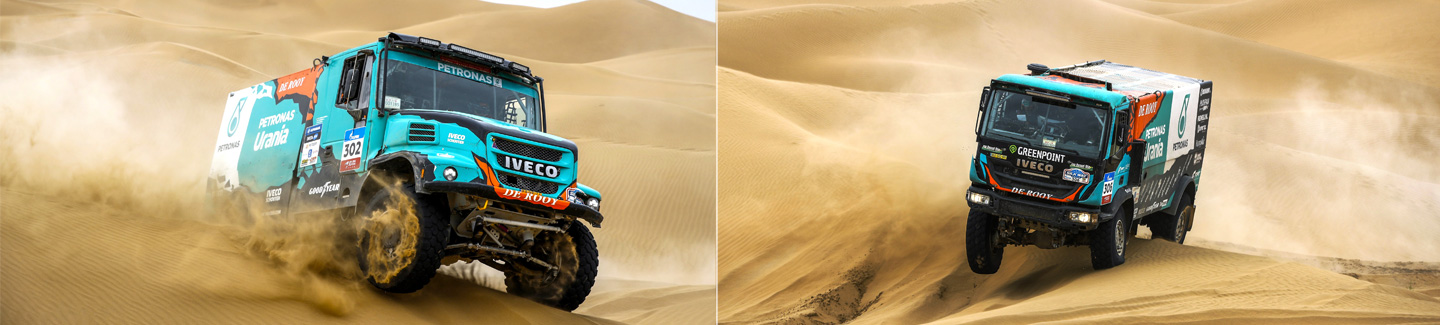
SILK WAY RALLY 2017: All drivers of Team PETRONAS De Rooy IVECO in the top ten of Stage 12 IVECO Trucks Press Release / July 21, 2017 Team Leader Gerard De Rooy, on his Powerstar Evo 2, crossed the finish line in this difficult stage in 4th position, ahead of his teammates. Artur Ardavichus finished in 7th place on his Powerstar, improving his overall ranking to 4th place two stages from the end of the Silk Way Rally. Ton Van Genugten and new co-pilot Bart De Gooyert arrived 8th, placing the third IVECO truck in the top ten of the day. For Team PETRONAS De Rooy IVECO yesterday’s stage, from the bivouac in Jiayugan to Alashan Youqi, finished with very good results. Team leader Gerard De Rooy did particularly well, crossing the finish line with a time of 4h14m33s. The new completely renovated Powerstar arrived fourth in the day’s stage: “We lost time because of a problem with a tyre, otherwise we could have made an even better time – said Gerard – We enjoyed very much driving in the dunes: the cloudy weather and milder temperature helped us”. Artur Ardavichus, behind the wheel of the other IVECO Powerstar, drove carefully avoiding risks in order to maintain or improve his place in the overall. Marco Alcayna Ferran, in his second stage as co-pilot (he replaced injured Belgian Serge Bruynkens) explained: “Today we faced beautiful dunes. I will say it was one of the most difficult legs since the beginning of the rally. The truck has a lot of power and this was really important to cross the long kilometers of sand.” Thanks to the result obtained yesterday after leg 12, the Kazakh pilot is in the 4th position of the general with an advantage of more than 12 minutes ahead of Nikolaev’s Kamaz. Dutchman Ton Van Genugten (#306) also completed the SS12 in the top ten of the partial classification, crossing the finish line in 8th place. Now in his second day with new co-driver Bart De Gooyert, he drove faster and he was also able to improve the overall position: behind the wheel of his IVECO Trakker, he is now in 7th place. Thanks to the team’s mechanical experts – John Peeters, Niels van Tilborg, Ramon Peters, Franklin Geerts, Paul Starmans, Peter van Rooij, Corne van Drunen, Clim Smulders, Koen Hendriks and Pjotr Hylla – Team PETRONAS De Rooy IVECO was able to resolve all unforeseen events occurred in the particularly tough stages of the Silk Way Rally. Today, July 21st, competitors left early to face magnificent landscapes and especially to cross cathedrals of dunes in the first special stage. The show promises to be really great. The second SS also includes a lot of navigation with some small but very technical sections of dunes. It is a pure pleasure to surf in this sand especially on the ridges and this should allow the most adventurous to save a lot of time. This leg will probably add some pages to the history of the Silk Way Rally. Total distance: 690.31 km of which 318.66. Stage 12 results – Silk Way Rally 2017 1. Airat Mardeev (Kamaz) 4h04m08s 2. Anton Shibalov (Kamaz) +2m15s 3. Eduard Nikolaev (Kamaz) +3m01s 4. Gerard De Rooy (IVECO) +10m25s 5. Siarhei Viazovich (Maz) +13m33s ---- 7. Artur Ardavichus (IVECO) +22m20s 8. Ton Van Genugten (IVECO) +23m13s Overall classification – Silk Way Rally 2017 1. Dmitry Sotnikov (Kamaz) 38h16m38s 2. Anton Shibalov (Kamaz) +3m04s 3. Airat Mardeev (Kamaz) +17m54s 4. Artur Ardavichus (IVECO) +2h03m14s 5. Eduard Nikolaev (Kamaz) +2h15m53s ---- 7. Ton Van Genugten (IVECO) +8h42m34s 13. Gerard De Rooy (IVECO) +215h24m54s Starting order for SS14 – 21th July 2017 ----- 06.33 Airat Mardeev (Kamaz) 06.37 Anton Shibalov (Kamaz) 06.43 Gerard De Rooy (IVECO) ----- 06.57 Artur Ardavichus (IVECO) 06.59 Ton Van Genugten (IVECO) .
-
-
Commercial Carrier Journal (CCJ) / July 21, 2017 For the 10th consecutive year, trucking companies will see increased fees on the Pennsylvania Turnpike in 2018. The Pennsylvania Turnpike Commission (PTC) approved a 6 percent increase for both E-ZPass and cash customers, which will take effect Jan. 7, 2018. The increase will see the most common toll for a Class 8 truck increase from $23.60 to $25.01 for E-ZPass and from $33.10 to $35.08 for cash. The annual increases of 3 to 6 percent are expected to continue for the Turnpike through 2044, according to PTC Chairman Sean Logan in 2015. According to a statement from the turnpike authority, such increases are required to meet the PTC’s various funding obligations, which include supporting PennDOT’s improvements along the 550-mile toll-road system.
-
Freightliner introduces next-generation Cascadia
kscarbel2 replied to kscarbel2's topic in Trucking News
-
Ford overhauls design with 2 key teams Automotive News / July 21, 2017 Ford Motor Co. is shaking up its design team to shorten product development cycles and better define the group's overarching strategy. The changes expand Ford's strategic design group to enable designers to work more collaboratively at a centralized location in Dearborn, Mich. Designers are grouped into two camps: one covering cars and crossovers, and another handling trucks, SUVs and commercial vehicles. The automaker is bringing Joel Piaskowski, director of Ford of Europe design, to the U.S. as global director of design overseeing cars and crossovers. Chris Svensson, design director of the Americas, has been named global director of design overseeing trucks, SUVs and commercial vehicles. David Woodhouse, director of Lincoln design, has been named director of global strategic design in addition to his duties with Ford's luxury brand. In his new role, Woodhouse will oversee the expansion of Ford's global strategic design group. Amko Leenarts will replace Piaskowski as director of Ford of Europe design. In addition, Freeman Thomas, strategic design director based at Ford's advanced design studio in Irvine, Calif., will retire at year end. Thomas managed the company's advanced design studios in Dearborn, Irvine, London and Shanghai. Moray Callum, Ford's vice president of design, said the changes are meant to enhance the team's thinking. He said the company will focus even more on consumer experiences through design-thinking and human-centric approaches. One of Callum's biggest goals, he said, is to shorten product development times so that a new vehicle's final designs are set closer to when it goes on sale. "If there's a strong strategy behind decisions, it makes decisions easier," he told Automotive News. Ford has a number of new vehicles on the horizon, including the Bronco SUV, Ranger midsize pickup, an electric SUV and an autonomous vehicle. Callum said as vehicles add self-driving capabilities, design becomes more important. "I don't think design will ever matter less" than it does now, he said. "What we're communicating by our design is very important. We want people to trust the car and the brand and we need to communicate that in the exterior and interior design." Over the last five years, Callum said, his team has nearly doubled in size. Ford will soon break ground on a new design center as part of a decadelong transformation of its Dearborn campus. Callum said the changes to the design team were in the works before CEO Jim Hackett took over in May, but that it fits in seamlessly with his desire to transform the company. Callum said, "We see him as a great supporter of design overall."
-
Bill Gross warns of recession risk if highly levered economies hike rates Reuters / July 20, 2017 NEW YORK - Highly levered domestic and global economies including the United States, which have "feasted" on easy monetary policies in recent years, cannot withstand a normalizing of short-term interest rates without running the risk of a recession, influential bond investor Bill Gross of Janus Henderson Investors warned on Thursday. In his latest Investment Outlook, Gross, who runs the $2.1 billion Janus Henderson Global Unconstrained Bond Fund, said Federal Reserve Chair Janet Yellen and other global policy makers should not rely on historical models "in an era of extraordinary monetary policy. "The adherence of Yellen, Bernanke, Draghi, and Kuroda, among others, to standard historical models such as the Taylor Rule and the Phillips curve has distorted capitalism as we once knew it, with unknown consequences lurking in the shadows of future years," Gross said. He was referring to Yellen's predecessor at the Fed, Ben Bernanke, European Central Bank President Mario Draghi and Bank of Japan head Haruhiko Kuroda. Economists John Taylor and A.W. Phillips devised models for guiding interest-rate policy based, respectively, on inflation and the unemployment rate. Those models disregard the importance of private credit in the economy, according to Gross. Gross said that over the past 25 years, the three U.S. recessions in 1991, 2000 and 2007-2009 coincided nicely with a flat yield curve between three-month Treasury bills and 10-year Treasuries. "Since the current spread of 80 basis points is far from the 'triggering' spread of 0, economists, and some Fed officials as well, believe a recession can be nowhere in sight," Gross said. But monetary policy following the collapse of investment bank Lehman Brothers in 2008 has been abnormal, and global central banks "can’t seem to stop buying bonds, although as compulsive eaters and drinkers frequently promise, sobriety is just around the corner," he said. Gross said most destructive leverage occurs at the short end of the yield curve as the cost of monthly interest payments increase significantly to debt holders. "While governments and the U.S. Treasury can afford the additional expense, levered corporations and individuals in many cases cannot," he said. Since the Great Recession, more highly levered corporations, and in many cases, indebted individuals with floating-rate student loans now exceeding $1 trillion, cannot cover the increased expense, resulting in reduced investment, consumption and ultimate default, Gross said. "Commonsensically, a more highly levered economy is more growth sensitive to using short-term interest rates and a flat yield curve, which historically has coincided with the onset of a recession," he said.
-
SILK WAY RALLY 2017: Gerard de Rooy achieves best result of the team in the 11th Stage IVECO Trucks Press Release / July 20, 2017 Team Leader Gerard De Rooy finishes Stage 11 in 7th position, ahead of his teammates. Spanish co-pilot Marco Ferran Alcayna moved from Van Genugten’s Trakker to Ardavichus’ Powerstar to replace injured Serge Bruynens. Bart De Gooyert is Van Genugten’s new co-pilot. The 11th stage of the 2017 Silk Way Rally between Dunhuang and Jiayuguan, situated at the western end of the Great Wall, was the eve of the two stages considered to be the most enjoyable but also the toughest of the rally. Yesterday morning Gerard De Rooy started at 9.09 after his teammates, and crossed the line on his IVECO Powerstar #302 in 2h35m13s, just 5m45s from the winner. “Our truck is finally really good, we had a clean stage without stops and problems – explained Moises “Moi” Torrallardona, Gerard’s experienced co-driver – We drove sometimes faster and at times slowly, the track was soft at the start and harder at the end but we enjoyed it very much. Now we are waiting for the big dunes of tomorrow: Gerard is one of the best drivers on sand and the truck is ok.” In spite of the good result, Team leader De Rooy lies in 14th position of the overall. There was an important change in the crew of Powerstar #310 driven by Artur Ardavichus: due to a stressed nerve incurred on a violent impact during a special stage, Belgian co-driver Serge Bruynkens had to retire from the rally. Marco Ferran Alcayna, Ton Van Genugten’s co-pilot, has replaced him and will continue as Ardavichus’s co-driver until the end of the rally. Dutchman Bart De Gooyert will join Ton Van Genugten and expert crewmate Bernard Der Kinderen crew on board the IVECO Trakker #306. “Today the stage was really technical like yesterday, fast and bumpy. I’m sorry for the physical problem that forced Serge to retire from the race before the end but, unfortunately, it’s part of the game” explained the Kazakh pilot. Ardavichus finished the 11th stage in eighth position just 14s behind De Rooy. He maintains his 5th place in the general ranking with a good advantage of more than half of an hour on Kamaz pilot Eduard Nikolaev. Ton Van Genugten drove his IVECO Trakker slowly in the first part of the stage to test his new crew, then picked up speed. “We quickly developed a good feeling with Bart, mechanic and co-driver, and this allowed us to make our race in the best way.” He crossed the finish line in 2h44m04s. Today, July 20th, will take place one of the two toughest stages – from Jiayuguan to Alashan – with beautiful dunes at the beginning and more at the end. Navigation will play the lead role in this stage where all types of terrain will be represented. Pilots will need to call on their best driving abilities. Stage length: 483.79 km of which 254.75 km of special. Stage 11 results – Silk Way Rally 2017 1. Martin Kolomy (Tatra) 2h29m28s 2. Anton Shibalov (Kamaz) +0m49s 3. Dmitry Sotnikov (Kamaz) +1m07s 4. Airat Mardeev (Kamaz) +3m18s 5. Eduard Nikolaev (Kamaz) +3m40s ----- 7. Gerard De Rooy (IVECO) +5m45s 8. Artur Ardavichus (IVECO) +5m59s 10. Ton Van Genugten (IVECO) +15m12s Overall classification – Silk Way Rally 2017 1. Dmitry Sotnikov (Kamaz) 33h58m25s 2. Anton Shibalov (Kamaz) +14m54s 3. Martin Kolomy (Tatra) +29m23s 4. Airat Mardeev (Kamaz) +31m59s 5. Artur Ardavichus (IVECO) + 1h54m59s ----- 9. Ton Van Genugten (IVECO) +8h33m26s 14. Gerard De Rooy (IVECO) + 215h28m34s Starting order for SS12 – 20th July 2017 ---- 07.42 Martin Kolomy (Tatra) 07.44 Anton Shibalov (Kamaz) ---- 08.02 Gerard De Rooy (IVECO) 08.04 Artur Ardavichus (IVECO) 08.09 Ton Van Genugten (IVECO) .
-
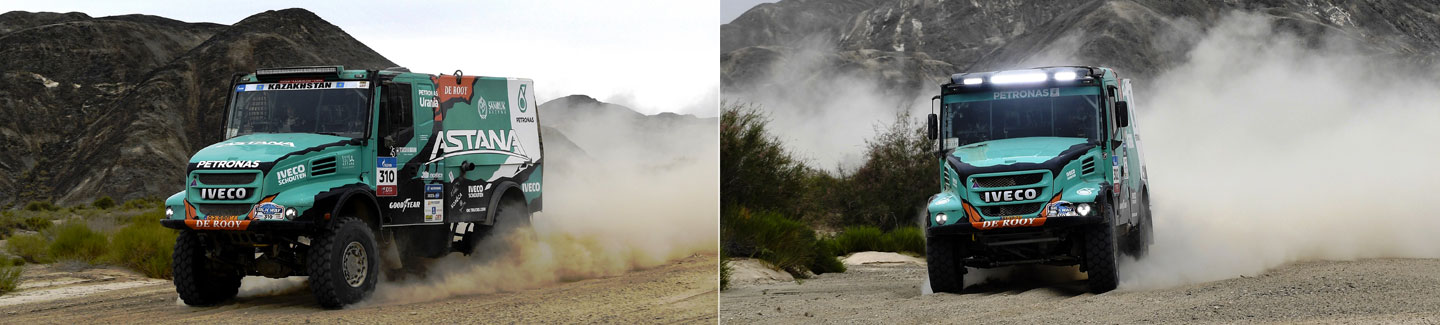
SILK WAY RALLY 2017: two IVECO trucks again in the top ten of overall ranking after 10th Leg IVECO Trucks Press Release / July 19, 2017 Artur Ardavichus, the Kazakh driver on board the Powerstar #310, finished the daily stage in sixth place and remains fifth in the overall. Dutch pilots Ton Van Genugten and Gerard De Rooy crosssed the finish line of this third Chinese stage in 8th and 9th place respectively. Van Genugten is firmly in 8th position of the partial general ranking, while Team leader De Rooy is 16th. The third stage of 2017 Silk Way Rally hosted in Chinese territory started from Hami and reached Dunhuang after crossing a big wadi with magnificent landscapes: about 320 km of special stage (total distance 517.53 km), very fast at the start and then more technical and slower with many changes of direction. Ardavichus was again at the daily start line ahead his teammates. He finished this SS with a time of 3h43m58s, just 8m37s behind the first. Thanks to his careful driving, the Kazakh was again in 5th position of the overall ranking after ten hard stages. He really could be the man of this edition of the famous rally raid for Team PETRONAS De Rooy IVECO, beside Russia, Kazakhstan and China. This stage of the Silk Way Rally was more difficult for the other two members of the team: De Rooy, who started just behind Ardavichus, was slowed down by some mechanical issues and lost about half an hour. “The special was very nice with some amazing passages and the truck felt good even if not in optimum conditions. We are waiting for the special and the dunes of tomorrow” – said Gerard who placed 9th in the daily ranking. The third man of PETRONAS De Rooy IVECO Team, Ton Van Genugten, now in 8th position of the partial overall, drove faster in the second part of the leg to recover the time lost to help De Rooy when he got in trouble 30 km before the finish. Behind the wheel of his IVECO Trakker #306, he arrived 8th in the stage at Hami-Dunhuang. The general classification after leg 10 sees him in 8th position. Today, July 19th, as the first special was due to be run in a region that has very recently declared a nature reserve by the Chinese authorities, the organisers of the Silk Way Rally have decided to cancel ES11A while maintaining the second timed special (ES11B) of the 11th stage. Held in wide sand river and between the canyons, it will be very fast at the end. Stage 10 results – Silk Way Rally 2017 1. Eduard Nikolaev (Kamaz) 3h35m21s 2. Martin Kolomy (Tatra) +1m29s 3. Dmitry Sotnikov (Kamaz) +2m29s 4. Anton Shibalov (Kamaz) +3m14s 5. Airat Mardeev (Kamaz) +5m47s 6. Artur Ardavichus (IVECO) +8m37s ---- 8. Ton Van Genugten (IVECO) +29m27s 9. Gerard De Rooy (IVECO) +29m46s Overall classification – Silk Way Rally 2017 1. Dmitry Sotnikov (Kamaz) 31h27m50s 2. Anton Shibalov (Kamaz) +15m12s 3. Airat Mardeev (Kamaz) +29m48s 4. Martin Kolomy (Tatra) +30m30s 5. Artur Ardavichus (IVECO) +1h50m07s ----- 8. Ton Van Genugten (IVECO) +8h19m21s 16. Gerard De Rooy (IVECO) +215h23m56s Starting order for SS11 – 19th July 2017 ---- 08.46 Eduard Nikolaev (Kamaz) 08.52 Martin Kolomy (Tatra) 08.54 Dmitry Sotnikov (Kamaz) ---- 09.02 Artur Ardavichus (IVECO) 09.08 Ton Van Genugten (IVECO) 09.09 Gerard De Rooy (IVECO)
-
Trump to end CIA support for ‘moderate’ anti-Assad forces in Syria RT / July 20, 2017 The White House and CIA have reportedly decided to end a covert operation to arm the so-called moderate Syrian rebels. The US has allegedly pumped some $1 billion into train-and-equip efforts with questionable outcomes. On Wednesday, US officials told the Washington Post (WP) and Reuters that Trump has decided to put an end to the covert CIA plan which began arming and training the so-called moderate Syrian rebels in 2013. Authorized by President Barack Obama, the secret Timber Sycamore weapons supply and training initiative has served as the backbone of Washington’s strategy to topple the Syrian President Bashar Assad. Two US officials, who spoke on condition of anonymity with Reuters, said the covert CIA scheme has produced little results. The Washington Post meanwhile claimed, based on their sources, that Trump’s reported intention to stop arming the rebels is the American president’s way of finding common ground with Russia on Syria. Moscow has always warned against arming the so-called moderate rebel groups in Syria, pointing out that weapons supplied to them often fall into the hands of jihadist groups such as Jabhat al Nusra and Islamic State. Trump’s decision to end the CIA program was reportedly taken in consultation with CIA Director Mike Pompeo and national security adviser H.R. McMaster ahead of his meeting with President Vladimir Putin in Hamburg earlier this month. During that meeting, on the sidelines of the G20 summit, Trump and Putin reached a ceasefire agreement for southwest Syria. The scrapping of the CIA’s Timber Sycamore program was not a precondition for the ceasefire negotiations, the US officials insisted. Without sharing the details of the program’s demise, the unnamed US officials claimed that Timber Sycamore would be phased out over a period of months. The WP report also said the decision to end the operation is being supported by the Jordanians, where some of the CIA training has been taken place. Varied US arms and training strategies to bolster rebel groups in Syria under the Obama administration have been notoriously underwhelming. In 2015, General Lloyd Austin, CENTCOM commander at the time, told Congress that only four or five of US-trained fighters have gone to Syria of the 5,000 the Pentagon envisaged. Earlier that year, the then Defense Secretary Ash Carter told the Senate Armed Services Committee Carter that less than 1 percent of the pool of 7,000 Syrian volunteers for the US-funded train-and-equip program had made it through the vetting process. “As of July 3, [2015] we are currently training about 60 fighters,” Carter said. “I can look out at your faces and you have the same reaction I do, which is that that's an awfully small number.” The Reuters report notes that the US will continue to support select Syrian rebel groups with airstrikes and guidance as part of a separate effort. In February, Reuters reported that the US had frozen the CIA-run program after rebels in northwest Syria came under major attack by Islamists. The alleged suspension of the program, which included salaries, training, ammunition, had nothing to do with Trump replacing Barack Obama as president, two US officials familiar with the CIA program told Reuters at the time.
-
Turkey leaks secret locations of US, French troops in Syria France 24 / July 20, 2017 Turkey’s state news agency on Tuesday published the locations of secret US military bases in Syria as well as details on the numbers of US and French troops stationed there, sparking the ire of fellow NATO member states. In the latest display of tensions between Turkey and other NATO member nations, Turkey’s state-run Anadolu news agency earlier this week published a detailed report of the secret locations of US military bases, operational posts and military posts inside Syria. The 620-word news report also included the numbers of US soldiers and French special forces stationed at these locations. The unprecedented leaking of sensitive battlefield information by the state-run news agency obviously had official Turkish backing, according to Jasper Mortimer, FRANCE 24’s Turkey correspondent. “It certainly was intentional. Anadolu agency is the hand-servant of the [Turkish] government. It would not have published this report without the green light from the top of government,” explained Mortimer, reporting from Ankara, adding that the revelation of troop numbers was particularly serious. “War correspondents do not give the number of troops in the unit to which they are attached. That is seen as giving information to the enemy. But here, Anadolu agency appears to have done exactly that.” ‘Advertising’ battlefield secrets The report, “US increases military posts supporting PKK/PYD in Syria,” lists US positions in Kurdish administered area of northern Syria and is the latest display of Ankara’s ire over Washington’s support for the PYD (Democratic Union Party), which Turkey views as the Syrian affiliate of the proscribed Turkish PKK (Kurdistan Workers’ Party). The PYD is the political umbrella of the YPG (People’s Protection Units) which part of the US-led military operations against the Islamic State (IS) group in the region. “Turkey sees the YPG as an affiliate of the PKK and Turkey has long called on Washington to withdraw support for them. But there’s a difference between calling on America to withdraw support and actually advertising the details of that support,” said Mortimer. The US denies working with Kurdish separatists and maintains the YPG is part of the SDF (Syrian Democratic Forces), which includes a large component of Arab troops. French special forces on the ground The leaked details of US positions inside Syria include three US military posts in the northern Syrian province of Raqqa, home to the IS group’s de facto capital. The report mentions the presence of US and French special forces stationed in a military post located on a hill south of Kurdish-administered town of Kobani. At a military base in Ayn Issah, a town in northern Raqqa, troops included “200 US soldiers and 75 French special forces units,” the report added. Operational capacities of the locations, including bases that are large enough for military helicopters and cargo planes are also detailed, as well as weapons arsenal that include artillery batteries, rocket launchers and armored vehicles. Lives at risk, says Pentagon The report sparked strong condemnations from the US Defense and State Departments on Wednesday, with the Pentagon warning that the leaks could put lives at risk. "The release of sensitive military information exposes coalition forces to unnecessary risk and has the potential to disrupt ongoing operations to defeat ISIS," Pentagon spokesman Eric Pahon told reporters on Wednesday, using another acronym for the IS group. French officials have not yet responded to the Turkish news report. When contacted by FRANCE 24, a French foreign ministry press officer said an official statement was not expected on Thursday. The latest Anadolu report marks another step in the deterioration of US-Turkey relations, with Ankara accusing Washington of failing to expedite the extradition of Pennsylvania-based Turkish cleric, Fethullah Gulen. Ankara blames Gulen for masterminding the July 15, 2016 coup attempt, a charge Gulen denies. Tensions have also been simmering between Turkish military and NATO officials based in Brussels. Turkey is NATO’s only Muslim-majority member with the alliance’s second-largest standing army. In December 2016, NATO’s top commander, Gen. Curtis Scaparrotti warned of a “degradation” of the alliance’s command operations following Turkey’s dismissal of “talented, capable” senior Turkish military officials in massive purges after the July 2016 coup attempt.


BMT Forum Logo