Jump to content
  • 0

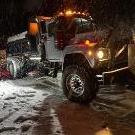
‘89 350 Mack 12 Speed 44k rears


Question

Good evening folks. In the upcoming months, I am going to be in the market to purchase a super dog. I’m going on the lower end of commonly spec’d trucks, and am inquiring to those who’ve actually pulled with these trucks. 350/Mack 12, 44k rears
As many of you know, Michigan legal weights can be up over 160k lbs. Will that combo do it? Obviously no it’s not a race winner but basic and bulletproof combo is the end game. 
“Michigan Special” trucks get thrown around daily here, but I’m curious as if a “Superdog” spec’d would do the job. Not going for speed. More of a reliability standpoint. Thank you all, and I look forward to your input!
Link to comment
https://www.bigmacktrucks.com/topic/76315-%E2%80%9889-350-mack-12-speed-44k-rears/
Share on other sites

8 answers to this question

Recommended Posts

  • 0

I say no, and I have experience at those weights. 400hp min if you are looking for highway operation.  Yes, it will move it but not be able to keep up to today's high way.  If you are talking 45mph speed limits, possibly.  120K lbs,sure, but if you are talking pulling trains, you need more than that.  I did a few 160-170K loads, I was over 400hp and had a 13 spd, and yes, I could get over 65 MPH with enough straight road, but that was rare.

  • 0

The newest superliner is 33 years old. It sounds good in theory but the chances of a superliner pulling those weights reliably is questionable. Not to mention when something does break you could potentially be spending crazy amounts of downtime chasing parts. A lot of parts for these old dogs are getting scarce or NLA. IMO it’s a bad idea to pursue.

  • 0

I could definitely see that being the case. The r model alone is a parts hunt let alone a truck made in significantly less quantities. There seems to be quite a few semi-local cl700s cat, x15, and e7 powered. Parts availability theoretically would be more viable, yes?

  • 0
1 hour ago, 67RModel said:

The newest superliner is 33 years old. It sounds good in theory but the chances of a superliner pulling those weights reliably is questionable. Not to mention when something does break you could potentially be spending crazy amounts of downtime chasing parts. A lot of parts for these old dogs are getting scarce or NLA. IMO it’s a bad idea to pursue.


1 hour ago, Geoff Weeks said:

I say no, and I have experience at those weights. 400hp min if you are looking for highway operation.  Yes, it will move it but not be able to keep up to today's high way.  If you are talking 45mph speed limits, possibly.  120K lbs,sure, but if you are talking pulling trains, you need more than that.  I did a few 160-170K loads, I was over 400hp and had a 13 spd, and yes, I could get over 65 MPH with enough straight road, but that was rare.

I did see a superliner with an n14 in it out west. 

  • 0

I made my living with 30+ year old trucks. I don't think that is really the biggest issue. Once you get much above 120K lbs it gets hard on driveline components, Yoke spread, U joint needles wear into the hard surface, etc. 

problem gets worse when you don't have enough power to get up near 1:1 ratio out of the transmission. Rear axles are fairly robust, but the transmission is the weak link. Having to spend all the time with the transmission in reduction, will put a lot of heat into the oil. 

You can somewhat offset these issue by have a low enough rear ratio so at highway speed you are at the redline. OR, two speed rears so you move some of the torque multiplication back so the driveline doesn't  carry all the torque load. 

There is some evidence that with single reduction rear axles when the you go slow ratios, there is less gear contact with the fewer teeth on the pinion then when faster ratios are used, making them weaker. 2 spd or double reduction help here. In reality operator will make the biggest difference. That includes "rating" of the components. 

You did say 350 hp, so that what I was commenting on.

If I were spec'ing with 30 year old spec's to pull that kind of weight all the time, I would spec 2 spd rears, carefully choosing the ratio to work with the transmission and engine. So likely a 13 speed underdrive and 2 speed rear axle, or may be a Spicer box up front. 400hp mechanical turned up slightly, larger than "normal" radiator.  These are not normal highway specs for a Super liner or really any truck. The Mich trains pullers were not "regular" tractors. 


I didn't pull 160K day in day out 5-6 days a week. I was up in that range very rarely, and it took its toll on components. 

  • 0
6 minutes ago, Geoff Weeks said:

I made my living with 30+ year old trucks. I don't think that is really the biggest issue. Once you get much above 120K lbs it gets hard on driveline components, Yoke spread, U joint needles wear into the hard surface, etc. 

problem gets worse when you don't have enough power to get up near 1:1 ratio out of the transmission. Rear axles are fairly robust, but the transmission is the weak link. Having to spend all the time with the transmission in reduction, will put a lot of heat into the oil. 

You can somewhat offset these issue by have a low enough rear ratio so at highway speed you are at the redline. OR, two speed rears so you move some of the torque multiplication back so the driveline doesn't  carry all the torque load. 

There is some evidence that with single reduction rear axles when the you go slow ratios, there is less gear contact with the fewer teeth on the pinion then when faster ratios are used, making them weaker. 2 spd or double reduction help here. In reality operator will make the biggest difference. That includes "rating" of the components. 

You did say 350 hp, so that what I was commenting on.

If I were spec'ing with 30 year old spec's to pull that kind of weight all the time, I would spec 2 spd rears, carefully choosing the ratio to work with the transmission and engine. So likely a 13 speed underdrive and 2 speed rear axle, or may be a Spicer box up front. 400hp mechanical turned up slightly, larger than "normal" radiator.  These are not normal highway specs for a Super liner or really any truck. The Mich trains pullers were not "regular" tractors. 


I didn't pull 160K day in day out 5-6 days a week. I was up in that range very rarely, and it took its toll on components. 

Thank you for your in depth explanation. I respect and appreciate your knowledge and first hand experience. 
Up here, even just pulling a lead without the pup, still yields a handsome payday. Maybe not as much as trains, but you’re not putting near the strain on components, in my mind thinking long term saves money in the end because you’re not working a truck to its screaming limits. I’m not exactly planning on pulling trains, maybe just a lead. It’s  more or less a fail safe if I have no other option.

I got the dump truck just about wrapped up. And in a couple months I plan on getting a tractor. Mack of course. Just trying to decipher which route to go, instead of purchasing a dry van hauler and being limited to 80k when most work in the mitten surely exceeds that. It’d probably be smarter to look towards an occasional 120-140k lbs MAX truck to get going. Just trying to safely get a versatile unit to play it safe. Everything up here is heavier

  • 0

I did almost all of my heavy work with a "modified dry van hauler" and ironically my last tractor is set up best for it, but never did much of it. 3406B 425hp, Eaton 15 OD (I hate this trans) and Eaton 2 spd rears on a 3/8" frame. Plenty of low speed gears to maneuver heavy loads with out slipping the clutch, and tons of pulling power @ 55 mph while still topping out at around 80 mph.

I sure wished I had the 2 spds when I was pulling those heavy loads. 

  • 0
12 hours ago, BulldogMack said:

Just trying to safely get a versatile unit to play it safe. Everything up here is heavier

If your dead set on Mack then for this application I would be looking for a later model CL753 or CL733 with cat or Cummins power already properly specd for Michigan special work. You could build a 700 series superliner into what you need but it probably would not make economic sense versus buying something already set up as such. Assuming you can find something reasonable to work with that isn't clapped and/or doesn't have double frame rust jacking.

1999 MACK CL753 For Sale in Lakeville, Minnesota | TruckPaper.com

2001 MACK CL733 For Sale in Anita, Iowa | TruckPaper.com

  • Like 1

Join the conversation

You can post now and register later. If you have an account, sign in now to post with your account.

Guest
Answer this question...

×   Pasted as rich text.   Paste as plain text instead

  Only 75 emoji are allowed.

×   Your link has been automatically embedded.   Display as a link instead

×   Your previous content has been restored.   Clear editor

×   You cannot paste images directly. Upload or insert images from URL.

  • Recently Browsing   0 members

    • No registered users viewing this page.
×
×
  • Create New...