


kscarbel2
-
Posts
19,109 -
Joined
-
Days Won
114
Content Type
Profiles
Forums
Gallery
Events
Blogs
BMT Wiki
Collections
Store
Everything posted by kscarbel2
-
What axles do you have ?
-
86' Superliner RW613 hard steering
kscarbel2 replied to Korman Trucking's topic in Driveline and Suspension
You didn't mention which of the two possible gears you had, nor your axle size. But this info should suffice. TRW - HFB64 Service Manual https://www.trwaftermarket.com/globalassets/na/trucksteering---literature/steeringgears-lit/steeringgears-sm/hfb-64/hfb64.pdf Sheppard - 92 Series Service Manual http://www.rhsheppard.com/wp-content/uploads/2014/08/92_Series_Service_Manual.pdf -
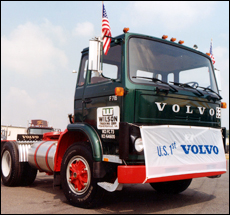
Fishersville, Virginia-based Wilson Trucking (near the I-81/I-64 intersection) was Volvo's single largest US F6/F7 operator for years and years. Volvo decided to give them deep pricing to gain market visibility when they had.......none. This year, Texas-based Central Freight Lines purchased Wilson........... https://www.bigmacktrucks.com/topic/48845-wilson-trucking-to-be-sold/#comment-362337 .
-
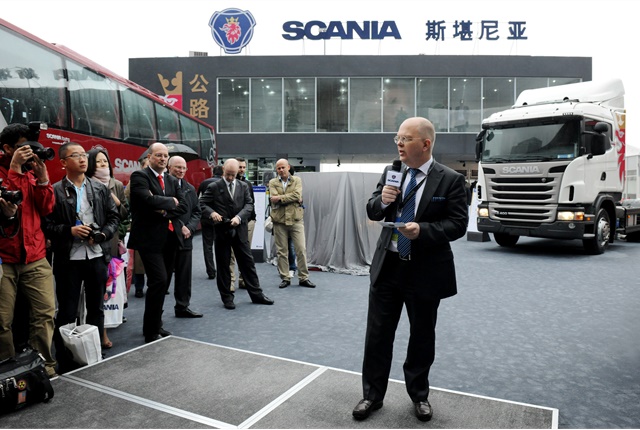
Heavy Duty Trucking / August 8, 2017 A full 20% of Chinese carriers plan to upgrade their trucks and purchase a European-built model with their next vehicle purchase. That’s good news for European truck OEMs, which have spent the better part of the past two decades slowly building their reputations and customer base in the world’s most populous nation. According to a report compiled by Bain Insights and published on the Forbes website last month, most Chinese carriers still intend to purchase domestic- or European-Chinese-joint venture trucks the next time they upgrade their fleets. But this does little to dampen the good news for European OEMs, which the study found enjoy significantly higher customer loyalty rankings than Chinese and joint venture (JV) trucks. Moreover, the findings indicate a substantial number of Chinese fleets are prosperous enough now to pay more for better quality trucks, stay with those brands longer, and generate positive word of mouth about the vehicles. Even better: The majority of respondents who indicated a preference for European-built trucks also indicated they plan to purchase new vehicles in the next three years. According to the Bain analysts, the study also points to a Chinese trucking industry that is maturing rapidly, as more truck buyers there are increasingly focused on total cost of vehicle ownership, including fuel economy. This dovetails with additional shifts in the Chinese trucking industry identified in the report, which notes that early Chinese fleet operations were focused in construction applications as the country launched a massive infrastructure modernization program. But now they appear to be moving toward more logistics-style long- and short-haul applications. European OEMs still have work to do, the Bain report noted, including localizing production to further reduce acquisition costs and develop deeper sales and service networks. .
-
The Electronic Logging Device (ELD) Controversy
kscarbel2 replied to kscarbel2's topic in Trucking News
ELD makers frustrated with Congress, urge truckers not to wait until December deadline Neil Abt, Fleet Owner / August 8, 2017 Makers of electronic logs are frustrated with the uncertainty surrounding the mandate created by recent congressional actions, and are cautioning truckers against waiting until last moment to select a device. They said costs for electronic logging devices (ELDs) have fallen sharply in recent years, and warned of a supply crunch for electronic components later this year. The ELD mandate, scheduled for to take effect Dec. 18, requires most commercial drivers to use an electronic device to monitor hours of service. In June, the Supreme Court declined to hear a challenge from the Owner-Operators Independent Drivers Association (OOIDA). Last month, a House committee attached a measure to a 2018 appropriations bill calling for additional review of “one of the most expensive of all transportation rulemakings.” The companion bill in the Senate does not contain any language on ELDs. Also in July, Rep. Brian Babin (R-TX) introduced a bill (H.R. 3282) that would delay the mandate two years. With the House and Senate both in recess until Sept. 5, “we are not sure it is even possible by the time the mandate is supposed to take effect that they could get something done,” said Eric Witty, PeopleNet’s vice president of product management. “It is business as usual for us,” said Tom Neppl, vice president of hardware solutions at Omnitracs. “We are proceeding as the Dec. 18 date will occur. Right now we don’t anticipate any change.” Norm Ellis, president of ERoad, said fleets with between 10-50 trucks are the most likely to hesitate on ELD implementation. “They can’t wait too much longer,” said Ellis, who recommends a four-to-six week transition period to allow the back office staff to undergo the “cultural change” that comes with ELD. In an e-mail to Fleet Owner, OOIDA spokeswoman Norita Taylor noted Babin’s bill has 38 co-sponsors. She also shared a letter of support sent to Babin signed by OOIDA and 13 other associations. “This is a massive unfunded mandate that provides no safety, economic, or productivity benefits,” the letter stated. Ellis said he has successfully tried to open a dialogue with ELD opponents including OOIDA. “They will stick to their guns until the last day I’m sure,” he suggested. Ellis hopes that attitude will change next year, and OOIDA would consider endorsing devices to secure discounts and other assistance for its membership. With no delay imminent, the ELD executives expect a surge in demand, a situation Omnitracs’ Neppl warned could be complicated by a shortage of electronic components. “These aren’t parts that sit on the shelf somewhere,” he said of the components needed for electronic logging devices. “I think it behooves the industry … to take into consideration the macroeconomics going on that could potentially drive some constraints on ELD solutions.” The result, PeopleNet’s Witty said, is that “fleets could end up being forced to adopt anything to be compliant. It could be whoever has something available, versus the preferred vendors they want to work with.” Truckers should consider it “too risky to wait and see if something changes,” said Bernie Kavanagh, general manager for North American Large Fleet at WEX Inc., which offers fuel cards, payment processing, and partners with telematics firms on ELDs. ERoad’s Ellis was forceful in his belief that overall costs have been inflated. The former Qualcomm and Omnitracs executive noted a steep price decline for technology and air time, allowing many low-cost options to enter the market. As further evidence, Ellis pointed to the 60 percent of ERoad customers who are purchasing “value-added services” beyond just e-logs. PeopleNet’s Witty agreed cost estimates are based on data from years ago “and isn’t looking at the market today.” There are options with no upfront fees, and could be run with few additional costs beyond a trucker’s existing data plan, he said. ELD costs are more than recouped when factoring in safety benefits and efficiencies gained from less paperwork, WEX’s Kavanagh argued. ELD smartphone apps are cheaper options than products offered by the companies interviewed for this story. In ERoad’s case, an ELD-only option starts in the range of about 35 dollars a month. It is one of the few tethered options on the market, and the only one that has been publicly certified by the non-profit PIT Group. Yves Provencher, PIT’s director of business and market development, said the company is working with other manufacturers that have asked not to be named. The certification process, similar to an accounting firm verifying financial statements, generally takes eight weeks and costs $32,000. It offers fleet owners confidence the device is working as intended, and will not become a liability in an accident, Provencher said. He added while there are costs associated with the mandate, “if you are against it, it is probably because you are cheating.” There was agreement that compliance and enforcement challenges will remain after Dec. 18, and the executives said tweaks to the mandate are likely during 2018 and beyond. -
Transport Topics / August 8, 2017 Sales of used heavy-duty trucks rose 17% in June as the average previously owned Class 8 truck was newer, had fewer miles and cost less than a year earlier, but concerns over excessive inventory levels remain, market analyts said. Sales climbed to 3,495, compared with 2,990 a year earlier according to one market research firm, based on its sample of dealers, wholesalers and auctioneers as well as a few large fleets who consistently report. “I would say it’s probably still a buyer’s market because prices are somewhat suppressed as opposed to depressed. And at the same time, the available equipment out there is very good equipment,” the analyst said. The company uses its sample to determine average prices, age and mileage, and it encompasses about 13% of the total market, which is statistically enough to project market conditions. By that measure, total sales in June were 26,884 compared with 23,000 a year earlier. Year-to-date sales jumped to 163,515 compared with 136,753 in the 2016 period. Regarding inventories, they are falling from previous highs, one fleet executive said. The used truck market has turned 180 degrees “because there was an oversupply of tractors — probably 150,000. We know that’s gone down because we’ve seen our rental business in Penske Truck Leasing go up, because [when] guys need more equipment, they go to rental,” Roger Penske, chairman of Penske Automotive Group, said on a July 27 earnings call. “So we see that as a good news from a used truck perspective.” Also, the average price of a used truck dropped 7% to $39,070, compared with $42,190 in June 2016. Prices during the last nine months have been between $39,000 and $41,000 Others pointed to price stability, as well. On a year-over-year basis, late-model trucks sold in the first six months of 2017 are averaging 5.8% lower than in the same period of 2016, according to Chris Visser, senior analyst, commercial trucks, J.D. Power Valuation Services. “Multi-month trending shows the retail market leveling out, with depreciation quite minimal,” Visser wrote in a report. “Compared with June 2016, this average sleeper was 3 months older, had 31,123, or 6.6%, fewer miles, and brought $2,763, or 5.5%, less money,” he said. Overall, average prices were 9.1% lower in the first half of 2017 compared with a year earlier, he said. “The decline [in prices] certainly year-over-year has subsided some. So, there’s some talk out there that maybe the prices are bottoming out right now. There’s still a lot of inventory in the market, so we’re still focused on moving those units out,” Robert Sanchez, chairman and CEO of Ryder System Inc., said on an earnings call July 26. “I wouldn’t say it’s really changed our outlook much yet,” he added. “Obviously, we’d have to see several quarters of stabilization of pricing and then continued volumes moving out, so our inventories come down before we change our view.” Used truck prices are not expected to “surge” in the next two years, analyst Michael Baudendistel with Stifel, Nicolaus & Co. wrote in a note to investors. He cited a steady supply of vehicles entering the market, “in particular a large supply of 4-year-old used trucks that should come into the marketplace in 2018 and 2019.” At the same time, mileage fell to 453,000, compared with 465,000 a year earlier, according to ACT. The age of the average used Class 8 truck was seven years, down slightly from seven years and one month a year earlier. Meanwhile, one truck maker announced it has made it easier to find and buy used trucks online. Paccar Financial Corp. redesigned its used truck website with the ability to search by make, model, truck components and mileage, plus a payment calculation tool and product walk-around videos, it said Aug. 2. The company is a unit of Paccar Inc., which manufactures the Kenworth Truck Co. and Peterbilt Motors Co. truck brands. When additional truck inventory is received, the trucks will immediately appear in the users’ saved searches, Paccar Financial said. .
-
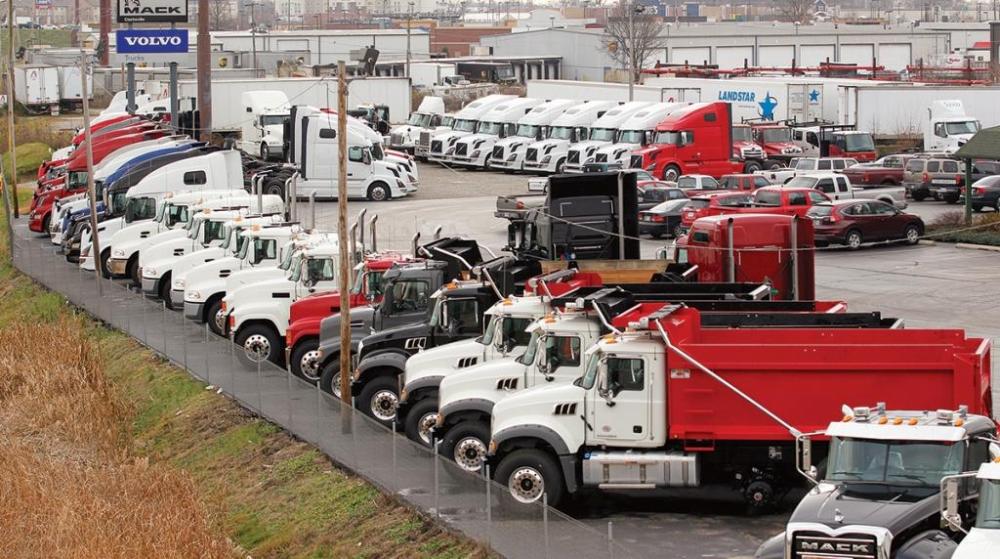
Class 8 Orders Steamroll Year-Over-Year, Up 81% to Surpass 18,000 Transport Topics / August 8, 2017 North American Class 8 orders blasted through normal expectations in July, climbing 81% year-over-year in what is typically the slowest order month of the year. Orders hit 18,700, according to preliminary data. A year earlier, orders only reached 10,358. July 2016 recorded the weakest monthly order intake since February 2010. “The year-over-year story is not so much about what happened this year as it is about what didn’t happen last year,” one analyst said. July 2016 also was the bottom of the cycle in this market, he said. “Since then, you can chalk [the gains] up to pre- and post-election sentiment.” But as far as the industry having a consensus of where the market is right now, he’s not sure. “I think there is quite a bit of opacity, given the lack of concrete drivers, basically. And I think that is true even among the truck makers.” July’s Class 8 North American preliminary net orders of 18,700 equates to a seasonally adjusted annual rate of 263,700; replacement for the same market is 225,000. The research firm FTR pegged preliminary Class 8 orders at 18,300. “This is a great sign to see orders rising, even slightly [month-over-month, up from 17,600 in June], in mid-summer. This is the beginning of a positive trend that we expect to continue the rest of this year, right into 2018. The Class 8 market is starting to move upward and orders are forecasted to accelerate in the fall,” Don Ake, Vice President of Commercial Vehicles at FTR, commented in a statement. “Freight is on the upswing and industry capacity is tightening,” he said. Orders for the past 12 months total 224,000 units, according to FTR. As with the several previous months, “the strength was largely broad-based across [truck makers] with orders being propelled by small and medium fleets and it appears that some incentivization is taking place in the marketplace,” analyst Jamie Cook of Credit Suisse wrote in a note to investors. Tam mentioned the experience of the owner of a 200-truck fleet in Indiana who told him she is being offered big-fleet pricing discounts and couldn’t walk away from such a good deal, even if it was ahead of her normal trade cycle. “The concern from an outside industry observer’s perspective,” Tam said, “is that if you are pulling forward demand, at what point do you have to start paying back?” He wondered if the Indiana fleet made a permanent change to its acquisition cycle, or if it did not get the same discounts next time, would it hold off? “Now you are stretched out on the back end,” Tam said. One truck maker said incentives are the rule. “Every single deal is competitive. Every truck maker is on every deal, it appears,” Jeff Sass, Senior Vice President, North America Truck Sales and Marketing at Navistar International Corp., told TT. “It’s not as if anyone has decided they are going to go off and make a lot of margin on the trucks. They are all really skinny deals out there.” Navistar is the parent company of the International Truck brand. Lead times at International are out to eight weeks, Sass said, and its dealers are trying to make sure they get their orders submitted in time to get into the fiscal year, which for Navistar ends Oct. 31, since a lot of them follow the same fiscal calendar. At the same time, most of the mega fleets are done for 2017, Sass said. “Their trucks are on order, or have already been placed. We are starting the conversation for the 2018 buys right now.” Another analyst noted orders will be increasingly important going forward to fill up still-open production slots this year. Based on truck makers’ build plans in July to produce 22,000 units — or a 270,000 annual build rate — “that would imply backlog-to-build levels of 4.4 months, reaching a three-year low and suggesting that monthly orders will be increasingly important in determining quarterly production beyond the third quarter, particularly given the fourth quarter schedule is 61% open as of last month, versus normal of 54%,” David Leiker an analyst with Robert W. Baird & Co., wrote in a note to investors Aug. 3. Tam agreed, saying all truck makers were likely already into the fourth quarter with their respective production schedules, “but to varying degrees.” .
-
The veil lifted for a moment. Russia (Putin) is accused of interfering in the internal affairs of other countries......Syria, U.S. elections, Afghanistan, ect. But when leading western powers interfere in the internal affairs of another country (Iran, Syria, Afghanistan, ect.), well, that’s altogether different and okay. ------------------------------------------------------------------------------------- Britain pressed US to join Iran coup against Mosaddegh The Financial Times / August 8, 2017 US State Department records confirm 1952 efforts to topple prime minister The British government in 1952 repeatedly asked the US to join in a coup aimed at toppling Mohammad Mosaddegh, Iran’s prime minister, according to newly declassified State Department documents. The files offer “the first officially-released confirmation of Britain’s expressed aim in late 1952 to persuade Washington to help oust Mosaddegh,” according to two scholars affiliated with the National Security Archive, the private non-partisan research organisation that obtained the documents. The “Top Secret” State Department memoranda — including one entitled “British proposal to organise a coup d’état in Iran” — also offer fresh insights into London’s assessment of Iranian politics and the threat to British interests that eventually led to the August 1953 coup. That anti-government uprising, backed by Britain and the US, toppled Mosaddegh, ushered in more than two decades of authoritarian rule by Shah Mohammad Reza Pahlavi and embittered relations between Tehran and the west. In 1952, Winston Churchill’s British government was desperate to regain control of Iran’s oil industry, which Mosaddegh had nationalised the year before, “by virtually any available means, including military action [steal a sovereign country’s oil industry],” write Malcolm Byrne of the National Security Archive and Tulane University’s Mark Gasiorowski. Beginning in October, British and US officials met at least three times to discuss prospects for toppling the Mosaddegh government. Sir Christopher Steel, the No 2 official in the British embassy in Washington, pitched the idea to reluctant US officials. In recent years, the British government has repeatedly pressed US officials to shield from public view any official confirmation of London’s efforts to oust the Iranian government. The documents made public on Tuesday were left out of a recent 1,007-page State Department volume released as part of its continuing “Foreign Relations of the United States” series. Mr Byrne and Mr Gasiorowski appealed against the government’s decision to keep the documents classified. Before receiving an official reply, Mr Gasiorowski discovered the records at a government archive in College Park, Maryland. A November 26, 1952 coup memo had been declassified on May 17, one month before the new State Deparment volume was published. A related December 3, 1952 memo bore markings indicating that it would not be declassified until the British government approved, or 2025. The scholars complained that the British government was controlling what the US public could learn about its own government’s involvement. The Truman administration had balked at Britain’s initial calls to act against Mosaddegh, who had expelled British diplomats and intelligence officials several months after nationalising the oilfields. By late 1952, the British had modified their sales pitch, stressing the need to take out Mosaddegh to combat “Communism in Iran,” the documents show. President Harry Truman and Dean Acheson, secretary of state, still refused to back a coup, preferring to work with Mosaddegh. But Paul Nitze, who headed State’s powerful policy planning staff, suggested that the Iranian coup plotters first mount a “campaign” against Ayatollah Abolqasem Kashani, a leading opponent of British involvement in Iran’s oil industry, and the communist Tudeh Party. British officials politely rejected that proposal and, while recognising that the Truman administration was in its final weeks, pressed the US for a decision. “The best time for a coup would be in the spring,” Sir Christopher said, according to the December 3 memo. ------------------------------------------------------------------------------------------------------------------------------------------------- In the summer of 1953, a US and UK-backed coup d'état deposed Mosaddegh and successfully put the foreign (US and UK) oil companies back in control of Iran’s oil. https://en.wikipedia.org/wiki/1953_Iranian_coup_d'état
-
But the bill is not 100 percent on you. The bill is zero percent on you. The bill is 100 percent on the dealer with failed workmanship. The dealer, and Volvo, have allocations within their budgets to cover the costs of such.......mistakes.
-
Bill Ford Thinks His Company Lacks Vision -- and That He Can Fix It The Wall Street Journal / August 8, 2017 Two decades ago, when Bill Ford took the helm of his family's auto company, he was ready to talk about the coming shift to electric vehicles and the eventual demise of car ownership. His ideas were dismissed. At one point, when he wanted Ford Motor Co. to invest in developing alternative transportation, "the board kind of looked at me like once again I was over my ski tips," Mr. Ford said in an interview. As years went by, other auto makers and tech companies got on board with his way of thinking. They overtook Ford in electric and self-driving technologies, and in April, Tesla Inc., which sells stylish electric cars, passed Ford in investor value, a dashboard warning signaling Wall Street's skepticism about the growth prospects of traditional car makers. Ford was being left behind, and the man with his name on the door, who for years had largely deferred to management, decided to intervene. In the past, the family heir let CEOs take the center stage. But what was leading the industry forward -- new concepts in fuel efficiency and transportation -- had been his focus for years. Plus, he was changing, spurred by the death in 2014 of his father, William Clay Ford Sr., who was a presence at the company for more than 50 years. His passing "made me realize it is me now," Mr. Ford said, about securing the family's leadership. "I've got to do this." A month after the Tesla milestone, Mr. Ford led a rare management shake-up, people familiar with the decision said. Chief Executive Mark Fields, a 28-year veteran, was out, and Jim Hackett, the executive brought aboard in 2016 by Mr. Ford to run the car maker's innovation unit, was elevated to the chief's job. "The role we're in now requires us to stick our necks out," said Mr. Ford, the company's executive chairman, who has taken a more commanding role over the past year. "We've got to place bets. We've got to have a point of view about the future." Mr. Ford believed the company was losing direction and that Mr. Fields didn't have a clear long-term strategy, the people said. Executives were bitterly divided about how to make progress, they said. Analysts, though, are still awaiting to hear from Mr. Hackett on his broader strategic plan -- details are expected out later this year -- and point out that Ford still faces a laundry list of near-term challenges. Shares haven't budged since the CEO change, and Ford said it expects pretax operating profit to fall between 16% and 25% this year. Mr. Ford's leadership has had ups and downs. He had operational control as CEO in the early 2000s, and worked to untangle the complex and splintered organizational model that he inherited from predecessors. But high labor costs and excess capacity hurt finances, and he turned to an outsider to accelerate the turnaround. Ford and much of the car industry remains dependent on sales of cars and trucks powered by internal-combustion engines and designed to be sold for private use. That model is being upended by Tesla and other Silicon Valley tech companies, including Uber Technologies Inc. and Alphabet Inc. They are leading the shift to electric vehicles, autonomous-driving cars and ride-sharing services, which auto makers fear will reduce the need for individuals to own cars. A third of all cars produced in 2025 are expected to be electric and hybrid cars, up from about 4% in 2016, according to IHS Markit, a market analysis firm. Meanwhile, U.S. auto sales fell 3% in the year through July; at Ford, pretax operating profit slipped 4% last year. Ford is now undergoing a 100-day review of all its operations, with the goal of becoming leaner and more agile. In his first weeks as CEO, Mr. Hackett rolled out a "shot clock" policy to enforce deadlines to help implement plans faster. Mr. Ford, 60 years old, has spent more than half his life trying to push the Dearborn, Mich., based auto maker founded by his great-grandfather to think about the environment and new forms of transportation. He conceded his timing wasn't always right -- including during his own stint as CEO from 2001 to 2006. In 2008, in the throes of the auto industry's collapse, the board didn't take up his proposal that Ford invest in nontraditional transportation businesses. He said he realized the struggling company at that time was thinking about "the next week, not the next 30 years." He had lined up billions in financing two years earlier that helped keep the company afloat. Ford came through that crisis on much firmer financial footing, due to a restructuring led by former CEO Alan Mulally that eliminated brands, streamlined the company's global operations and refocused attention on the core Ford and Lincoln lineups. When Mr. Fields took over in mid-2014, Ford was solidly profitable but needed to switch gears to better prepare for its future. The company pivoted from Mr. Mulally's laser focus on core business efforts, turning its attention to "mobility," a term Mr. Ford started using nearly 20 years ago that describes new forms of transportation. Mr. Fields, who had been groomed for the top job for years, struggled. Projects appeared disjointed, without a clear path to profitability, and shares tumbled 40% during his tenure. Mr. Fields didn't respond to requests for comment. Mr. Ford turned to Mr. Hackett, a longtime office furniture executive and member of the Ford board whom Mr. Ford had helped tap to lead Ford's Smart Mobility alternative transportation unit a year earlier. Ford started the group after the company's talks to build self-driving cars with Alphabet fizzled. "Jim always made me think," demonstrating depth he rarely encountered in the car business, Mr. Ford said. "So many people I meet in this job I hear the same thing over and over again." The mobility unit is working with a bike-sharing firm in San Francisco and is crunching data on how people in various settings get from Point A to Point B. It purchased Chariot, an app-based shuttle service that plots out routes based on user demand, which has a growing presence in San Francisco, New York, Seattle and Austin. In the interview at the Dearborn headquarters, Mr. Ford described Mr. Hackett, who helped transform office spaces away from cubicles into flexible, open plans during nearly 20 years as CEO at Steelcase Inc., as a like-minded ally in the quest to reinvent the car business. "We're just very much in sync," Mr. Ford said. "I never have to wonder, and he doesn't have to wonder, what the other guy is up to." Ford's sales of hybrid and electric vehicles grew 17% last year -- the genre made up 3% of company sales -- and Ford plans to roll out 13 more electrified vehicles in the next five years, including hybrid versions of its Mustang sports car and top-selling F-150 truck. The auto maker said earlier this year it will invest $1 billion in artificial-intelligence startup Argo AI to develop autonomous-driving technologies. Ford said it plans to put a fully autonomous car on the road by 2021 for commercial use. Mr. Ford said that when he took over as chairman in 1999, 20 years after joining the company as a product planning analyst, the culture was "hierarchical, almost militaristic." The rigid style once made Ford a leader in an industry dictated by long development cycles and intense capital needs, but eventually made it too insular and slow to compete with fast-moving technology companies. In June, Mr. Hackett took Mr. Ford and the senior management team to Steelcase to learn about how the retailer grew from an old-line seller of office furniture into a service-oriented business that helped clients rethink office spaces around technology and modern work habits. "He just wanted us to get out of our mind-set here, to ask a lot of what-if questions away from Ford," Mr. Ford said. As part of the management shuffle, Mr. Ford has become a more visible steward of the company. He attends and weighs in at meetings to discuss strategy. He has direct responsibility for communications and government relations -- he worked to defuse President Donald Trump's criticism of the company's plans to move production of the Ford Focus to Mexico. Ford now plans to move the car's production for the U.S. market to China. Last fall, Mr. Ford met with a small group of dealers at a restaurant in Dearborn, to talk about Ford's push into new ventures, such as ride-sharing and autonomous cars. Dealers were nervous the company was shifting too much attention away from its core business. Some were alarmed when Ford introduced only one new model at the Detroit auto show in 2016 -- an annual event typically dominated by unveilings of the SUVs and pickup trucks that deliver the bulk of Ford's profits -- and instead focused on mobility ventures. Ford didn't unveil new models at the 2017 show. Mr. Ford, standing in the middle of the group, reassured them this wasn't the case. "It was a very frank discussion to let the dealers know where all this is going," said Jim Seavitt, whose Ford dealership is located a few miles down the road from Ford's headquarters. Mr. Ford assured the dealers that new models were coming and that Ford was still focused on producing vehicles they could sell, said Mr. Seavitt, who has sold Mr. Ford Mustang sports cars over the years and recently delivered to him a new GT supercar. In his younger days, Mr. Ford would often shy away from the spotlight, viewing himself as good soldier for the company, on acquaintance said. As he gained management experience, he spoke with more authority, and came across as particularly passionate "when he's talking about something of importance to him like the environment and mobility," the person said. "Bill may be quiet, he may be modest, but he will step up without fear of consequence or risk when he feels it is important to do so," said Irv Hockaday, a former Hallmark Cards Inc. CEO who served on Ford's board from 1987 to 2013.
-
You have 245,000 miles on the heads? Then they're not new anymore by any stretch. Who is "we"? Why do you have an "obligation" to save the heads. The Mack brand dealer's workmanship failed. They have to stand behind it. The best way, as the Mack dealer effecting the second repair said, is to replace the head (and I myself like to replace heads in pairs).
-
Replacing the head is the right way to go, for several obvious reasons. Under the circumstances, you're in a position to get a reman Mack head for free. I myself would pay out-of-pocket to replace the second head at the same time, if you plan to run the truck long-term. How could you possibly not get 100% of the costs covered ?
-
I'm not altogether clear on your question. Volvo entered the US market in 1974 with the F86US......and went nowhere. There was no alliance with White.....Volvo bought them in 1981. Volvo bought the majority of GM's heavy truck division in 1987, and rest in 1997. In 1988, Volvo GM Heavy Truck Corporation was formed as a joint venture between Volvo and General Motors Corporation. General Motors held 35% interest in the new venture, with the majority (65%) belonging to Volvo. Volvo GM’s nameplates were WHITEGMC and Autocar. In 1994, A.B. Volvo’s interest was 87% and General Motors was 13%. The WHITEGMC nameplate was discontinued in 1995 and Volvo GM’s trucks were sold under the Volvo and Autocar nameplates. In 1997, Volvo purchased all of General Motors interests in Volvo GM, and changed the name to Volvo Trucks North America https://history.gmheritagecenter.com/wiki/index.php/Volvo_GM_Heavy_Trucks_History
-
Nothing meaningful for emissions controls in the 1980s. Euro-1 didn't take effect until 1992.
-
Mazda successfully eliminates the spark plug
kscarbel2 replied to kscarbel2's topic in Odds and Ends
Mazda claims new gasoline engine is world's most efficient Nikkei Asian Review / August 8, 2017 TOKYO -- Mazda Motor has developed what it claims is the world's most fuel-efficient gasoline-powered engine, the carmaker said Tuesday. Called the Skyactiv-X, the engine is the first gasoline model that ignites the fuel-air mixture through compression, like a diesel engine. Standard engines use sparks to set off combustion. Diesel fuel self-ignites at high temperatures. The Japanese carmaker said self-ignition enables higher fuel efficiency than spark-ignition, which tends to cause the fuel to burn unevenly inside the combustion chamber. Mazda says the Skyactiv-X is 20-30% more fuel efficient than its current Skyactiv-G engine. Going with gasoline Mazda's focus on diesel and gasoline engines contrasts with its rivals' embrace of electric vehicles. Germany's Volkswagen, for instance, has shifted toward electric cars after it was revealed that the company had manipulated mileage numbers for its diesel engines. Volvo, meanwhile, says it will only sell electric or hybrid cars from 2019. Some governments are moving in the same direction, with the U.K. and France declaring they will ban sales of gasoline and diesel cars by 2040. Mazda argues that a faster way to bring greenhouse gas emissions under control is to make diesel and gasoline cars more efficient. In a press conference on Tuesday, Mazda executives cited a forecast saying that 85% of vehicles sold in 2035 will still use internal combustion engines, as a greater share of car sales will come from developing countries that have little or no infrastructure for electric vehicles, such as charging stations and extensive power networks. Mazda is not ignoring electric cars, however. It plans to develop electric vehicles with Toyota Motor, with which the company announced a comprehensive capital and business partnership last week. On Tuesday, Mazda said it will roll out hybrid and electric vehicles in 2019. For now, however, the company intends to focus on improving on its diesel and gasoline engines. Mazda is looking to develop hybrids, which run on electric motors at slower speeds and on gasoline engines at higher speeds. It says that developing a hybrid will be easier with a more efficient engine, as that would enable the use of a much smaller motor and battery than seen in current hybrids. "I think [the British and French governments] know that electric cars won't be able to replace gasoline cars so soon," said Kiyoshi Fujiwara, Mazda's chief of innovation. Fujiwara added that he thinks "internal combustion engines will continue to play a role" because they incorporate hybrid and other emission-reducing technologies. -
We made a mistake and came in too heavy. The specs worked alright in the northeast, but overall we should have come in with a lighter chassis (the rest of the world did and still does carry heavy loads). We built them at the time, for example the T112MC lightweight set-forward axle tractors we sold in New Zealand. We also should have brought over an axle-forward COE like the FK, but again lighter. So to answer your question again, we misjudged the specs for the market. https://www.bigmacktrucks.com/topic/45692-the-north-american-style-axle-forward-scania-coes/
-
Did you call Volvo Group's Mack brand customer satisfaction hotline (U.S. and Canada) at +1 (866) 298-6586 and start working this problem from that angle? The old saying, "the squeaky wheel gets the grease", was never truer than today when companies are all trying to be as cheap as possible. You should call Mack as a professional and a gentleman, and introduce your case. And they should become involved in a likewise professional manner. When you spent 13k on a Mack brand repair, you also purchased OEM level after-sales support. Don't ignore that fact......take full advantage of what you paid for.
-
Navistar International enters into a second amended and restated ABL credit agreement Reuters / August 7, 2017 * On August 4, co-entered into a second amended and restated ABL credit agreement * Amended agreement, among other things, reduces size of revolving credit facility to $125 million from $175 million * Amended agreement also extends maturity date from May 18, 2018 to August 4, 2022
-
Tow hook, fuel pump issues prompt recalls of 2,500-plus Freightliner, Western Star trucks Matt Cole, Commercial Carrier Journal (CCJ) / August 7, 2017 More than 2,500 Freightliner and Western Star trucks, ranging from severe duty to Class 8 long-haul tractors, are included in two separate recalls, according to documents from the National Highway Traffic Safety Administration. The largest of the two recalls affects approximately 2,483 trucks and was prompted by tow hooks that were not manufactured properly. Recall documents state the tow hooks could fail during a recovery, causing the sudden release of the truck. Trucks affected by this recall are: 2018 Freightliner Cascadia 2018 Freightliner 114SD 2018 Freightliner 122SD 2018 Freightliner M2 Business Class 2018 Western Star 5700 2018 Western Star 4700 NHTSA’s recall number for this recall is 17V-452, and Daimler Trucks North America’s recall number is FL-742. Daimler will notify owners, and dealers will inspect the tow hooks. Depending on the production dates of the tow hooks, dealers may replace them, free of charge. The other recall affects approximately 74 trucks equipped with Cummins ISX15 engines. In these engines, the fuel pump’s drive gear could slip on its drive shaft, resulting in a loss of function, causing the engine to stall. Paccar issued a similar recall last week that affected more than 1,700 trucks. Trucks affected by this recall include: 2017-2018 Freightliner 122SD 2017-2018 Western Star 4900 2017-2018 Western Star 5900 The recall also includes 2017-2018 Freightliner Custom Chassis XCM and XCP, which are used for RVs. Cummins will notify owners of affected trucks, and Cummins dealers will replace the pumps. NHTSA’s recall number is 17V-450, and DTNA’s recall number is FL-744.
-
-
German state premier on defensive over close ties with VW Reuters / August 7, 2017 BERLIN -- Stephan Weil, the premier of Germany's Lower Saxony, which owns a fifth of Volkswagen Group's voting rights, rejected as groundless a newspaper report that said he softened a speech critical of the automaker in the diesel-emissions scandal at VW's request. Weil, already facing an unexpected election after the defection of a member of his ruling coalition to Chancellor Angela Merkel's conservatives, is under fire for what some see as a too-cozy relationship with the company. The mass circulation newspaper Bild am Sonntag on Sunday quoted a VW employee as saying that the company "rewrote and watered down" an October 2015 speech by Weil to the state legislature about the diesel scandal after Weil shared a draft with the company. "This was no fact check," the paper quoted the employee as saying. Weil, a member of VW's supervisory board, called VW "a pearl of German industry" in the speech, but other passages were removed, the newspaper reported, including one in which he said company officials should be held accountable "regardless of their place in the hierarchy." "The allegations being made are completely unfounded," Weil told reporters on Sunday. "The core of the text remained completely unchanged." Weil said he had asked VW to check the speech for legal and factual issues given the gravity of the situation facing the company, which was in discussions at the time with U.S. officials about rigged emissions tests. He said some suggested changes were adopted, while others were not. His office released two versions of the text that verified his statement. Weil said his speech remained sharply critical of VW leadership for not disclosing the emissions issue until a year after it first began discussions with U.S. officials. His office said there had been no consultation about speeches or remarks with VW for several months because the "situation between VW and the U.S. authorities has now been cleared up." A VW spokesman said it was common practice for supervisory board members to coordinate statements about corporate issues with the company. "Every member of the supervisory board has an obligation with regard to the company's interests and, based on the stock corporation act, has to adhere to the confidentiality interests of the company," the spokesman said in emailed comments. VW executive Oliver Schmidt pleaded guilty last week in a U.S. court in connection with the emissions scandal that has cost the German automaker as much as $25 billion. Close ties The controversy about Weil's speech erupted amid renewed questions about close ties between German politicians and German carmakers, and whether they prevented the German government from acting sooner to address the widening emissions scandal. Critics have also attacked the outcome of last week's diesel summit, saying that the German government should have insisted on harsher steps to rein in diesel emissions, but was swayed by industry to adopt less onerous measures. Bild am Sonntag published thumbnail portraits of six German politicians, including Foreign Minister Sigmar Gabriel, who have or have had in the past consulting agreements or other jobs with VW, Daimler or other bodies associated with the car industry. They included Daimler's chief lobbyist Eckart von Klaeden, a conservative politician who worked under Chancellor Angela Merkel in the chancellery until 2013. His abrupt switch to the Mercedes manufacturer prompted an investigation by Berlin prosecutors and new rules on "cooling off" periods. Thomas Steg, now VW's top lobbyist, previously served as spokesman for two German chancellors. Matthias Wissmann, who served as German transport minister from 1993 to 1998, has served as president of the VDA auto industry lobby since 2007. Cem Ozdemir, leader of the pro-environment Greens party, said the "conflation of politics and automotive industry" was damaging to Germany's reputation and posed a "threat to the foundation of our market economy."
-
Pressure on NAFTA talks to hit deadlines Automotive News / August 7, 2017 WASHINGTON — Two decades into a treaty that ignited fierce passions and rhetoric on the 2016 campaign trail, negotiations will begin this month between the U.S., Canada and Mexico to rewrite the North American Free Trade Agreement (NAFTA), with potentially huge ramifications for the auto industry. Trade negotiations usually take years of detailed work to hash out agreements covering multiple industries and products. In this case, the three governments will race to finalize a deal before other events complicate matters. Details about the structure of the talks have been limited so far. Automotive News got a sense of how the process will unfold, and how external factors might influence the negotiation timetable, from trade experts who based their comments on experience with previous agreements and conversations with officials participating in the coming talks. The initial session, Aug. 16-20, will be a feeling-out process, with Canadian and Mexican officials mostly in listening mode and discussions focused on establishing procedures for subsequent rounds. It will be closed to outside stakeholders. The U.S. Trade Representative's office announced that John Melle, a 29-year veteran of the office who heads Western Hemisphere trade policy, will serve as chief negotiator. He will manage day-to-day negotiations conducted by technical leads for each subject area. Personnel assigned to each chapter of the agreement, such as rules of origin for goods that receive tariff-free treatment, will work through text line by line with the assistance of subject-matter experts from other agencies, such as the Commerce Department's International Trade Administration for the auto sector. Mexico's lead negotiator is Kenneth Smith, a Ministry of Economy representative who runs the Mexican Embassy's NAFTA section in Washington, according to Antonio Ortiz-Mena, a senior adviser with the Albright Stonebridge Group and a former head of economic affairs at the embassy. According to Canadian media reports, Steve Verheul, who led negotiations for Canada during its trade talks with the European Union, is expected to lead the NAFTA negotiations. The federal government has also put together a 13-member NAFTA advisory council that includes Linamar CEO Linda Hasenfratz. All issues will be on the table at each session, with parallel negotiations taking place, said Les Glick, an international trade and customs attorney with the law firm Butzel Long. This format creates the opportunity for trade-offs in different subject areas, said Eric Miller, president of Rideau Potomac Strategy Group and a former vice president at the Canadian Council of Chief Executives. Mexican officials are keen to quickly conclude talks so their legislature can ratify an agreement before the Mexican presidential campaign season kicks into gear. President Enrique Peña Nieto will become a lame duck in the spring as the July election nears, which will make it more difficult for the government to implement any NAFTA concessions, said Scott Miller, a senior adviser on international business at the Center for Strategic and International Studies. If the talks don't end by mid-February 2018, they couldn't restart until January 2019, after the new Mexican president takes office, he added. Eric Miller, who visited Mexico in June and met with advisers for leftist candidate Andrés Manuel López Obrador, said NAFTA appears to have receded as a top campaign issue and that López Obrador is generally supportive of NAFTA if certain modifications can be made. But anti-American, nationalist sentiment could reignite if the U.S. pushes Mexico too hard for concessions, or if President Donald Trump again makes disparaging comments about Mexico or talks about a border wall, Doreen Edelman, a trade attorney at Baker Donelson, said. Driving the schedule on the U.S. side is the July expiration of Trade Promotion Authority, which gives the president authority to conduct negotiations on a fast track and then bring the pact to Congress for a straight up-or-down vote. Any extension of the authority would have to be approved by Congress, which is questionable given free-trade skepticism in the electoral bases of both parties. Experts question whether the ambitious negotiating schedule can be achieved, but former Obama administration deputy trade representative Robert Holleyman and Ortiz-Mena were cautiously optimistic. "The U.S., Canada and Mexico largely concluded a NAFTA renegotiation through the conclusion in 2015 of the Trans-Pacific Partnership," Holleyman said, referring to the pact advanced by the Bush and Obama administrations and ultimately scuttled by Trump. "If you look at U.S. negotiating objectives, many of them track things concluded in TPP. So they are beginning with a high level of knowledge of each other's markets and understand where they can reach agreements." Deep benches of seasoned negotiators on all sides, the absence of negotiations over duties or quotas, and the fact that Mexico's industry and government have been coordinating their position for months also augur well for a fast conclusion, Ortiz-Mena said.
-
It is a fact. I hear at least one such story a week. But what do you expect from the group of non-truck people who has been running the Mack brand?
-
The 10.6-litre DC 11 was last offered in Euro-3 emissions at 340 (DC11 08 340) and 380 (DC11 09 380) horsepower. When Scania offered the 2-Series (and later 3-Series) conventionals in the US market, they were powered by the 308 horsepower (DSC11 06) and 341 horsepower (DSC11 03).
-
As any distributor principal can tell you, Kenworth has been leading the vocational segment in a massive way, from coast-to-coast, over the last two years. Western Star would have better numbers if it went after the fleet business. However Daimler wants to reserve that for Freightliner.

BMT Forum Logo