


kscarbel2
-
Posts
19,171 -
Joined
-
Days Won
115
Content Type
Profiles
Forums
Gallery
Events
Blogs
BMT Wiki
Collections
Store
Everything posted by kscarbel2
-
Scania Group Press Release / September 5, 2016
-
ADR is the designation applied by the United Nations for the haulage if hazardous materials. The ADR treaty has been adopted by most countries around the world (the U.S. being an exception). Related reading: https://en.wikipedia.org/wiki/ADR_(treaty) http://www.unece.org/trans/danger/publi/adr/adr_e.html http://www.unece.org/fileadmin/DAM/trans/danger/publi/adr/ADRagree_e.pdf .
-
From the initial announcement, when all they had to show were Photoshop pictures, and no photo of an actual concept truck in development, I wondered who at the center of this chain-jerking exercise. Tesla and Wrightspeed are real. But Nikola? We'll what they "show" in December. If it's real, there stands to be a major North American truckmaker behind them.
-
Commercial Carrier Journal (CCJ) / August 31, 2016 . . . . .
-
Volvo, Peterbilt to join SuperTruck II program Fleet Owner / August 31, 2016 Volvo Group North America and Peterbilt announced they have joined the U.S. Dept. of Energy’s (DOE) SuperTruck II program. Under a SuperTruck II award announced by the DOE, Volvo Group North America is scheduled to receive $20 million in federal funding that it will use to improve the freight-moving efficiency of heavy-duty trucks. The Volvo Group said it and its partners will match the development funds dollar-for-dollar. “The Volvo Group’s team of researchers and engineers will use alternative engine designs and an integrated system approach to build a lightweight tractor-trailer concept that exceeds the freight efficiency goal of 100 percent improvement on a ton-mile-per-gallon basis compared with a 2009 baseline,” the company said. “The team also will demonstrate a powertrain capable of 55 percent brake thermal efficiency.” “The Group will leverage its industry-leading expertise in vehicle development, along with established partnerships with advanced technology and trailer equipment vendors,” Volvo added. “It will also draw from the company’s legacy of innovation in the areas of energy efficiency, safety and environmental solutions.” Volvo Group’s partners include Michelin Americas Research Company (tires), Wabash National (trailer), Metalsa (lightweight frame), Johnson-Matthey Inc. (exhaust aftertreatment system catalysts), Oak Ridge National Laboratory (exhaust aftertreatment system testing / analysis), Peloton Technology (connected vehicle / platooning), Pennsylvania State University (connected vehicle testing), Knight Transportation (long-haul fleet) and Wegmans Food Markets (regional-haul fleet). Peterbilt announced it will work with Cummins to develop technologies under the program. According to Peterbilt, the technologies will double freight efficiency to achieve Greenhouse Gas Emissions (GHG) requirements set forth for model years 2021, 2024 and 2027. “Peterbilt is proud to support the DOE’s SuperTruck II program in cooperation with Cummins,” said Darrin Siver, Peterbilt general manager and PACCAR vice president. “We will work together to build on the success of our original SuperTruck program.” “Cummins and the entire team is focused on developing technologies that can transform the industry and help our customers be more successful while continuing to be great stewards of the environment. Combining some of the best technical minds available for this project, I am confident that we can reach our goals and deliver results that are a win for our customers, a win for our organizations and a win for the environment,” said Wayne Eckerle, Cummins vice president of Research and Technology. Peterbilt said it will work to improve aerodynamics by 15% in all wind directions, which will provide customers an up to 7.5% improvement in fuel economy. According to the company, this enhancement will decrease aerodynamic drag and rolling resistance. “Peterbilt recognizes customers’ needs for reduced fuel costs,” said Scott Newhouse, Peterbilt chief engineer. “Our aerodynamic and fuel saving initiatives align with the goals of the SuperTruck II program.” Peterbilt will work to improve fuel economy and efficiency through technologies including auxiliary systems such as air compressors, power steering pumps and cooling pumps. To reduce rolling resistance, Peterbilt will team with tire manufacturing partners to investigate alternative compounds and tire configurations for optimized surface contact. The SuperTruck II program is a five-year program between Peterbilt and Cummins. On the original SuperTruck program, the Peterbilt and Cummins team demonstrated a 66% fuel economy improvement and 76% freight efficiency improvement over the baseline truck, according to Peterbilt.
-
Phase 2 GHG Rules to Curtail Use of Glider Kits
kscarbel2 replied to kscarbel2's topic in Trucking News
Is Phase 2 GHG rule the end of the road for glider kits? Today’s Trucking / August 31, 2016 Glider kits — new trucks that are equipped with older engines and drivetrain components — will be almost outlawed by 2021 due to provisions of the federal Phase 2 Greenhouse Gas and Fuel Economy rules released earlier this month. Starting in January of ‘21, they’ll be allowed only for their original purpose, which was reclaiming late-model powertrains from wrecked trucks. This goes back many years, to when glider kits were bought as service parts. Today, three truck builders produce glider kits for assembly by individuals and commercial concerns. “We support GHG Phase 2 and we are presently working through the details,” stated David Giroux, spokesman for Daimler Trucks North America, whose Freightliner arm builds most glider kits used in the United States. Kenworth and Peterbilt produce the others, and Truckinginfo is seeking comment from them. Though they make up a small percentage of total new truck sales, gliders produce far more exhaust emissions, says the Environmental Protection Agency, which wrote the new rules with the National Highway Traffic Safety Administration. The EPA became concerned after a surge in sales, from a few hundred per year 10 to 20 years ago to more than 20,000 in 2015. Most of those were undisguised efforts to get around modern emissions limits and the expensive engines needed to meet them, the agency feels. And most were high-mile highway trucks whose older engines, often with electronic controls but no other pollution-control equipment, spew many times the exhaust emissions of new engines. Last year’s proposals to do away with glider kits sparked many comments from producers who argued that total impacts on emissions are minuscule; that many gliders (such as concrete mixer trucks) run low annual mileages; and that they are built mainly by small companies that provide valuable jobs. EPA and NHTSA noted all those arguments but said none addressed the basic issue of higher particulate matter and oxides of nitrogen emissions. “Although glider vehicles would make up only 5% of heavy-duty tractors on the road, their emissions would represent about one-third of all NOx and PM emissions from heavy-duty tractors in 2025,” the agencies said. “By restricting the number of glider vehicles with high polluting engines on the road, these excess PM and NOx emissions will decrease dramatically, leading to substantial public health-related benefits.” Instead of abruptly outlawing them, however, the new rules will phase out gliders over the next four years. Beginning this January, volume production and sales of gliders using “pre-emission” diesels will be greatly curtailed – and the agencies said they hope that this won’t spark a “pre-buy” of gliders between now and January. Meanwhile, low-volume builders, including individual truckers, can continue to buy and assemble glider kits using older engines until 2021. “For calendar year 2017, each manufacturer’s combined production of glider kits and glider vehicles will be capped at the manufacturer’s highest annual production of glider kits and glider vehicles for any year from 2010 to 2014,” the rule states. “All vehicles within this allowance will remain subject to the existing Phase 1 provisions, including its exemptions. “Any glider kits or glider vehicles produced beyond this allowance will be subject to the long-term program,” meaning they must use engines that are certified as emissions-legal for the same year the glider kit is built. The phase-down using that calculated cap will last one year, until January 2018. It appears that provision will curtail and eventually kill off the glider business grown by various dealers and service companies in the United States. Among them is Fitzgerald Gliders, which last year assembled more than 3,000 glider kits, most of them highway tractors. The company primarily used rebuilt and remanufactured 1998-2001 Detroit Diesel Series 60 engines, which are known for their fuel economy and performance. Truckinginfo is seeking comment from Fitzgerald and other builders. It also appears that builders of front-discharge mixers, who derive much business from the glider trade, will also have to phase out their glider assembly operations. They include Oshkosh, Indiana Phoenix and Terex Advance, who’ve also been asked to comment. Terex Advance has said it has built trucks with currently certified diesels combined with used (and usually rebuilt or remanufactured) transmissions and axles. But the dollar savings over an all-new truck were only 10%, versus 30% or more when an older engine is also used. It’s likely that by 2021, they and everyone else in the business will have to use engines certified to meet emissions limits set for the same year that the glidered trucks are built. “The provisions being finalized are intended to allow a transition to a long-term program in which use of glider kits is permissible consistent with the original reason manufacturers began to offer glider kits – to allow the reuse of relatively new powertrains from damaged vehicles,” the agencies say in the rule. Usually, that will mean engines that have run fewer than 100,000 miles are still within their original intended service life for pollution control equipment or are under three years old. -
Volvo Group Outlines SuperTruck II Plans Heavy Duty Trucking / August 31, 2016 Volvo Group has outlined how it plans to use $20 million in federal funding to further the freight-moving efficiency of heavy-duty trucks as part of the SuperTruck II initiative. Volvo Group said its team of researchers and engineers will use alternative engine designs and an integrated system approach to build a lightweight tractor-trailer concept that will exceed the freight efficiency goal of 100% improvement on a ton-mile-per-gallon basis compared to a 2009 baseline. The team is also tasked with demonstrating powertrain capable of 55% brake thermal efficiency. Volvo Group and its partners will match the development funds dollar-for-dollar. To achieve these goals, the company plans to leverage its experience in vehicle development along with established partnerships with advanced technology and trailer equipment vendors. Those partners include Michelin Americas Research Company for tires, Wabash National for trailers, Metalso for lightweight frames, Johnson-Matthey for exhaust aftertreatment systems, and Peloton Technology for platooning and connected vehicle tech. Volvo will also partner with Oak Ridge National Laboratory for aftertreatment testing and analysis, Pennsylvania State University for connected vehicle testing, Knight Transportation for long-haul fleet, and Wegmans Food Market for regional-haul fleet. The news comes as Volvo prepares to unveil its first SuperTruck concept from the original program in mid-September. Other SuperTruck II Projects The $20 million is part of a larger investment by the Department of Energy to develop next generation fuel-efficiency technology for commercial and passenger vehicles. Other manufacturers being funded as part of the SuperTruck II initiative are Daimler Trucks North America, Peterbilt, Cummins, and Navistar. Cummins will design and develop a new more-efficient engine and advanced drivetrain and vehicle technologies.By reducing drag and rolling resistance, Peterbilt will work with Cummins to improve aerodynamics by 15% in all wind directions to gain up to 7.5% better fuel economy. Peterbilt said it will also improve efficiency through auxiliary systems, such as air compressors, power steering pumps and cooling pumps. To reduce rolling resistance, Peterbilt will team with tire manufacturing partners to investigate alternative compounds and tire configurations for optimized surface contact. Daimler Trucks North America will develop and demonstrate a tractor-trailer combination using a suite of technologies including active aerodynamics, cylinder deactivation, hybridization, and the electrification of accessories. Navistar will design and develop a vehicle and powertrain with electrified engine components that can enable higher engine efficiency and a significantly more aerodynamically reengineered cab. For more information on the DOE’s alternative fuel technology investment, click here.
-
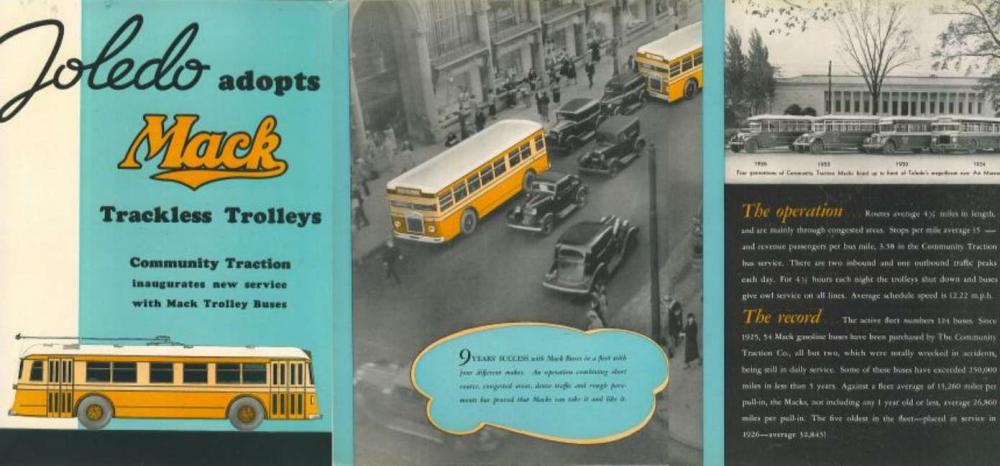
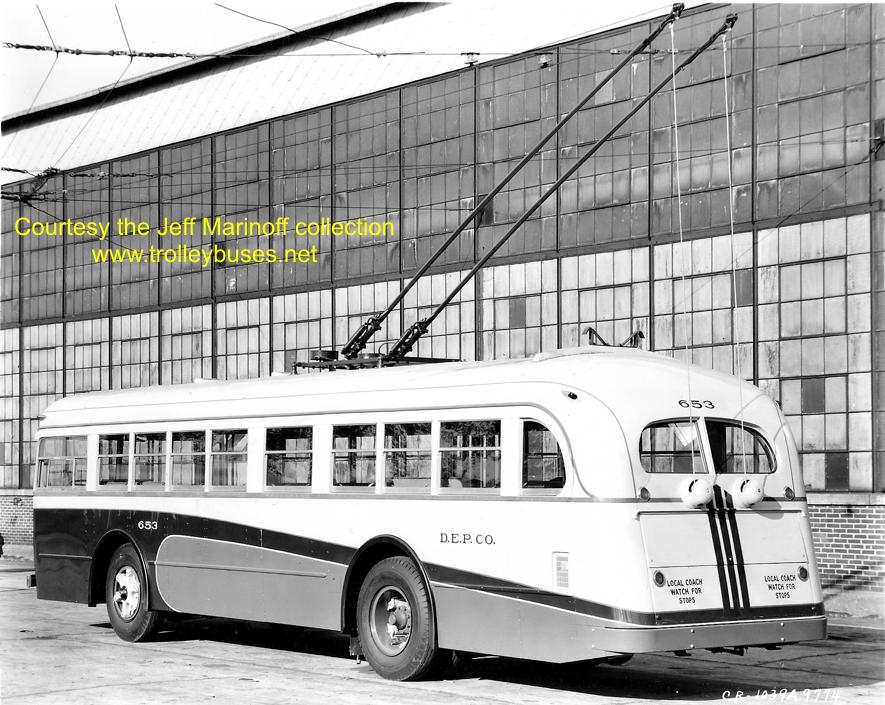
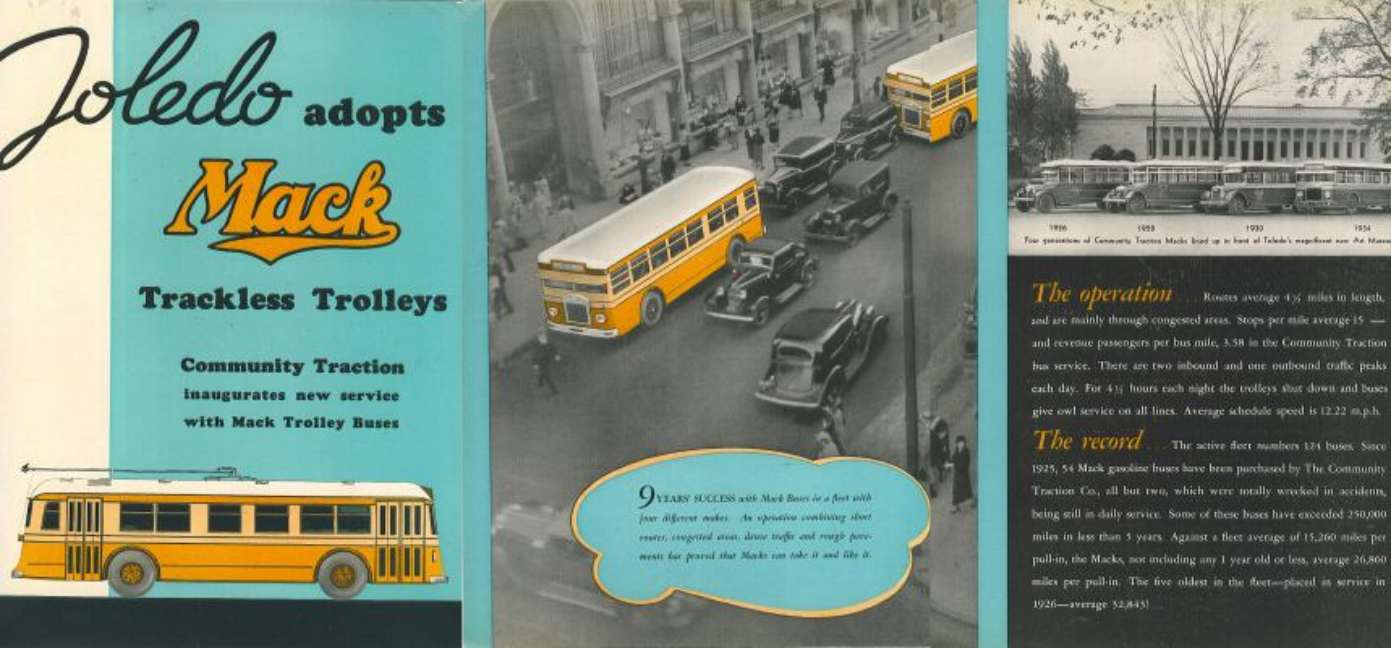
I agree. What we used to call a "trackless trolley' in the states, for example the Mack Trucks model "CR", actually is cheaper to operate. Cities across the world, largely with the exception of the U.S.*, use modern trackless trolleys (overhead-powered electric buses) today. * San Francisco is the only U.S. city I know with a trolley bus fleet. .
TrolleyBus1939.thumb.jpg.4f3e07042ce25ee302c73a41003fa72e.jpg)

.jpg.3c60a3e38e35d1d59c8aeb8ccc3b251c.jpg)
.jpg.34dee97208db3503a02f5aa917a0d307.jpg)
.jpg.3615b66fd6cbe1ba39caffcfdc13d5a9.jpg)
.jpg.bbd96282cae40d0eed0e7aae1e018f94.jpg)
.jpg.ffc09b26c476f4855e262b4300454ba5.jpg)
.jpg.344b1c014ceeb9dabdc6e34c05ec16a1.jpg)
.jpg.0c8c1ea77ad2b2f34ffda1a7c4076773.jpg)
.jpg.b1f8e52c9d9bda2c6532a85ed35e4a2b.jpg)
.jpg.b3e04ee91164171528aeed56a40c46a8.jpg)
-
The truck restorer's new tool for rust removal
kscarbel2 replied to kscarbel2's topic in Odds and Ends
This Hand-Held Laser Makes Rust Literally Evaporate Car & Driver / August 31, 2016 Rust is the bane of any mechanic. If you work on your car—whether it’s a beloved classic or just your daily driver—you’ve probably stared at stubborn, inevitable corrosion and wished you could banish it with the wave of a magic wand. Sadly, magic wands aren’t real. But this hand-held, 1000-watt laser that blasts away rust, paint, and any other coating, revealing virgin bare metal in seconds is real. Yes. A frickin’ laser. This device is called the P-Laser QF-1000. Like its rigid-mounted counterparts, the hand-held instrument is meant for industrial applications, like preparing metal for robotic welding or removing residue from manufacturing molds. As such, it’s very expensive: P-Laser told us that a low-power QF-50, with only 50 watts of muscle, costs €47,800, or more than $53,000 at today’s exchange rate. We assume that’s outside your tool budget. How does it work? A P-Laser spokesperson explained that the system uses short pulses of laser light. When aimed at a metal surface, “the dirt layer and any oxides underneath will absorb the energy and evaporate.” The metal underneath will not absorb the laser energy, leaving nothing but a clean surface ready for welding or painting. We know what you’re thinking, and the answer is no: This thing won’t vaporize human flesh. Amazingly, aiming this laser blaster at your finger doesn’t even hurt at all. . .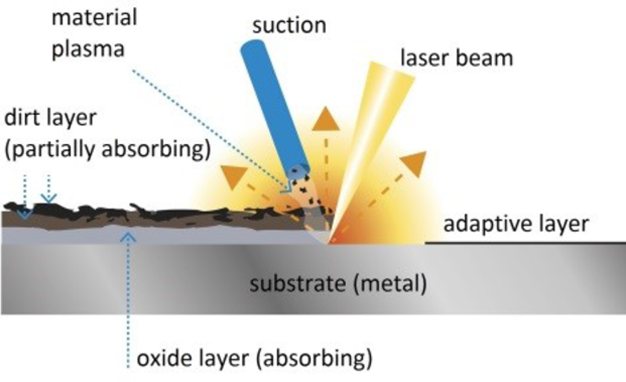
-
-
"People should and do trust me" - Hillary Clinton
kscarbel2 replied to kscarbel2's topic in Odds and Ends
Some celebrities have bad taste in politicians. One wonders what the potential paybacks are. I note they continually appear to be holding Hillary up. -
Frame refurbishement
kscarbel2 replied to mackniac's topic in Exterior, Cab, Accessories and Detailing
BMT...........Simply the best knowledge base on trucks the world over. -
Phase 2 GHG Rules to Curtail Use of Glider Kits
kscarbel2 replied to kscarbel2's topic in Trucking News
Because of exactly what you said, setting 2021 as the date shows a backroom negotiation took place. Between now and then, a good many people should seize the opportunity to buy a Series 60-powered glider kit. -
"People should and do trust me" - Hillary Clinton
kscarbel2 replied to kscarbel2's topic in Odds and Ends
Fundraising drive underlines Clinton’s reliance on wealthy backers The Financial Times / August 31, 2016 It was a typically lazy August day on the holiday island of Martha’s Vineyard. Children were playing by the ocean, families were dining by the waterfront, and President Barack Obama and his family were enjoying the penultimate day of their holiday and relaxing on the beach. Lazy, that is, for everyone except Hillary Clinton. Following a quick stop on neighbouring Nantucket, the Democratic presidential candidate was barrelling across the island in a motorcade as she made her way from one event to the next — a one-woman, selfie-taking, fundraising machine. It was one part of a multi-stop tour that has taken her to wealthy enclaves across the country. In the 10 days to August 30, Mrs Clinton devoted seven full days to the endeavour, attending 20 separate events, some yielding seven-figure sums in two-hour windows. In the final days of summer, Mrs Clinton is racing to raise the $1bn her advisers say she needs to defeat Donald Trump in November’s election, an amount comparable to what Mr Obama and Republican nominee Mitt Romney each raised in the 2012 contest. Dennis Cheng, Mrs Clinton’s finance director, told campaign staff this month that they were halfway towards meeting their target, the Associated Press reported. Building on the successful grass roots tactics used by primary rival Bernie Sanders, the Clinton campaign has stepped up its campaign to attract money from small donors, sending daily emails to supporters in recent days warning that the campaign was not “hitting [its] goals” in August. The Clinton camp is keen to stress that the average donation size in July was just $44. But the whistle-stop tour of wealthy Martha’s Vineyard and the other big-name fundraisers underline how Mrs Clinton continues to rely heavily on establishment Democratic donors from the financial, technology and entertainment industries. In California, she visited the home of Earvin “Magic” Johnson, the former basketball star, and his wife Cookie, before dropping in at the Hollywood mansion of celebrity couple Jessica Biel and Justin Timberlake, who at a 100-person event complete with a photo booth raised more than $3.3m. Later, a select group of about 20 guests paid more than $200,000 each to dine with Mrs Clinton at the home of Laurene Powell Jobs, widow of Apple founder Steve Jobs. On Nantucket, they paid up to $27,000 to nibble on hors d'oeuvres at Innisfree, the estate owned by Elizabeth Bagley, the former US ambassador to Portugal. By contrast Mr Trump has attended just a handful of fundraising events so far, despite raising $80m in July — only $10m less than Mrs Clinton. Unlike Mrs Clinton’s, Mr Trump’s campaign has not given details of his fundraising schedule. It is known that he attended an event at the Cape Cod home of Bill Koch, the billionaire businessman. (Mr Koch’s better-known brothers Charles and David have declined to endorse the candidate.) While Mr Trump was set to hold a fundraiser in Rhode Island this week, that event was cancelled, the Providence Journal reported. This lack of fundraisers has freed Mr Trump up to spend more time on the campaign trail, including recent appearances in Florida, Ohio and Mississippi. Mrs Clinton, by contrast, hosted just one public campaign rally between August 18 and 30. Lynn Forester de Rothschild, chief executive of E.L. Rothschild and a prominent Clinton donor, said it was unfair to criticise Mrs Clinton for her use of high-end fundraisers, especially as the Democratic candidate was a vocal critic of the Supreme Court’s 2010 Citizens United ruling, which overturned campaign financing limits. “She has to raise the money that is necessary in this environment, until Citizens United is repealed and there’s the comprehensive campaign finance reform that Hillary has promised. You have to play by the rules and excel on every level. And one level is fundraising,” Lady de Rothschild said. Mr Trump, she claimed, would have adopted a similar tactic had he been more successful in wooing wealthy donors. “He doesn’t have the kind of supporters that she has. He would have fundraisers all day long if he could fill a room,” she added. Matt Bennett, co-founder of Third Way, a Democratic think-tank, said Mrs Clinton was following a path well trodden by previous presidential nominees, both Democratic and Republican. “This [fundraising] is what you do in August. Voters aren’t paying attention. They're not watching television, they’re not going to rallies, they're not thinking about politics. And all your donors cluster in places that are easy to access, like The Hamptons,” Mr Bennett said. The Hamptons is where Mrs Clinton has spent the past few days, attending six different fundraisers on Sunday and Monday, pulling in an estimated $14 million. On Tuesday evening, she appeared at another Hamptons fundraiser, this one at the home of singer Jimmy Buffett, where VIP tickets, including premium seating and a private reception with the presidential candidate, cost $100,000 a piece. Jon Bon Jovi and Paul McCartney both gave performances. According to one former aid, this week could be the last chance for Mrs Clinton to meet en-masse with rich donors before the campaign really kicks off following September’s Labor Day holiday. “It is a lot harder to do that after Labor Day when [the candidates] actually have to go to real places,” he quipped. .

-
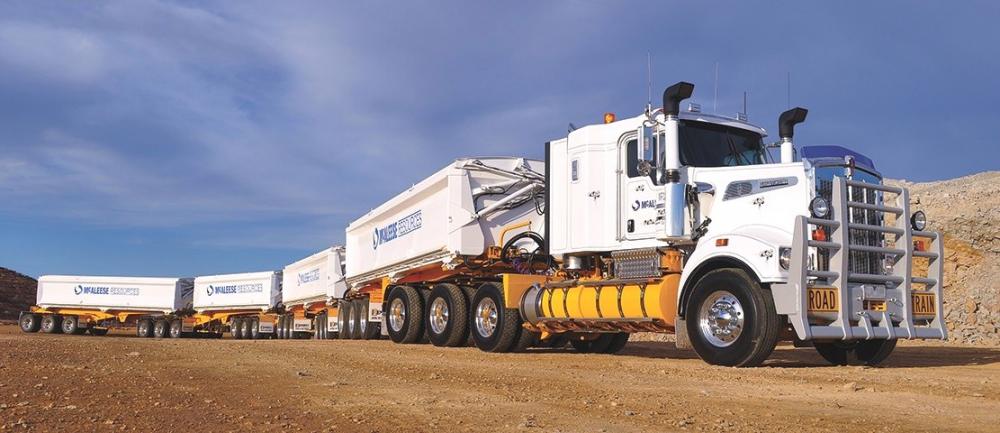
McAleese enters administration with McGrathNicol Australasian Transport News (ATN) / August 29, 2016 Recapitalisation deal expires as unhappy shareholders stand firm on property rental Troubled transport firm McAleese is in voluntary administration. Four administrators from forensic accountancy McGrathNicol are now in charge and will now subject each of the group’s four main businesses to an "urgent financial and operational assessment". All up, Joseph David Hayes, Jason Preston, William James Harris and Keith Crawford will control 20 entities, including Cootes Transport Group, WA Freightlines and Jolly’s Transport Services. They are part of four main businesses: Heavy Haulage and Lifting – comprising McAleese Transport, National Crane Hire and Walter Wright Cranes and offers integrated heavy haulage, general freight and lifting solutions across Australia Specialised Transport or WA Freight Group – providing express transport services to and from all major capital cities both interstate and intrastate Oil and Gas – comprising two businesses, Cootes Transport and Refuel International. Cootes Transport distributes liquid fuels, chemicals, LPG and other petroleum products across Australia. Refuel International is a manufacturer of specialist fuel transfer equipment. It is owned by Sunshine Refuellers, an entity to which the administrators have not been appointe Resources – providing bulk haulage and ancillary onsite services to mining companies operating in the key resource producing regions of Western Australia. Resources also operates a quarry in Cloncurry, Queensland. A deal with financier SC Lowy Consortium, which is presently McAleese’s largest secured creditor, was due to end on Friday if a compromise related to property rental arrangements with some shareholders through TTPH Pty Ltd was not found and a waiver from Atlas Iron on haulage contracts was not supplied. TTPH was unmoved. "As a result, McAleese’s uncompromised senior debt and all accrued interest was immediately due and payable," the McAleese board says. "The SC Lowy Consortium declined to enter into any new forbearance arrangement. "This left the board with no choice but to place the McAleese Group into voluntary administration in order to protect the interests of shareholders, creditors, employees, suppliers and other stakeholders." Those supporting the restructuring deal, SC Lowy and interests linked to MD Mark Rowsthorn, will now look for an alternative mechanism to effect the recapitalisation, the McAleese board says. McGrathNicol says the Cootes sale process that began before its appointment will proceed. McAleese’s shares have been suspended on the Australian Securities Exchange (ASX) and the first creditors’ will be on September 8.
-
McAleese administrator seeks to hold new EGM Australasian Transport News (ATN) / August 30, 2016 Recriminations from both sides increasingly played out in public McGrathNicol administrator Keith Crawford is searching for a new date for the McAleese extraordinary general meeting (EGM) as the atmosphere surrounding the downed firm gets increasingly fractious. Having lost directors Wayne Kent and Kerry Gleeson yesterday on the appointment of McGrathNicol as voluntary administrators, Crawford chaired the meeting to consider a shareholder pitch to spill the board. This had been proposed by the Gilberto Maggiolo-led Havenfresh shareholder entity and would see Harold Price and Maurice Smith join Maggiolo on the board. In the event, the meeting was adjourned, as Crawford "considered that the appointment of administrators was material information for members and members would not have had sufficient information to determine how to vote at the meeting", McAleese tells the Australian Securities Exchange (ASX). The administrators intend to hold the meeting "as soon as the outcome of the voluntary administration process is clearer". During the administration, the administrators exercise all of the powers of the existing directors, whose powers are suspended. The administrators note that the original notice of the meeting did not contemplate that administrators would be appointed to the company. A supplementary notice will be issued that will specify a new time and date for submissions of proxies. In the midst of the turmoil, the company’s shares have risen over the past week, from 1.5 cents each to 2.5 cents, leaving the market puzzled. Meanwhile, public comment from rival shareholders – MD Mark Rowsthorn on one side and opposing shareholding original owners and company-linked property holders for whom Maggiolo has the public profile on the other – have taken each other to task over the company’s predicament. The immediate point of contention is property rentals, with the former charging the latter with scuppering the least-worse option by refusing to negotiate on a lower rate and the latter denying that and noting the opaque nature of the management-led rescue plan made it unclear who negotiations should be conducted with. There appears to be deep mistrust from those opposed to the rescue deal about how Rowsthorn’s position would have emerged, given he negotiated it with financier and major shareholder SC Lowy. It would seem that without a deal with those opposed, SC Lowy, as the major secured creditor, and Rowsthorn, with whom it has been dealing, would have the whip hand in any sell-off of assets or businesses. The administrators flagged yesterday that they would take a detailed look at all parts of McAleese.
-
CEO blames founders for McAleese collapse Prime Mover Magazine / August 30, 2016 A day after it became public that embattled logistics firm, McAleese, has gone into voluntary administration, Chief Executive and major shareholder, Mark Rowsthorn, has now criticised the company’s founders for standing in the way of a successful recapitalisation. According to The Australian, Rowsthorn said the founders – led by McAleese director Gilberto Maggiolo – had long resisted requests by the company to cut “boom time” rents on properties they leased to it, as demanded by distressed debt investor, SC Lowy, as part of a rescue deal. Background: As one of two vital conditions to allow the company to continue as a going concern and pull off a solvent restructure, SC Lowy ahd asked for a renegotiation of the rental leases held with equity shareholder TTPH, which is owned by a group of investors that include the people that created McAleese in the first place. However, TTPH reportedly refused to engage with management and SC Lowy on renegotiating the rental leases, prompting Rowsthorn to accuse its owners of knowingly pushing McAleese over the edge.
-
McAleese collapse explained Prime Mover Magazine / August 30, 2016 The collapse of embattled logistics firm, McAleese (www.mcaleese.com.au), at the start of the week could leave shareholders empty-handed, according to Brendan Richards (pictured below), head of Ferrier Hodgson’s Logistics practice. In a CRTNews exclusive, the Melbourne-based industry expert explains where the industry giant went wrong and what will likely happen next. Q: After a long and hard-fought battle, the future of McAleese was eventually decided on the back of a set of six onerous property leases. What tipped the scale? A: It wasn’t just one issue alone. With troubled acquisitions, poor investments, a huge debt burden, disgruntled bankers and weakening operating conditions, McAleese has been on shaky ground for a long time. These factors all stimulated the recapitalisation proposal that was developed by McAleese. Q: But the failed rent negotiation still made the difference? A: True, McAleese finally fell into Administration because it was unable to resolve a dispute with a group of shareholders who were unhappy with the performance of the company, the management led by Mark Rowsthorn, and the proposed recapitalisation of the company that they felt was unfairly prejudicial to them. The dissident shareholders were associated with the company TTPH, who happened to be a landlord. With a breakdown of trust between those shareholders and Rowsthorn, they refused, through TTPH, to accept the rent reduction proposal. The rent reduction was a condition of the funding arrangement with SC Lowy. Having failed to achieve it in time, the SC Lowy debt became immediately payable which resulted in the insolvency of McAleese and the appointment of Administrators. Q: It was a political showdown? A: The circumstances were unique. If TTPH had been genuinely arms-length, an arrangement may have been agreed. But yes, TTPH was ultimately a used as a leverage tool – although I can’t see how the outcome created by the refusal of TTPH to agree to a rent reduction has helped the dissident McAleese shareholders to achieve anything. Q: So where will the whole thing leave shareholders? Is all lost for them? A: The shareholders have most likely lost their entire investment. There is little chance that they will receive anything of value from the Administration process. There may be a Deed of Company Arrangement proposed by interests associated with Mark Rowsthorn, but this will be targeted primarily at the creditors rather than the shareholders. I suspect that the proposal will give a better outcome to creditors than a liquidation of the assets would, and will preserve the business. But it is too early to really know how it will play out. Q: Where do you think McAleese went wrong? A: In the end it was let down by the poor execution of its strategy. When Mark Rowsthorn bought into it, he was looking to emulate the success achieved at Toll, the building of a logistics behemoth in relatively short time powered by rapid acquisitions and using the funding model available in a public company. The model worked for Toll because it acquired businesses that broadened its revenue base without an over-exposure to any particular industry, segment or geographical region. McAleese, however, had its hooks in resources and energy, and most of the acquisitions that were undertaken in recent years deepened this. It became over-levered in its business model and in its funding, so the end of the resources boom had an exponential impact on McAleese’s bottom line. Q: Which role did the troubled Cootes business play in that context? A: The acquisition of Cootes wasn’t a good one. They overpaid for it and what they bought wasn’t what they thought it was. The Cootes family created a business famous for its fleet quality, but after years of private equity ownership and a previous bankrupt owner in ION Group, it was run down by the time McAleese took it on. On top of that, the double fatality involving a Cootes tanker caused the oil companies to take another look, and they took much of their business elsewhere. Cootes quickly contracted from there, but the balance sheet was left with the legacy of having paid too much for a much bigger business. Who knows why investors signed up in droves for Initial Public Offering just weeks after the accident, because the response of the oil companies was fairly predictable. Q: And how about the failed Heavy Haulage Australia (HHA) project? A: When the market finally woke up, other acquisitions were on the radar that just compounded the problem. The HHA investment was bullish at a time that called for restraint [and] the WA Freight Lines acquisition did little to help McAleese’s strategic objectives. These investments caused some to suggest that management were aloof to the issues. Q: Did the heavy exposure to one struggling key client, Atlas Iron, compound the issue? A: It would be easy to point the finger at the problems of Atlas Iron and certainly McAleese suffered in the downstream of Atlas, but it seemed to be off the rails before that. Having a strong business strategy and sticking to it is important. But if the strategy proves to be wrong, or is not well executed, then stop, reflect and correct. Keeping on keeping on when the fundamentals are wrong is a sure fire way into the abyss. Q: Assuming McAleese doesn’t find a way back – what would a large-scale business failure mean for the rest of the Australian transport market? A: Unfortunately, with the transport market being so heavily saturated, there aren’t many businesses that would shift the market in any meaningful way if they failed. Volumes are typically absorbed quickly by others and the market continues on, as competitively as ever. It would take one of our largest integrated logistics players to fail for anyone to sit up and take notice. With McAleese primarily involved in resources and energy, and with such little activity in that market, I am sure that its volumes could be absorbed by others with little overall market impact. .
-
Western Star Trucks Australia / August 30, 2016 .
-
Western Star Trucks Australia / August 30, 2016 .
-
Western Star Trucks Australia / August 30, 2016 .
-
Western Star Trucks Australia / August 30, 2016 .
-
Western Star Trucks Australia / August 30, 2016 .
-
We'll Likely Never See Nikola Motor's Super Electric Truck in Real Life autoevolution / August 30, 2016 A few months ago, a new company called Nikola Motor came out of the blue and announced plans for a heavy duty electric semi that will revolutionize the way we look at trucks forever. It was so much better than our current diesel machines that we all felt like fools for not coming up with this idea sooner. Well, that was on paper, because in reality, the Nikola One isn't that good. In fact, it isn't at all, because nobody's seen even a square inch of its body. As far as everyone's concerned, it doesn't exist. Sure, the company says it will unveil it this December (that's four months from now, in case you were wondering) and also claims it has already received 7,000 pre-orders for the truck that had a combined value of over $2.3 billion. Not bad for a company nobody really knows that much about. The initial concept relied on an onboard gas turbine to produce the required energy, a setup that may not please the purists as it would still produce emissions, but we all agreed it was still better than diesels. Besides, the Nikola One came with 2,000 hp of electric power and 3,700 Nm or 2,730 lb-ft of torque from zero revs, so it had everything going for it regarding its ability to move heavy cargo efficiently. On paper. Now, though, only three months after the first time this project broke cover and two months after the [alleged] 7,000 pre-orders were announced, the company issued a press release. In it, it announces nothing less than a complete change in the vehicle's powertrain. No, it won't get a diesel unit, but it will use hydrogen fuel cells instead. A "custom-built hydrogen-electric 800V fuel cell," to be more exact. Of course, this doesn't change the bombastic claims the company made about the truck. It will still be "more powerful than any other production diesel truck on the road and have a range of over 1,200 miles between fill-ups." Yes, on paper, which is where the Nikola One might live its whole life after all. Tesla co-founder explained why fuel cells would never work in transportation, and it's all down to the energy equation, which is "terrible." "[...] It turns out that the amount of energy per kilometer driven is just terrible. It’s way worse than almost anything else you can come up with." But Nikola Motors is pushing things even further. It claims it will produce the necessary hydrogen in "zero emission solar farms built by Nikola Motor Company. These solar farms will produce over 100 megawatts each and will use electrolysis to create hydrogen from water. Even our manufacturing facilities will be run off of zero emission hydrogen energy.” Right. There's no time frame on the solar farms, but Nikola Motors intends to have at least 50 hydrogen stations ready by 2020 across North America, so it would make sense if they were built sooner than that. It all sounds extremely optimistic and this major change in the vehicle's design will only raise more doubts. We'd be very curious to know how many of those [alleged] 7,000 orders still stand after this new information was released.
-
Nikola Motor Company's electric truck just became a lot harder to sell CNET / August 30, 2016 The startup has abruptly changed course with its battery-electric truck, opting for a hydrogen fuel-cell power train, instead. Hmm. Remember Nikola Motor Company? The not-so-originally-named startup promised to break into the auto industry with a battery-electric semi truck cab, called the Nikola One. A number of folks put down deposits based on that information, but now, the company has changed the truck's method of propulsion, which is...worrisome. Nikola announced today that its Nikola One would feature a hydrogen fuel-cell power train. It's still electric, although it appears to ditch the natural-gas range extender in favor of hydrogen. The company claims this move makes its truck entirely emissions-free, which is good, but it's still a puzzling move. Here's why it's strange. A number of folks [allegedly] put down deposits on a $375,000 semi cab that was marketed as being entirely electric -- as in, you can plug it into the wall and take power from the grid, all across the country. Now, the trucks will be powered by compressed hydrogen gas, which relies on an infrastructure that's so far into its infancy it's barely experienced cell mitosis. All of a sudden, your ability to fill up around the country has disappeared -- and with it, I imagine, more than a few of those deposits, which I hope are refundable. To that end, Nikola's promised that it plans to produce its own hydrogen, via "zero-emission solar farms built by Nikola Motor Company," per its press release. The company said it will have over 50 filling stations in place by 2020. That's one per state. The truck's purported 1,200-mile range will help out there, because it may take hours to find a station, if you ever do. It's all just very strange. I, and many of my colleagues, still don't know what to make of all this. Either way, we'll know more once the truck is unveiled to the world on December 1 in Salt Lake City.
TrolleyBus1939.jpg.0f4d042dc99904e9518ca6bd38748752.jpg)


BMT Forum Logo