



RS Disposal
-
Posts
206 -
Joined
-
Last visited
Content Type
Profiles
Forums
Gallery
Events
Blogs
BMT Wiki
Collections
Store
Everything posted by RS Disposal
-
Just wanting to close out this thread with what I found. After replacing all fuel line hoses from tank to injector pump with no resolve I ordered and replaced the lift/fuel pump and the problem has been resolved. Even though this engine has less than 200,000 miles on it, it is 40+ years old and I do understand that alone with things wearing out, they also age out. Thanks everyone for all your input.
-
thx, I thought so from back when I had to do the head and replace an injector. Sorry about all the questions, but I do appreciate yours and everybody insight
-
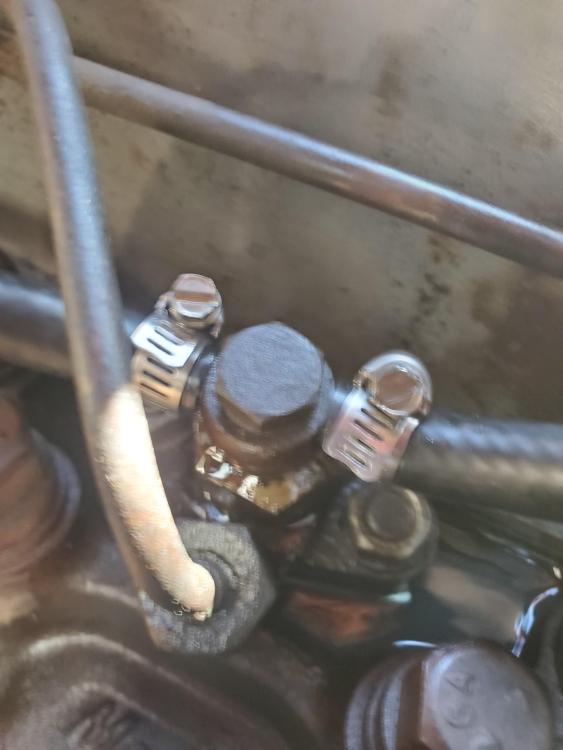
Looks like the leak is actually coming from under the fitting on top of the injector. Does the just screw of and have copper washers for seal?
-
I've replaced all fuel lines from tanks to injector pump and still had the issue. Just replaced lift pump. Haven't had a chance to run trk yet when I spotted the return line leaks
-
looks liker they just press on will any fuel line work?
-
1979 ENDT 675 engine. Are the fuel return lines between the injectors anything specific? or can I just use any 1/4inch fuel line? Appears I have one leaking a bit. Could this be part of my fuel problem with the surging and engine occasional miss?
-
I totally understand that and I understand a shop not wanting a truck to take up space trying to source parts. It just would of been nice for someone to at least communicate with me rather than say they will try and then I never hear anything from them. I understand that lack of communication was from shop management and not the mechanics themselves. When my engine was down I lost about a month waiting to hear from any one of the shops. I was just intimidated by the size of the job I was looking at and unsure about what I was looking at. Once I got into it it was all pretty much straight forward and didn't have any problems, except time, in sourcing parts. The machine shop I had do my head work also had no problems sourcing what he needed. I was luck on the head being it wasn't cracked. That one I wasn't able to locate, but once the machine shop informed me the head was magi fluxed (not sure on spelling) wasn't cracked and was rebuildable I stopped looking. I did find a couple of heads but they weren't maxidyne heads and from what I could find wouldn't work.
-
They were one of the many I contacted about the engine work. Talked with about a dozen shops big and small. They said they would get back to me as far as sourcing parts etc. All me if they could find parts they were 6 to 8 weeks out. Never did get a call back from anybody I talked with. All shops I talked with even on the brake job as at least 4 weeks out. If it's a job I can do I'm not waiting that long for something I can do in a day. I have no problem getting my hands greasy. I just get the impression from the shops I talk to they have no interest in working on a 40+ yr old truck. As far as the brake job I did pick up a dollie from Harbor freight and modified to to support the hub with the inner wheel still on and once I had it so that it would slide on and off straight the job was basically a piece of cake. The only delay was I had to have the shoes relined being new shoes weren't available locally, but that only took a day. Not too many parts for my truck are available locally and unless it is just a generic parts that doesn't require a VIN number to look up, I have to go to the dealer because everybody tells me that my VIN number isn't a good number. My older parts guy, been with Mack for 30+ yrs, there has no problem. The newer guys need to be shown how to look up my VIN. I do appreciate all you are passing on to me and I'm not too proud to not accept criticism and or suggestions/insight
-
that I am finding out
-
Just because this truck only runs maybe 150 miles a week during ski season doesn't mean that I don't work work than full time. When I lost my 2 biggest accounts in the same summer and since rear load work in the valley isn't really there in my area I had to branch out and expanded into smaller roll off construction dumpsters. During covid even that dropped off so I started a small project handyman business being people were stuck at home and noticing alot of small things they wanted done. So, I work from anywhere from 50 to 70 hours a week, depending on truck/dumpster work, during my busy season which is now. this truck's work load is seasonal and I try to do most of my work and repairs during off season. It is staged and runs out of a mountain location and get packed with frozen slush and ice and makes for doing anything under the truck extremely difficult. AT night it lately it is getting down to single digits and very seldom gets above freezing, so frozen ice and slush just doesn't melt and fall off. Doesn't spend enough time in the valley with temps at only low 40's anyway for much to melt and fall off. Don't have a shop big enough to put truck inside. As I found out with the engine breakdown I had 2 years ago, in my area trying to find someone who will work on an older truck was impossible. So I gave up wasting my time and trying to find someone. I couldn't even find someone to do rear brakes being it has inboard drums and requires drive hub removal. Being my dad was a fabricator and had a machine shop and I am to an extent I made what I needed to deal with the weight of the drive hub removal and re install. Around here I feel that most shops anymore just have parts changers. Very few REAL mechanics anymore. At least doing the work myself I know it is done right and I learn something in the process. I am smart enough to know what I don't know. That's why I come here and ask so many questions. Sorry for the long post and rant, but I am just one guy trying my best to make it all work and take care of my family
-
My truck deals with alot of snow and wet salty road slush that get frozen and packed into the frame rails and everywhere underneath. Current have 1800 lbs of that according to the scale house at the dump. It took me a day with a torpedo heater to get the fuel line to where I could get it out. The fuel problem is still there so I have ordered a new lift pump and just replumbed the electric back in. The same issue is going to be changing out the air line from pump. In looking closer at the dryer and am pretty sure it is going to be junk from the corrosion from all the road salt. Going to pick up another one before I have the air lines made in case I need to route the lines differently. After cleaning the frozen slush out from around the rear of truck I noticed that the pinion is leaking pretty bad. Brake cans have oil on them. In checking oil level it is lower than I would of liked to of seen it. Finger crossed I didn't mess up anything inside the differential. Good time to do another gear oil change also. My truck only runs about 150 miles a week with 2 trips across the valley of about 45 miles round trip.
-
It is a working truck and I have bought numerous tools that have been needed to do the work.
-
not with the truck right now for a pic. I am familiar with that method of removing the seal. Just trying to get all my ducks in a row for when I do this job being when I have the truck at the shop I don't have my personal vehicle available whereas truck is staged at a different location for work
-
I am more of a light truck/automotive mechanic. Getting my feet wet with heavy truck maintenance and repair
-
Under truck greasing what needs done I noticed that my pinion seal is wet. Question is is replacing the seal pretty much straight forward as in with light trucks? Anything I should be aware of being I have never done a heavy truck pinion seal? 1979 Mack and I do believe it is the single reduction differential. Pretty sure I don't have a socket big enough so, off hand does anybody know the size needed I would need to purchase? Per factory shop manual looks like nut torque is 600-900 ft lbs. Only reference to gear oil is "GO-F-90". An online search for that number shows it being 75W-90. Is this correct?
-
I have used reusable fitting so I do understand what you are saying. I will look closer
-
I keep brake shoes, wheel seals, alternator, starter, most air valves that are on the truck (seems I have alot of trouble with those in a really cold winter whereas the truck is stage up canyon and can see single digit or lower temps on a consistent basis). Just recently did a total rebuild of front suspension all the way from springs, steering components, brakes and wheel seals. So I think those are good for a bit but as you say will definitely be monitored on an on going basis The fittings on the air dryer are no reusable ones unfortunately. But I have kicked the idea around of buying bulk hose and getting reusable fittings. I don't feel that you are picking on me. I value all of your thoughts and insight being I know what I don't know. If I thought I knew it all I wouldn't be asking questions. I appreciate anything and all you have to say Thank you
-
Not replacing the fuel line wasn't a matter of time, It was a matter of availability of being able to have one made over the weekend. It was the last FUEL line needing to be replaced. The inline pump isn't meant to be a long term cure. It is just another step in my trouble shooting process. Being the line wasn't wet anywhere along it's length with pressure on it makes me think that it wasn't sucking air. Being any older truck alot of parts aren't able to be locally sourced. I do have a new lift pump on order. My mindset is one that I need to know what was actually causing the problem and not just throw alot of parts/repairs at it in hopes that one of them fixes the problem. Time consuming and can be frustrating I know, but just the way my mind works. I haven't really addressed the air lines yet being the truck has no problem building air. I was just concerned about servicing the dryer. Once I get to the dryer job the lines from the compressor to dryer and from dryer to wet tank will be replaced alone with the signal, etc lines to and from governor. The truck is a 1979 and when my dad was running it I don't think it was maintained very well knowing that the arrangement he had with his brother (who owned a ski lodge in the resort) that every 4 or 5 yrs the truck is replaced. The truck have never run full time even back then. The truck then sat for 20+ yrs before I put it back to work Mile wise it only has 160,000 miles, but it it 47 yrs old so just is not really wearing out, it is aging out. My biggest problem has been sourcing parts as I found out with the engine breakdown 2 yrs ago. The truck only really makes any money thru the ski season (about 4 or 5 months) and then it only works two days a week for about 10 hours total, so there is not alot left over to stock pile anything more than than maintenance parts and smaller breakdowns.. I do totally understand what you are saying about a parts truck, but that search didn't go well back when I had my engine breakdown
-
Being that the tank to primary filter hose is the last one needing replaced I decided to try a wild hair idea. I spliced in an inline fuel pump (being the line was going to be replaced anyway so no concerns about cutting it) and powered it off a keyed accessory circuit. Powered it on and had about 20 psi at the injector pump. Started the truck and let it run for a bit watchin the fuel gauge to see if having the lift pump still in line (if indeed the pump is bad) would have any adverse effect on the fuel pressure. Being it was a work day I had to climb canyon I decided WTH and give it a try being after about 15 minutes of fast idle the pressure seemed to stay about the same. Climbed the canyon with no problems at all. I do believe I felt there was a bit more power available, I did notice that the boost pressure was a little higher and the the pyrometer was a little higher (neither was crazy high). Correct me if I am wrong, but my thinking those factors would mean the engine was getting better fuel flow.
-
I totally understand your comment. My problem about truck not running is it is a garbage truck and I service a ski resort town which in the ski season is extremely busy particularly on holidays. non of my accounts have the space to miss a pickup day which is 4 or 5 times a week.
-
thats the last hose i have to replace. Would of done this weekend but my hose place is closed on weekends and truck has to go to work tonite. It's hard to work on equipment that also has to work every day.
-
haven't actually checked the vent it self, but I did try running with the fuel cap loose. I will try the drain back tee and see if it makes any difference. Being a one man show with only one truck and this being my busy season and truck having to also work while I try to figure this out makes for some long frustrating days
-
truck seems to run fine around town but when I am climbing the canyon occasionally it will start to miss (more than just loosing power) and I would have to pull over and let it idle for a bit. Then I could start back up again. I do understand about a liquid filled gauge, but would think the gauge attached after the secondary filter would mellow the fluttering a bit. I did notice a couple of times that the gauge did drop to zero for several seconds. I did pull the plastic check valves and they did look ok, but don't have new to compare against. Truck only has about 160,000 road miles (not sure about motor miles being there is a pto running a packer) but then again it is 47 yrs old and sat for about 20 yrs before being put back into service about 8 yrs ago. Truck only really works part time anyway, but I do know stuff breakdown with age alone
-
from what I have found its about 15 psi. My question was the fast fluttering
-
pulled the return tee of and took apart. everything looks good there. Haven't pulled the cap screws yet. Put a fuel pressure gauge on the injector in line and at idle the needle fluctuates between 10 and 30 psi. Doesn't change much if I go to a fast idle. Should this reading be more smooth rather than fluttering? Would this be sign of a bad fuel pump? I did pull the caps and the springs appear ok and the plastic check valves are ok



BMT Forum Logo