Olivetroad Posted March 27, 2012 Share Posted March 27, 2012 It's okay - I know I am stupid, I don't need anyone reminding me, but I have been wanting to know the answer to this:Why did some early firetrucks have open cabs?and on that same train of thought - why did the military use open top cabs? Quote Link to comment Share on other sites More sharing options...
heavyhauler Posted March 27, 2012 Share Posted March 27, 2012 I was told that you needed to be able to see the action from the cab of the truck-not so sure but that is what I was told when I asked that very same question.John Quote Link to comment Share on other sites More sharing options...
1958 F.W.D. Posted March 28, 2012 Share Posted March 28, 2012 Heavyhauler has it- in the early days, open cabs were believed to enhance the driver and officer's abilities to be able to better spot the pumper or the turntable of the aerial ladders (at corners of buildings, around overhead wires and other obstructions, etc....) for maximum efficient operation on firegrounds. Eventually it became tradition, however in the end the open cabs fell victim to the desire fpr protection from the elements. Quote TWO STROKES ARE FOR GARDEN TOOLS Link to comment Share on other sites More sharing options...
41chevy Posted March 28, 2012 Share Posted March 28, 2012 Military used to be See Out, Shoot Out and Get Out...not always in that order. Paul 1 Quote "OPERTUNITY IS MISSED BY MOST PEOPLE BECAUSE IT IS DRESSED IN OVERALLS AND LOOKS LIKE WORK" Thomas Edison “Life’s journey is not to arrive at the grave safely, in a well preserved body, but rather to skid in sideways, totally worn out, shouting ‘Holy shit, what a ride!’” P.T.CHESHIRE Link to comment Share on other sites More sharing options...
Pawel Posted March 28, 2012 Share Posted March 28, 2012 I also always wondered about the open - topped american fire trucks. Here in Europe we didn't have trucks like that, fire trucks had metal roofs even before WWII. As for the military trucks, the soft-top roof can be disassembled quickly to decrease the overall height of the truck, which in turn allows it to be loaded on board of a cargo aircraft - this is especially true in case of the 2,5 and 5 ton machines. With such a soft top, an installation of a machine gun ring is also easier. And if you have to park the trucks really tight, as for example on a ship deck, a soft top also allows you to access such a truck without opening the cab doors. Plus, I guess at some point in time a soft top was cheaper to build than a metal one - saves steel and weight. Have a nice dayPaweł Quote Link to comment Share on other sites More sharing options...
b61fred Posted March 28, 2012 Share Posted March 28, 2012 in the early 70's safety regulations required that the cabs were closed. they also outlawed riding the tailboard at about that time also. Most rual fire departments had closed cabs and most urban had open cabs, not much need for a open cab truck in the country because most were pumpers. Quote 15 gears...no waiting! Link to comment Share on other sites More sharing options...
1958 F.W.D. Posted March 29, 2012 Share Posted March 29, 2012 in the early 70's safety regulations required that the cabs were closed. they also outlawed riding the tailboard at about that time also. Most rual fire departments had closed cabs and most urban had open cabs, not much need for a open cab truck in the country because most were pumpers.Who "outlawed" it? Quote TWO STROKES ARE FOR GARDEN TOOLS Link to comment Share on other sites More sharing options...
b61fred Posted March 29, 2012 Share Posted March 29, 2012 federal safety standards. I was told this by members of the PPPSI during a presentation they had during one of our truck club meetings. The man was very knowledgeable about fire trucks, Boyers are his speciality. I am no firetruck buff, but after his "show" I never have been able to find a truck made after the mid seventies that was open cab. Now that I have said this I am sure that someone will post a bunch of 80's models with open cabs....As for the riding on the tailboard that was a big NO,NO when I was on the volenteer fire dept. they said it was outlawed sometime before I started. That could be an Indiana thing though. This is the basis on witch I have my information. Quote 15 gears...no waiting! Link to comment Share on other sites More sharing options...
thomastractorsvc Posted March 29, 2012 Share Posted March 29, 2012 Pawel is spot on for the military equipment, it is or was for versatility of transport and convoy security. Years ago if a truck was outfitted with a ring mount it had a soft top and the passenger seat flipped down with a steel tread plate so you could stand on it to fire the mounted weapon. The trucks were unarmored and the operators would sand bag the floor and hood not the best but it worked, the US Army Transportation Museum has a couple of good examples of gun trucks from Vietnam. http://www.transchool.lee.army.mil/Museum/Transportation%20Museum/museum.htmIn Desert Storm and Panama we used the basic truck configuration for the most part from Vietnam with sand bags . In Somalia the threat was little different and wire mesh/chain link fence was attached to frames and slid over the door and window openings because they allowed fresh air in and rocks and debris out. In Iraq and Afghanistan we went from basic Vietnam style armorment to full blown hardened vehicles. We did incorporate "slat armor" from Vietnam initially on the new Strykers vehicles because they would catch RPGs now that has spread on to other vehicles. Quote Robert"I reject your reality and substitute my own." Link to comment Share on other sites More sharing options...
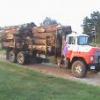
heavyhauler Posted March 29, 2012 Share Posted March 29, 2012 Here is one just for your reference. Quote Link to comment Share on other sites More sharing options...
bulldogboy Posted March 31, 2012 Share Posted March 31, 2012 Who "outlawed" it?As far as I know there is no "law" against riding the tailboard of a fire truck. However, the National Fire Protection Association (NFPA), who writes standards on everything fromfire apparatus to restaurant range hood extinguishing systems, has a standard that requires a seated, belted, enclosed position for every person riding on that apparatus.Technically, these standards are not laws but, in reality, they have the force of law. If someone is injured or killed while riding the back step a sharp lawyer will point out toa jury that these standards are written by fire service personnel (I know not all of them are; doesn't matter) for the protection of fire service personnel and to ignore them is openingyourself up to a major lawsuit. There was a case many years ago in Massachusetts where a firefighter was severely injured when he fell from a moving engine while he wasstanding in the open jumpseat area. The truck manufacturer claimed that the engine met all NFPA standards for the time it was built but the jury rejected that argument andawarded for the plaintiff. Fire departments ignore NFPA standards at their own risk.I started my fire service career riding the back step and driving semi-cab Mack fire apparatus. There was nothing more thrilling than responding through downtown whilehanging on the rear bar for dear life. I am glad that I had the opportunity to do so but we cannot go back in history; today's legal environment will not allow it.bulldogboy Quote Link to comment Share on other sites More sharing options...
Olivetroad Posted March 31, 2012 Author Share Posted March 31, 2012 As far as I know there is no "law" against riding the tailboard of a fire truck. However, the National Fire Protection Association (NFPA), who writes standards on everything fromfire apparatus to restaurant range hood extinguishing systems, has a standard that requires a seated, belted, enclosed position for every person riding on that apparatus.Technically, these standards are not laws but, in reality, they have the force of law. If someone is injured or killed while riding the back step a sharp lawyer will point out toa jury that these standards are written by fire service personnel (I know not all of them are; doesn't matter) for the protection of fire service personnel and to ignore them is openingyourself up to a major lawsuit. There was a case many years ago in Massachusetts where a firefighter was severely injured when he fell from a moving engine while he wasstanding in the open jumpseat area. The truck manufacturer claimed that the engine met all NFPA standards for the time it was built but the jury rejected that argument andawarded for the plaintiff. Fire departments ignore NFPA standards at their own risk.I started my fire service career riding the back step and driving semi-cab Mack fire apparatus. There was nothing more thrilling than responding through downtown whilehanging on the rear bar for dear life. I am glad that I had the opportunity to do so but we cannot go back in history; today's legal environment will not allow it.bulldogboyThat is kind of what I thought - a slippery slope where industry standards become the law as far as attorneys are concerned Quote Link to comment Share on other sites More sharing options...
leversole Posted April 1, 2012 Share Posted April 1, 2012 Got to hear the siren on this one today!No cab here either! This siren had a hand crank! Quote Link to comment Share on other sites More sharing options...
vision386 Posted April 1, 2012 Share Posted April 1, 2012 I really don't know about the fire trucks,but i read an article several years ago,that said the reason the military went to open/soft cab trucks was the shortage of metal during WW II, it was about the famous GMC "duece and a half" GM said it also cut production/build time down,and saved a great deal of money too. I enjoyed reading about the truck, designed to be dropped from a plane in pieces and put back together,up and running in less than two hours,during the "Redball express" it was said a pair of good mechanics,properly equipped,could change the GMC inline 6 in about 15 mins. to a half hour! send the truck on its way! even Gen. G.S. Patton jr. said "the truck was the most valuable weapon of the war"...........................Mark Quote Mack Truck literate. Computer illiterate. Link to comment Share on other sites More sharing options...
fxfymn Posted April 3, 2012 Share Posted April 3, 2012 Open cabs actually go back to the days of horse drawn apparatus. Obviously, all horse drawn stuff was "open cab" and since the fire service is very tradition bound they kept the open cab as apparatus became motorized. They did provide better visibility when sizing up an incident, but only when the weather was nice.The 68 riots were really the death knell of open cabs for most cities, not government regulation. Open seats did not provide any protection from thrown objects and cities quickly started adding canvas tarps or other covers for the member's protection. FDNY converted it's entire fleet to fully closed apparatus in the years following the riots and as far as I know was the first to go to fully closed equipment by using things such as a "phone booth" type enclosure on the side of some rigs for members to stand in. Other cities such as Detroit had used "sedan" type pumpers that provided enclosed riding seats going back at least into the fifties.Like many older folks who were on the job I drove and rode many open cab rigs. They were sweet on warm spring days, but overall they were a PIA in most conditions. Nothing sucks like riding back to the fire house in an open cab in a cold rain after being on a fire for several hours in near freezing weather! Bulldogboy was close on the open jump seats. The case happened in Brookline, MA and the member died as a result of falling off of the apparatus while responding to a call. The manufacturer, Pirsch, had installed a chrome grab rail across the roof of the rig mostly for looks. The widow sucessfully argued that the rail invited the rider to ride standing up in the jump seat which is what the member was doing when he fell from the apparatus. The grab bar above the tail board fell into the same category and thus apparatus builders quickly started putting warning signs on the back step that advised the bar was not intended for riding the back step while responding. NFPA 1901 also "outlawed" back step riding around the same time.I rode to many a call while standing in the jump seat. A member would typically throw their gear onto the rig so you could get out of the station quickly. We would than stand in the jump seat and put our gear on while responding. Not smart or safe, but in the fire service you typically traded safety for speed at the time.The latest NFPA standards do require enclosed cabs and seat belt equipped seats for all members. Departments are not required to follow NFPA standards, but most manufacturers will not build anything that does not comply since there have been successful lawsuits over equipment failures that did not comply with NFPA stadards even when the department did not choose to comply with the standards. That is why small rural departments such as the one from KY that recently posted pictures of "non-compliant" apparatus can still use them. 1 Quote Money, sex, and fire; everybody thinks everyone else is getting more than they are! Link to comment Share on other sites More sharing options...


Recommended Posts
Join the conversation
You can post now and register later. If you have an account, sign in now to post with your account.